



Automated Crop Monitoring System - How Automation Transforms Farming
Discover how Automated Crop Monitoring Systems use AI, IoT, and drones to boost yields, cut costs, and enable sustainable, data-driven farming practices.
Written by Amirhossein
Reviewed by Boshra
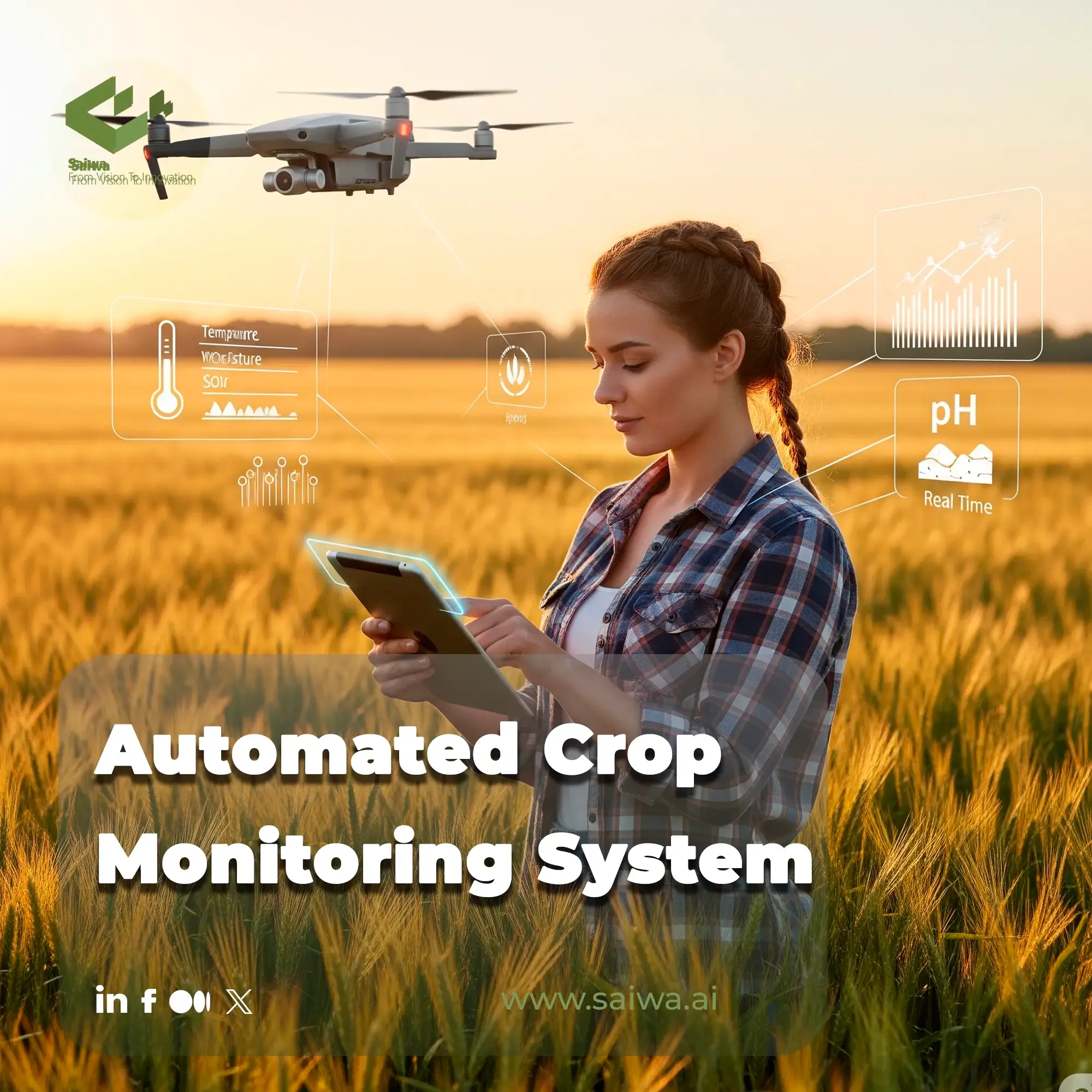
Modern agriculture faces a critical challenge: boosting production to feed a growing global population while minimizing its environmental footprint. This requires a transition from intuition-based farming to data-driven, precision agriculture. Leading this charge are intelligent platforms like Saiwa's Sairone, which leverage AI to convert complex aerial data into actionable insights for farmers and environmentalists.
This article explores the core technologies powering this revolution and their real-world impact.

Core Innovations Enabling Automated Crop Monitoring
The shift towards automated agriculture isn't driven by a single technology, but rather by the sophisticated interplay of several groundbreaking innovations. Each component contributes a unique capability, and when integrated, they create a system that sees, analyzes, and acts with unprecedented precision. Let's delve into the key technologies that form the backbone of these advanced systems.
IoT and Smart Sensors
At the farm level, the Internet of Things (IoT) creates a connected ecosystem. Strategically placed smart sensors gather continuous, real-time data on critical variables like soil moisture, nutrient levels (NPK), and ambient temperature, forming the foundational data layer for all subsequent analysis.
Remote Sensing
Remote sensing in agriculture technologies, utilizing tools like satellite imagery, allow for the assessment of crop health on a macro scale. By analyzing light absorption and reflection, specialized indices can detect plant stress or nutritional deficiencies long before they become visible to the human eye, enabling proactive interventions.
Machine Learning Algorithms
Machine learning (ML) serves as the analytical brain of the system. These algorithms process the immense datasets collected by sensors and drones to identify patterns, predict outcomes, and provide targeted recommendations. This is where raw data transforms into strategic intelligence, guiding everything from irrigation schedules to pest control.
Drones and Satellite Imagery
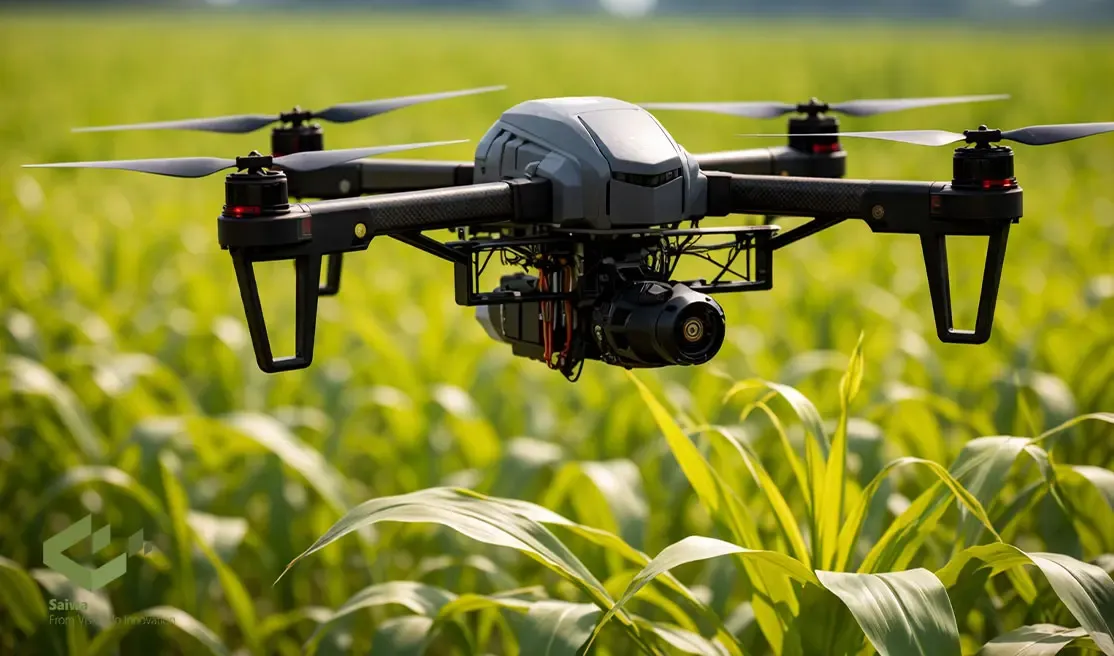
Drones and satellites provide the "eyes in the sky," capturing high-resolution multispectral images. This imagery is crucial for tasks like precise Weed detection and monitoring vegetative health across vast fields, offering a level of detail and scale that is impossible to achieve through manual inspection alone.
Robotics and Autonomous Ground Units
While aerial units monitor from above, autonomous ground robots can perform targeted actions. These units can be dispatched for precise weeding, spot-spraying of pesticides, or detailed soil sampling, translating digital insights into physical action with minimal human intervention.
Data Collection and Decision-Oriented Insights
The true power of an Automated Crop Monitoring System lies not only in gathering data, but in transforming it into actionable intelligence for farmers. By collecting diverse data streams from in-field IoT sensors measuring soil pH and moisture, to aerial drone imagery capturing plant height, and satellite data assessing canopy density the system builds a comprehensive picture of crop and field conditions. This data is then centralized and normalized on a cloud platform, making it easily accessible anytime, anywhere.
Beyond simple aggregation, advanced machine learning algorithms analyze these interconnected variables, identifying patterns, anomalies, and trends that would be impossible to detect manually. The result is decision-oriented insights that empower farmers to act proactively: adjusting irrigation schedules, optimizing fertilizer application, predicting pest or disease outbreaks, and managing resources efficiently. In essence, the system converts raw measurements into a dynamic, actionable roadmap for farm management. Accessible, accurate, and real-time data becomes the foundation for data-driven decision making, ensuring higher yields, reduced waste, and sustainable agricultural practicees.
How an Automated Crop Monitoring System Works in Practice
An automated crop monitoring system becomes truly valuable when it does more than observe conditions. It must connect detection, interpretation, and intervention in a way that reduces reaction time without increasing false alarms.[1]
The current article already explains that automation in agriculture is driven by the interaction of IoT sensors, remote sensing, machine learning, drones, satellites, and autonomous units. In practice, the strength of the system depends on how well those components work together as a closed decision loop rather than as separate technologies.[2]
Automation works best as a layered process
No single sensing method can explain every field problem on its own. A review on site-specific crop monitoring notes that technology fusion in digital farming depends on proper parameter collection, model selection, and platform integration, and that multiple sensing systems can be combined to monitor variables such as nitrogen, chlorophyll, leaf area index, and biomass more effectively.[1]
That matters because a single anomaly on a map may reflect nutrient stress, water shortage, disease onset, pest pressure, or soil-related constraints. The purpose of automation is to narrow that uncertainty faster, not to skip diagnosis altogether.[2]
A practical automated workflow usually follows this sequence:
Broad-area monitoring identifies unusual zones through satellite or drone imagery.[3]
In-field sensors add localized readings such as soil moisture, nutrient status, or temperature to test whether the signal is agronomically consistent.
Machine learning ranks the severity, pattern, and likely cause of the anomaly based on multiple variables rather than one image alone.[2]
The platform converts confirmed findings into an operational response such as irrigation adjustment, nutrient correction, scouting priority, or precision treatment.
Why multiscale monitoring improves reliability
This layered structure is especially important for early stress detection. A UAV-satellite multiscale monitoring study found that early crop stress can be detected effectively with multi-temporal and multi-scale observation, and that low-altitude UAV data helps overcome field-level limitations in satellite monitoring by reducing mixed-pixel issues and filling temporal gaps.[3]
That insight is highly relevant for farm managers because automation is only useful when it can detect problems early enough to change the outcome. A system that reacts after visual symptoms are already widespread is no longer delivering the full value of automation.[3]
System layer | Main role in automation | Why it matters |
Satellite or aerial imagery | Detects broad variability and emerging stress patterns. [3] | Gives the system field-wide visibility that manual scouting cannot match consistently. |
IoT and smart sensors | Supplies direct readings on soil and microclimate conditions. | Helps verify whether a visual anomaly is linked to water, nutrients, or environment. [1] |
Machine learning | Integrates multiple variables and prioritizes likely causes. [2] | Reduces interpretation time and improves decision speed. |
Operational output | Triggers recommendations, alerts, or precision actions. | Ensures the system leads to intervention, not just observation. |
Where Sairone fits
This is also where Sairone adds practical value. Its crop health monitoring workflow includes localized alerts, a health dashboard, a growing season timeline, plant health indices, AI-based treatment suggestions, and prescription-map export for spray drones or precision sprayers.
For growers, agronomists, and ag-service providers, that means automation becomes more than passive monitoring. It becomes a structured response system that can track issues from detection through treatment and follow-up across the season.
The practical takeaway is simple: the best automated crop monitoring system is not the one that gathers the most data. It is the one that combines multiple signals, reduces uncertainty quickly, and delivers field-ready actions at the moment they matter most.[3][1]
Key Benefits of Automated Crop Monitoring Systems
The practical benefits of adopting automated monitoring are profound, transforming not just efficiency but the very paradigm of farm management. A closer look reveals several key advantages that these integrated systems bring to modern agriculture.
Real‑Time Monitoring and Early Warning: Constant data flow allows for the immediate detection of anomalies, such as early signs of disease or pest infestations.
Precision Resource Management: Water, fertilizer, and pesticides are applied precisely where needed, optimizing resource use while minimizing unnecessary waste and runoff.
Labor and Cost Efficiency: Automation of repetitive tasks like field scouting and irrigation control significantly reduces the need for manual labor and associated costs.
Sustainable and Scalable Farming: Optimized resource use and proactive management contribute to more sustainable practices that can be scaled effectively for both large and small operations.
Sairone’s Role in Advancing Automated Crop Monitoring Technologies
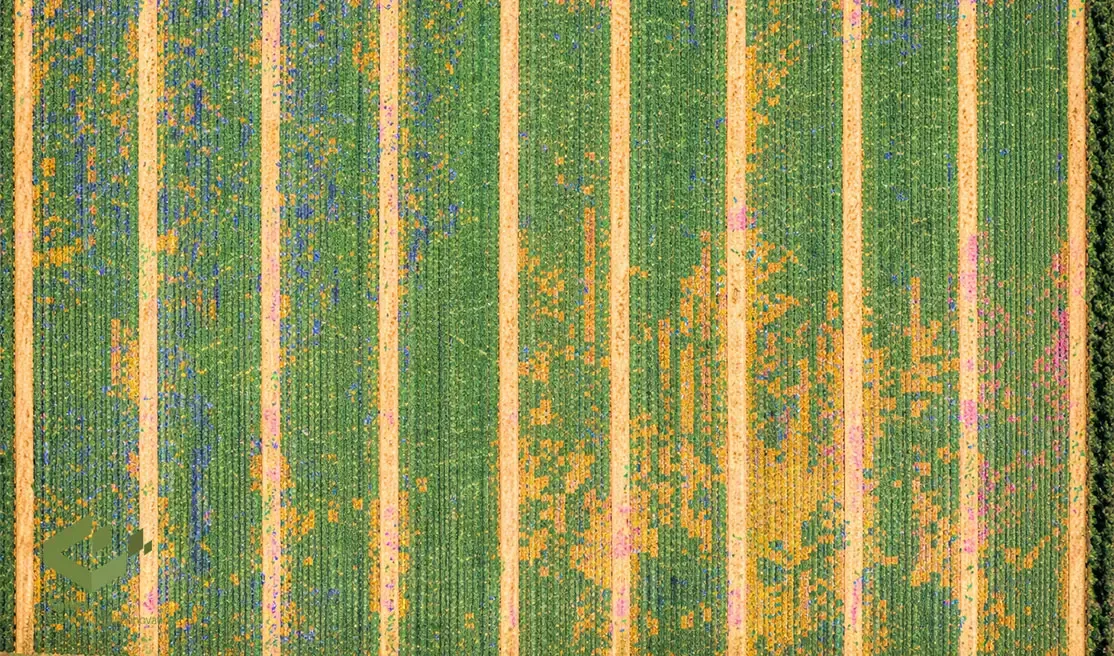
Sairone by Saiwa sits at the cutting edge of this evolution. It is a specialized AI suite designed to interpret high-resolution drone imagery for the agricultural and environmental sectors. Instead of just providing raw data, Sairone delivers clear, actionable intelligence.
It automates critical tasks like Crop yield estimation and pest detection, empowering farmers and ecologists to make faster, more informed decisions. By turning complex visual data into practical solutions, Sairone helps users save time, optimize operations, and enhance stewardship of the land.
Conclusion
Automated crop monitoring represents a fundamental shift in agriculture, moving from reaction to prediction. By integrating technologies like IoT, AI, and remote sensing, these systems provide unprecedented insight and control. This evolution enables farmers to increase yields sustainably and efficiently, ensuring that data-driven intelligence becomes the most valuable tool in the field.
Note: Some visuals on this blog post were generated using AI tools.
Comments
No comments yet!
Table of Contents
No headings were found on this page.