



Crop Pest Detection AI - Precision Tools for Modern Farms
Crop Pest Detection AI enables early, precise pest control using drones, sensors & deep learning—boosting yields, cutting costs & supporting sustainability.
Written by Amirhossein
Reviewed by Boshra
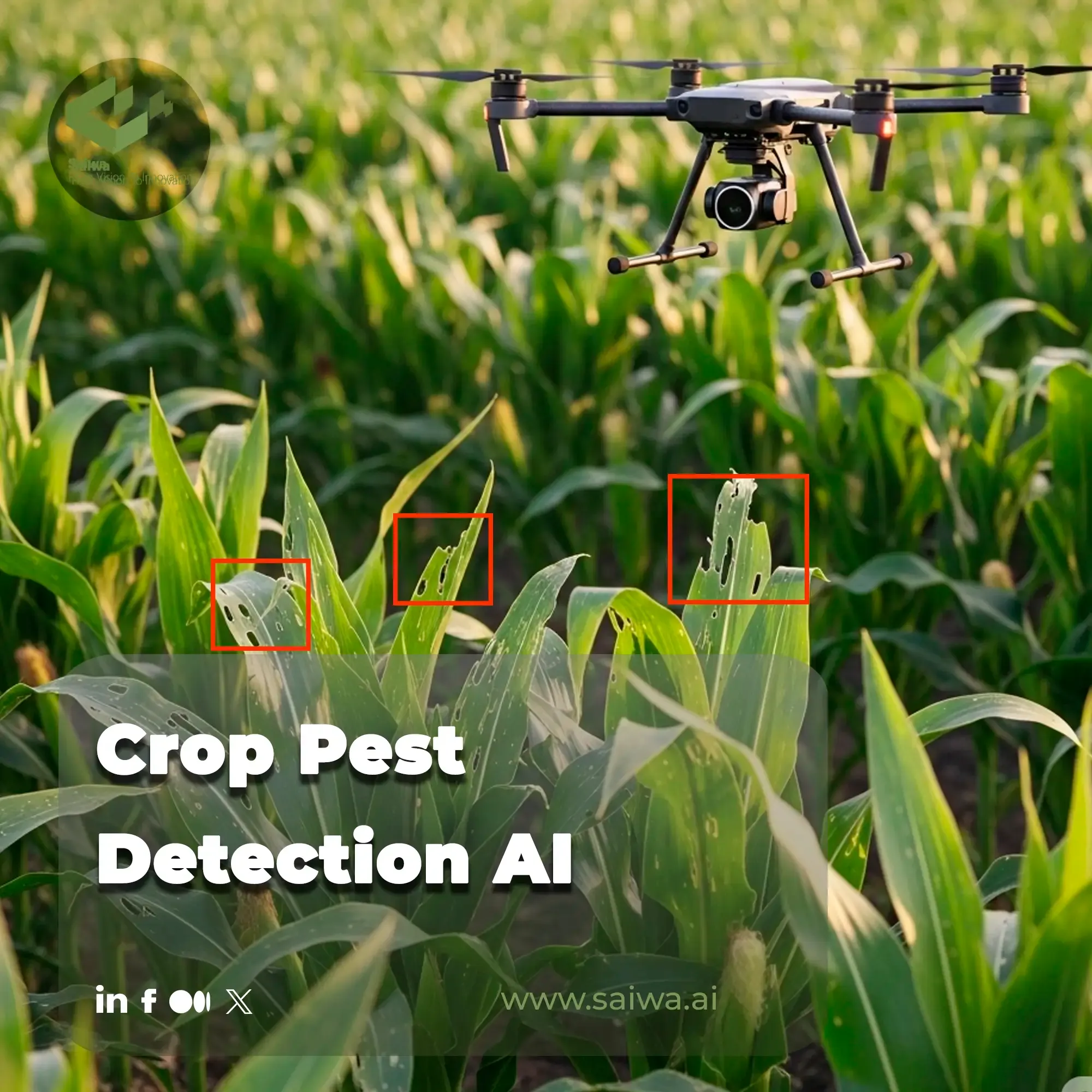
The silent war against agricultural pests—a primary cause of up to 40% of global crop loss—is shifting from reactive treatments to proactive, data-driven strategies. Traditional scouting is slow and prone to error.
Saiwa introduces Sairone, a solution engineered to turn this challenge into an opportunity by transforming high-resolution visual data into precise, actionable intelligence for modern agriculture.

Key AI Technologies Powering Crop Pest Detection
The effectiveness of modern pest control isn't reliant on a single invention but rather the sophisticated integration of several core technologies. This synergy creates a system far greater than the sum of its parts, offering unprecedented levels of insight. Below, we delve into the key technological pillars that make this revolution possible:
Computer Vision and Deep Learning
At its heart, this technology serves as the "eyes and brain" of the system. Deep learning models are trained on vast datasets of crop and pest images, learning to distinguish between healthy plants, stressed vegetation, and specific insect species or disease symptoms with remarkable accuracy, often exceeding 95% in controlled environments.
Automated Pest Detection and Monitoring
This is the practical application of computer vision, enabling continuous, tireless surveillance of fields and greenhouses. Systems can automatically scan thousands of images captured by drones or stationary cameras, identifying and flagging potential threats in hours—a task that would take human scouts weeks to complete.
IoT and Smart Sensors
Intelligent traps equipped with cameras and lures are deployed across the farm. These IoT devices capture images of trapped pests and transmit them to a central AI platform for instant analysis. This creates a real-time map of pest pressure and migration, enabling a targeted response instead of guesswork.
Automated Visual Classification
Beyond simple detection, advanced AI classifies the type of pest or disease. This critical distinction allows farmers to apply the precise insecticide or treatment needed for a specific threat, avoiding the use of broad-spectrum chemicals, protecting beneficial insects, and preventing the development of pesticide resistance.
Remote Sensing Technologies
Using multispectral and hyperspectral sensors on drones, these systems provide comprehensive Plant health monitoring. They detect subtle changes in a plant's chlorophyll levels and heat signature, often the earliest indicators of stress caused by pest infestations, long before the damage becomes visible to the naked eye.
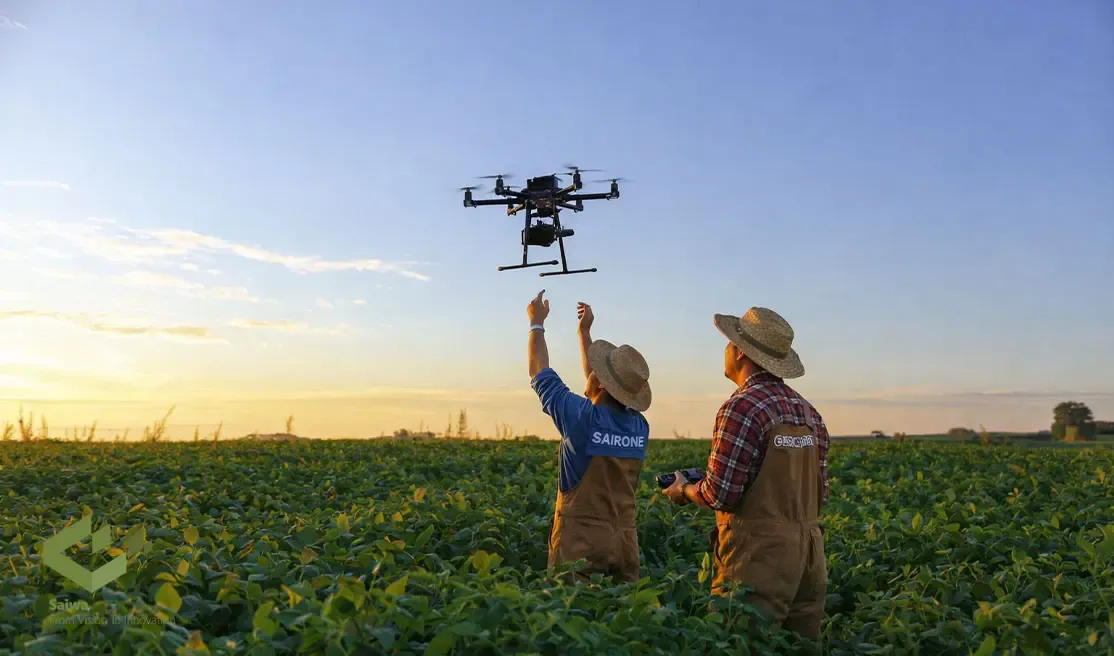
Turning AI Pest Detection Into a Field Decision System
AI pest detection creates the most value when it supports Integrated Pest Management rather than operating as a standalone image classifier. Recent literature notes that AI can support several parts of pest monitoring schemes, while updated IPM reviews describe pest management as a combined strategy designed to reduce reliance on chemical pesticides while improving crop productivity and ecosystem outcomes.
For professional growers, that means the goal is not simply to detect “something unusual” faster. The goal is to connect early detection with a response that is accurate enough to protect yield without defaulting to unnecessary blanket spraying.
Detection and diagnosis are not the same
The current article correctly highlights computer vision, IoT devices, automated visual classification, and remote sensing as the core pillars of AI pest detection. In practice, however, these tools do not all answer the same agronomic question.
Smart traps, cameras, and image-based classifiers are more direct tools for identifying pest presence, while remote sensing is often better at detecting crop stress patterns and mapping where closer inspection is needed. A review of automatic insect detection systems notes that pests can now be monitored with infrared, audio, and image-based systems, and that these technologies are increasingly linked to decision-support systems for precision agriculture.
That distinction matters because a stress signal is not automatically a pest signal. USDA ARS notes that remote sensing can detect crop stress and map its geographic pattern within the field, but the same review also makes clear that crop stress may result from nutrient deficiency, pest infestation, disease, or drought.
In other words, AI can identify where a problem is emerging very quickly, but field validation is still essential before choosing the treatment.
Build a layered pest monitoring loop
The most reliable pest-monitoring programs combine direct detection with spatial context. Instead of relying on one source alone, farms can use a layered workflow that connects traps, imagery, and scouting into a single operational loop.
Monitoring layer | Best role in pest detection |
Smart traps and camera-based devices | Capture direct pest evidence and support repeated monitoring over time. |
Drone or satellite imagery | Reveal spatial stress patterns and help prioritize where to inspect first. |
Ground scouting | Confirms whether the detected signal is actually pest-driven rather than caused by drought, disease, or nutrient stress. |
AI decision platform | Converts detections into localized alerts, treatment suggestions, and precision outputs. |
This kind of workflow is much more practical than treating every anomaly as a spray decision. It reduces misclassification risk and helps growers focus labor on the highest-priority zones first.
Why action-ready outputs matter
This is where a platform such as Sairone becomes more useful than raw detection alone. Its crop health workflow supports early spotting of pests and disease, localized alerts, AI-based treatment suggestions, plant health indices, and exportable prescription maps for spray drones or precision sprayers.
Those outputs matter because pest detection only becomes operational when the result can guide where to scout next, where to intervene, and where to keep monitoring instead of treating the whole field.
For modern farms, the strongest AI pest systems do not replace agronomic judgment. They strengthen it by shortening the time between the first signal, the correct diagnosis, and the most targeted possible response.
Timing Is Everything in Pest Management
In crop pest control, timing is everything. It can mean the difference between a minor inconvenience and a major infestation. Early detection enables farmers to act while pest populations are small, which minimizes crop damage and prevents pests from spreading to neighboring fields. Because pests have rapid reproduction cycles, even a short delay can lead to exponential growth, making late interventions far less effective and more costly. AI-powered systems detect pests at the right moment, enabling precise, timely, and sustainable management that protects both yields and the environment.
Bridging AI and Integrated Pest Management (IPM)
While detecting a pest is a critical first step, the ultimate goal of any advanced smart farming system is to integrate that detection into a broader decision-making framework. The true value of AI in agriculture is not just identifying an insect, but answering the complex agronomic question: Does this specific pest population require immediate intervention?[1][2]
Redefining the Economic Threshold Level (ETL)
In traditional Integrated Pest Management (IPM), interventions are governed by the Economic Threshold Level (ETL). The ETL is defined as the specific pest population density at which a farmer must apply control measures to prevent the population from reaching the Economic Injury Level (EIL)—the point where crop damage exceeds the financial cost of the pesticide application. Historically, calculating the ETL relied on manual field sampling, which is slow, statistically limited, and often leads to unnecessary, preemptive spraying.
Crop Pest Detection AI transforms this process by automating the ETL calculation. By continuously processing data from drone flights, multispectral imagery, and stationary IoT traps, deep learning models can quantify the exact abundance of an insect in real-time. For example, an AI system can scan a tomato greenhouse and determine if whitefly populations have crossed the threshold of 10 adults per leaf, or if a soybean field has reached a critical density of stem borers.
Because the AI maps these populations geolocally, it allows for micro-scale threshold analysis. Instead of treating an entire 500-acre farm because one corner reached the ETL, the AI generates prescription maps for autonomous spot-spraying, targeting only the specific zones where the economic threshold has been breached.
Benefits of Crop Pest Detection Using AI
Adopting AI for pest management moves farming from a defensive posture to a strategic, offensive one. The practical advantages translate directly into healthier crops and a more robust bottom line, fundamentally changing how farmers protect their yields. These benefits include:
Early and Accurate Detection: AI identifies pest hotspots at their earliest stages, enabling immediate intervention and drastically reducing the window for pests to spread and cause significant damage.
Resource Optimization: Precision spot-spraying, guided by AI-generated maps, can reduce pesticide consumption by up to 90%. This minimizes chemical runoff, lowers operational costs, and supports sustainable farming practices like targeted Weed detection.
Enhanced Crop Yields: By stopping infestations before they become widespread, AI directly protects the quantity and quality of the final harvest, maximizing return on investment
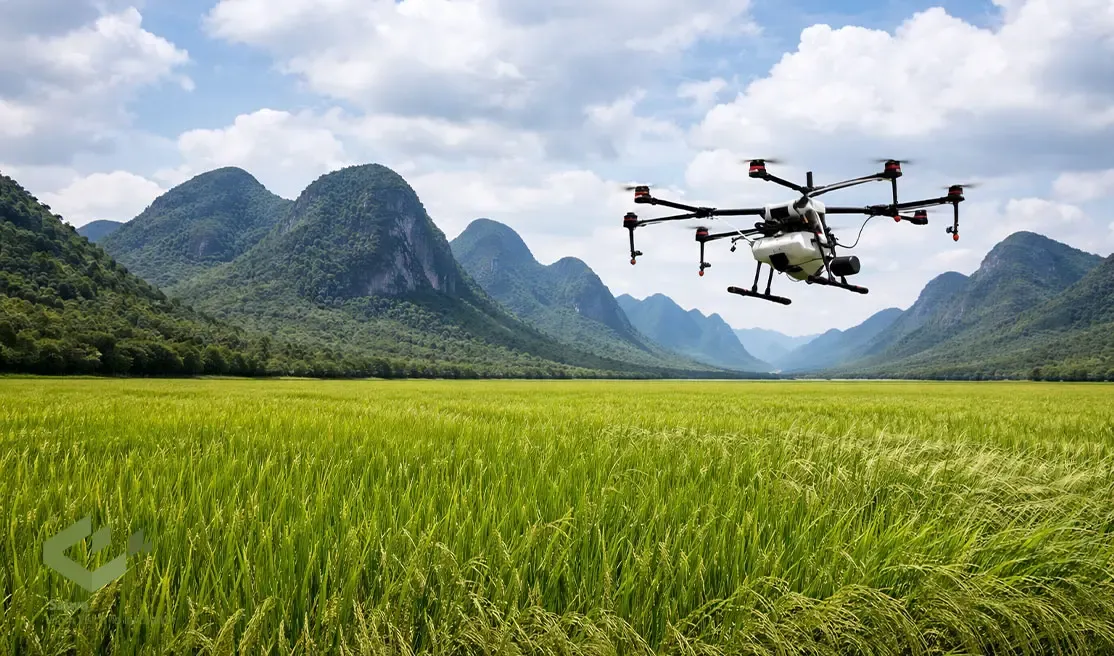
Sairone’s Solution for Smart Pest Detection and Crop Protection
Sairone by Saiwa is the culmination of these advanced technologies, delivered through a powerful and intuitive platform. It harnesses high-resolution drone imagery to provide farmers and ecologists with a clear, data-backed view of their fields.
Sairone’s automated analysis engine processes this visual data to deliver precise insights for pest management and overall crop vitality. The platform excels at transforming the complexities of Crop Pest Detection AI into straightforward, actionable reports, empowering users to make timely, informed decisions that boost productivity and enhance ecological stewardship.
Conclusion
The integration of AI into agriculture is no longer a futuristic promise; it is a practical, field-proven reality. By shifting from manual inspections to automated, intelligent analysis, these tools empower growers to protect their crops with unparalleled precision. This technological leap secures yields and paves the way for a more sustainable and efficient future in farming.
Note: Some visuals on this blog post were generated using AI tools.
Comments
No comments yet!
Table of Contents
No headings were found on this page.