



Revolutionizing Agriculture: AI-Powered Crop Health Monitoring
Monitor crop health in real time, detecting diseases early and improving yield through AI-driven insights.
Written by Amirhossein
Reviewed by Boshra
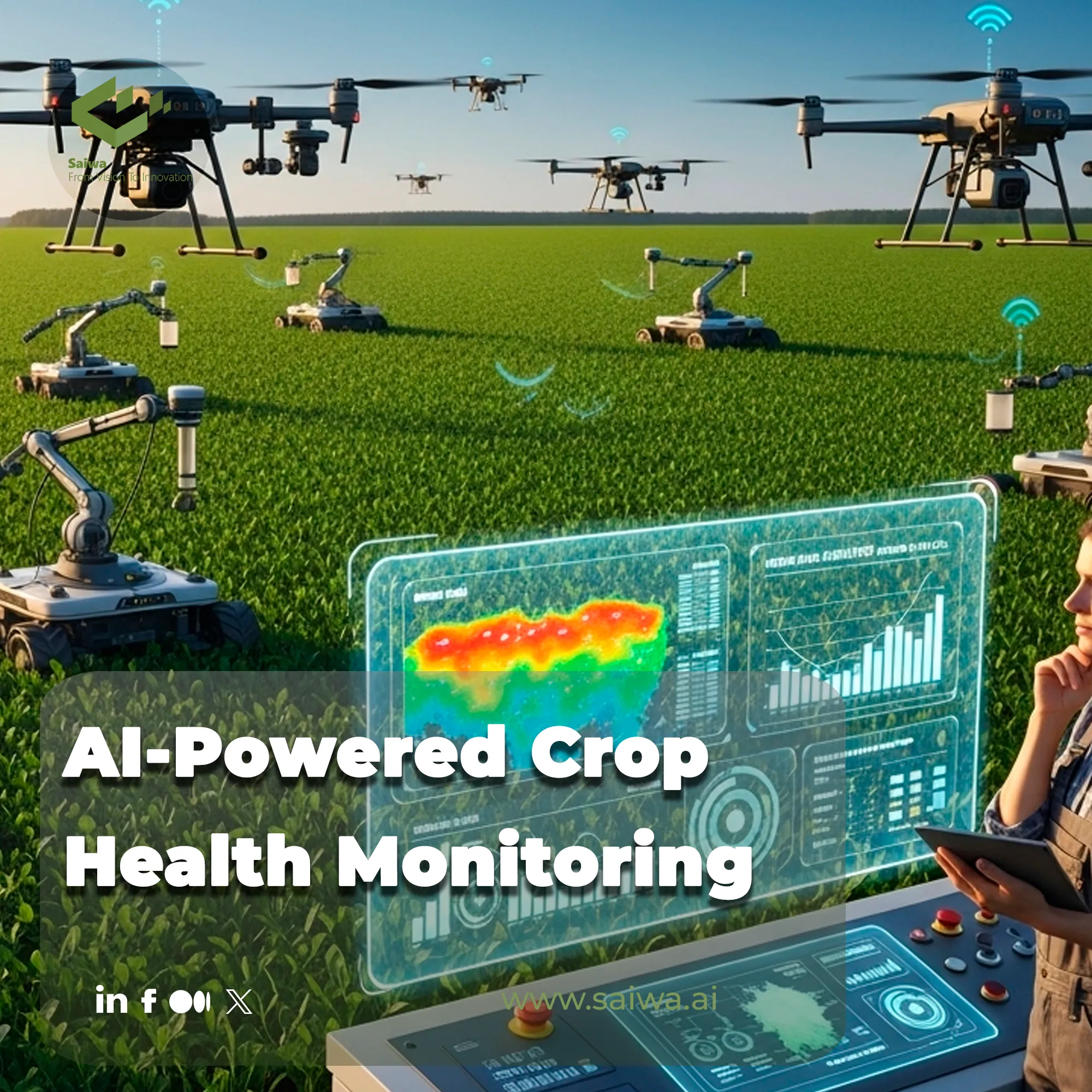
Agriculture is rapidly transforming to sustainably feed a growing global population. Traditional monitoring of vast farmlands is inefficient, delaying responses to diseases and pests. This is where Crop health monitoring using AI offers a data-driven solution to optimize yields and reduce waste. At Sairone, we lead this revolution, using advanced AI to convert complex agricultural data into actionable insights. This article explores how AI is reshaping farming for a healthier, more productive future.

Beyond the Visible: AI's Role in Crop Health Monitoring
Artificial intelligence provides insights that go far beyond what the human eye can see. By analyzing various forms of data, AI systems can detect subtle changes in plant health long before they become visible problems.
Spectral Insights
Spectral imaging allows us to see the chemical composition of plants. AI algorithms analyze this data to identify nutrient deficiencies or stress factors that are invisible in normal light, enabling early and precise interventions.
Remote Sensing with Drones and Satellites
Drones and satellites with high-resolution cameras capture detailed field imagery. AI models then process these images to identify patterns of crop health, water stress, or pest infestations over large areas. This provides a comprehensive overview, helping farmers manage resources effectively.
Hyperspectral Imaging
Hyperspectral imaging advances remote sensing by capturing data from hundreds of narrow spectral bands. This creates a detailed "fingerprint" for each pixel, revealing subtle variations in plant physiology. AI models trained on these rich datasets can distinguish between crop species, identify specific diseases, and assess fruit ripeness with incredible accuracy, revolutionizing plant health monitoring.
Real-Time Diagnostics: AI-Powered Disease Detection
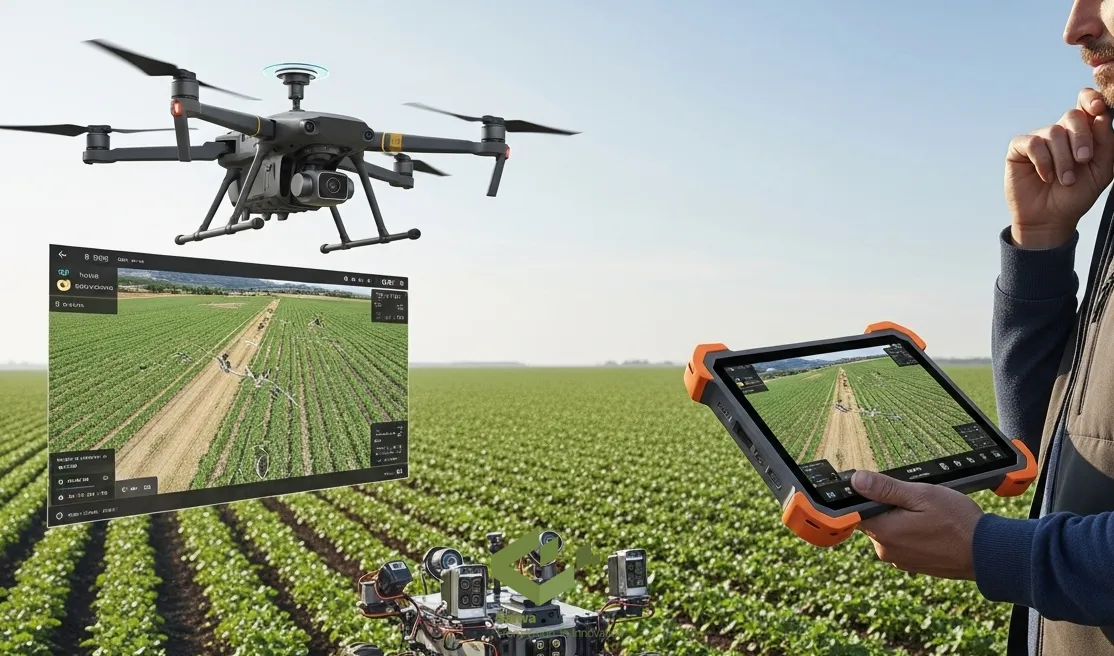
Early disease detection is critical for preventing widespread crop loss. AI-powered diagnostic tools offer a rapid, reliable way to identify pathogens before they can spread.
Computer Vision for Leaf and Stem Analysis
AI-powered computer vision analyzes leaf and stem images for visual symptoms of disease. These systems detect subtle changes in color, texture, and shape indicating a pathogen, allowing for early diagnosis and targeted treatment, which reduces broad-spectrum pesticide use.
Machine Learning Models for Pattern Recognition
Machine learning models train on vast plant image datasets, learning to recognize unique patterns associated with different diseases. This enables the models to diagnose crop health issues accurately. These powerful tools for weed detection can even predict potential outbreaks from environmental data.
Turning Detection Into Action
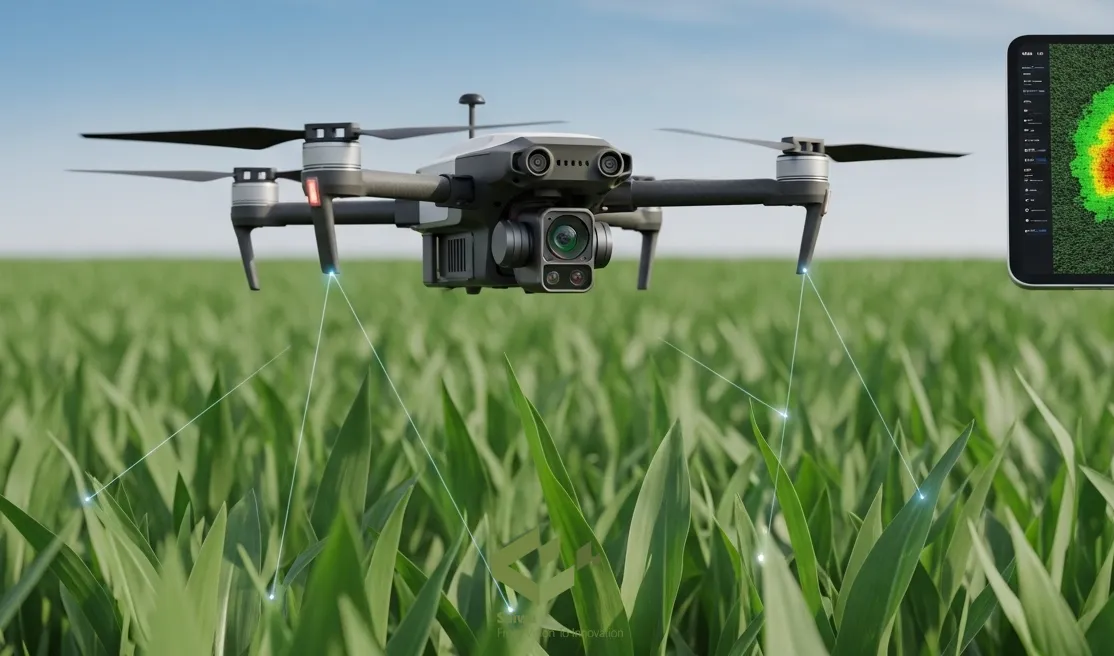
AI-powered crop health monitoring delivers the most value when early signals are converted into verified management decisions rather than stored as raw imagery.
That is especially important in large-scale farming, where the real objective is not only to spot stress early, but to decide where to scout, what to treat, and how to avoid unnecessary input use.
Why validation still matters
Advanced imaging can detect subtle plant changes before symptoms are visible to the human eye, particularly when hyperspectral sensing is used to capture hundreds of contiguous spectral bands.
However, research reviews also show that reliable disease detection depends on more than model accuracy alone; it depends on well-curated training data, biologically informed interpretation, and careful validation under field conditions.
This is a critical point for professional growers and ag-service providers. A stress signature may indicate disease, but it can also overlap with nutrient deficiency, water stress, or other physiological changes if the model is not validated properly.
“Computer vision can reduce labour costs, prevent misdiagnosis of disease, and prevent misapplication of pesticides.”
A practical workflow
A field-ready crop health monitoring program should follow a simple operational sequence:
Capture routine aerial imagery across the field to establish a baseline for canopy condition and seasonal change.
Use AI to flag abnormal zones with plant health indices such as NDVI or VARI, instead of treating the entire field as equally affected.
Ground-check selected hotspots to separate likely disease pressure from nutrient imbalance, irrigation issues, or non-pathogenic stress.
Convert verified problem areas into treatment plans and export prescription maps for spray drones or precision sprayers using formats such as shapefiles or KML.
Re-monitor the same zones through the season using dashboards, localized alerts, and a growing-season timeline to measure whether the intervention actually worked.
This workflow improves decision quality because it connects detection, validation, and follow-up in one continuous system.
Choosing the right sensor
Sensor layer | Best use case |
RGB imaging | Best for visible symptoms on leaves and stems, including changes in color, texture, and shape that computer vision can classify efficiently. |
Multispectral imaging | Best for routine field-scale stress zoning and vegetation-index mapping when growers need broad coverage and actionable crop health layers. |
Hyperspectral imaging | Best for advanced diagnostics where subtle physiological differences matter, because it captures dense spectral information that can reveal early disease signals before obvious symptoms appear. |
Why this improves outcomes
The operational advantage of AI monitoring is not just earlier detection. It is earlier detection with enough structure to support precise scouting, more defensible treatment decisions, and better documentation across the season.
For farm managers and precision agriculture providers, that translates into faster response, lower risk of blanket spraying, and a clearer record of how crop health changed from first alert to post-treatment review.
Precision Agriculture: Tailored Interventions for Optimal Growth
Precision agriculture uses AI-driven insights to tailor farming practices to the specific needs of different areas within a field. This proactive approach, a core benefit of Crop health monitoring using AI, optimizes resource use and improves overall efficiency. The following are some key applications:
Smart Irrigation and Water Management: AI systems analyze soil moisture data and weather forecasts to determine the precise amount of water each section of a field needs.
Fertilizer Optimization: By identifying nutrient deficiencies at a granular level, AI enables targeted fertilizer application, reducing waste and environmental runoff.
Targeted Pest Control: AI-powered drones can identify and spray only the areas affected by pests, minimizing pesticide use and protecting beneficial insects.
Growth Stage Monitoring: AI tracks the growth stages of crops, helping farmers time interventions like fertilization and harvesting for optimal results.
Sairone’s Role in Advancing AI-Driven Crop Health Monitoring for Smarter Farming Decisions
Our Sairone platform empowers farmers with AI’s full potential, integrating drone imagery with advanced machine learning. It automates high-resolution image analysis, delivering actionable insights for Crop yield estimation, pest detection, and overall health assessment.
By turning complex data into clear guidance, Sairone helps farmers save time, reduce costs, and make smarter, data-driven decisions for enhanced productivity and sustainability. Discover how Sairone can revolutionize your farming operations.
Conclusion
The integration of artificial intelligence into agriculture marks a pivotal shift towards more efficient and sustainable farming. From early disease detection to precision resource management, the applications of Crop health monitoring using AI provide unprecedented insights. As we continue to innovate, solutions like Sairone will be crucial in shaping a future where technology helps us meet the world's growing food demand securely and responsibly.
Note: Some visuals on this blog post were generated using AI tools.
Comments
No comments yet!
Table of Contents
No headings were found on this page.