



Environmental Benefits of AI-Driven Weed Detection and Precision Control
Environmental Benefits of AI-Driven Weed Detection and Precision Control
Written by Amirhossein
Reviewed by Boshra

The Environmental Cost of Conventional Weed Management
Broadcast Spraying, Herbicide Overuse, and Soil Contamination
Conventional agricultural practices rely heavily on uniform, whole-field herbicide applications to manage weed populations. This broadcast spraying approach assumes an even distribution of weeds across agricultural plots, a premise that contradicts the natural patchy spatial distribution of most weed species. Consequently, vast quantities of chemical herbicides are applied to bare soil or weed-free crop areas. The excess chemicals inevitably leach into the soil profile, altering microbial communities and degrading soil health.
When herbicides are applied indiscriminately, only a fraction of the active ingredients reaches the intended target plants. The remaining chemicals are subject to environmental transport mechanisms, including surface runoff and groundwater leaching, contaminating adjacent aquatic ecosystems. This persistent chemical load disrupts local biodiversity, particularly affecting non-target flora and beneficial insect populations. Transitioning away from whole-field applications is a fundamental requirement for mitigating the ecotoxicological impacts of modern farming.
Herbicide Resistance as an Ecological and Agronomic Threat
The continuous and uniform application of specific herbicide modes of action exerts immense selection pressure on weed populations. Over successive growing seasons, this pressure accelerates the evolution of herbicide-resistant weed biotypes. As weeds develop physiological or target-site resistance mechanisms, agronomists often respond by increasing chemical application rates or applying complex, highly toxic herbicide mixtures to achieve acceptable control.
This escalating chemical arms race fundamentally threatens both agricultural sustainability and ecological balance. Higher chemical volumes exacerbate the environmental contamination cycle, while the unchecked proliferation of resistant weeds outcompetes native vegetation and cash crops for resources. Breaking this cycle requires a shift from uniform chemical dependence to highly targeted intervention strategies that minimize selection pressure and drastically reduce the total volume of active ingredients introduced into the environment.
Site-Specific Weed Management as the Precision Alternative
Patch-Level Detection and Decision Algorithms
Site-Specific Weed Management (SSWM) operates on the principle that interventions should only occur where weed thresholds exceed economic or ecological tolerance levels. By utilizing advanced algorithms, SSWM systems divide agricultural fields into spatial grids or management zones, analyzing the specific weed density within each sector. Decision algorithms process this spatial data to determine the optimal intervention strategy, ranging from variable-rate chemical application to mechanical removal.
These algorithms rely heavily on accurate spatial mapping and real-time processing capabilities. Instead of treating a field as a single homogeneous unit, the system evaluates patch-level dynamics. This localized approach allows for precise targeting, ensuring that control measures are applied exclusively to weed-infested zones, thereby establishing a data-driven foundation for sustainable field management.
Herbicide Savings and Reduction in Chemical Load
The implementation of SSWM through precision targeting yields substantial reductions in total herbicide consumption. Field studies indicate that targeted spraying systems can reduce herbicide usage by 50% to 90%, depending on the weed species' distribution and the specific crop environment. By actuating spray nozzles only when a weed is positively identified, precision systems prevent chemical deposition on bare soil and healthy crops.
This drastic reduction in chemical load carries profound environmental benefits. Lower application volumes translate directly to reduced chemical runoff into riparian zones and lower residual toxicity in the soil. Furthermore, precision applications allow for the use of contact herbicides in highly localized doses, reducing the reliance on systemic, residual chemicals that persist in the environment for extended periods.
Camera-Guided Hoeing and Non-Chemical Mechanical Precision
While precision spraying reduces chemical use, camera-guided mechanical weeding entirely eliminates the need for herbicides in specific management zones. These non-chemical systems utilize real-time imaging to differentiate between crop rows and weed patches. Actuators then guide mechanical hoes or blades through the inter-row spaces, physically uprooting weeds without disturbing the established crop.
The ecological gain of mechanical precision is twofold: it provides immediate physical control of herbicide-resistant biotypes and preserves soil health by avoiding chemical contamination. Modern camera-guided implements operate at high speeds, making non-chemical weed management economically viable for large-scale operations while maintaining rigorous environmental stewardship standards.
Sensor Technologies Enabling Accurate Field-Level Weed Detection
Imaging Technologies That Enable Precise Weed Detection
Accurate weed detection depends on high-fidelity sensor arrays capable of capturing detailed agronomic data under varying field conditions. RGB (Red, Green, Blue) cameras are widely deployed for their high spatial resolution, which is essential for analyzing leaf morphology, texture, and structural features. However, traditional RGB sensors often struggle in complex environments with overlapping foliage or varying illumination.
To overcome these limitations, multispectral and hyperspectral sensors are integrated into detection platforms. These sensors capture reflectance data across the electromagnetic spectrum, particularly in the near-infrared (NIR) bands. Since weeds and crops often exhibit distinct spectral signatures—driven by differences in chlorophyll content and internal leaf structure—multispectral imaging enables highly accurate differentiation even when morphological characteristics are visually similar.
Deep Learning Architectures for Real-Time Crop-Weed Differentiation
The raw data captured by imaging sensors requires sophisticated processing to yield actionable agronomic insights. Deep learning architectures, specifically Convolutional Neural Networks (CNNs), have emerged as the standard for classifying and segmenting crop and weed imagery. Models such as YOLO (You Only Look Once) and Mask R-CNN are trained on massive datasets of annotated agricultural images, allowing them to recognize complex patterns and subtle phenotypic differences.
These architectures process sensor data in real-time or near-real-time, enabling on-the-go decision-making for autonomous machinery. By extracting feature maps from the input imagery, deep learning models can accurately delineate weed boundaries from the background soil and adjacent crops. This high-speed differentiation is the computational engine that makes precise, localized interventions possible on a commercial scale.

UAV and Drone-Integrated AI for Landscape-Scale Weed Surveillance
Drone Imaging Workflows and Machine Learning Detection Models
Unmanned Aerial Vehicles (UAVs) provide a rapid, non-destructive method for acquiring high-resolution spatial data across extensive agricultural landscapes. The standard drone imaging workflow involves flying a pre-programmed grid over a target area, capturing hundreds of overlapping images. These images are then stitched together using photogrammetry software to create highly detailed orthomosaics.
Once the orthomosaics are generated, machine learning detection models ingest the geospatial data to identify and map weed infestations. Unlike ground-based sensors, drones offer a macro-level perspective, identifying the leading edges of invasive weed spread before they establish dense populations. This early detection capability is critical for implementing targeted control measures before widespread chemical intervention becomes necessary.
Riparian Zone Monitoring and Community-Scaled Weed Mapping
Drones equipped with AI detection models are particularly effective in sensitive ecological areas where ground access is limited or mechanically destructive. Riparian zones—the interfaces between land and rivers—are highly susceptible to weed invasions and highly sensitive to herbicide runoff. UAVs allow conservationists to monitor these fragile ecosystems safely, mapping invasive species without disturbing the habitat.
Community-scaled mapping initiatives leverage this technology to coordinate regional weed management strategies. By sharing AI-processed spatial data across property boundaries, land managers can track the trajectory of invasive plants and apply targeted treatments. This collaborative, landscape-scale approach prevents localized weed outbreaks from becoming regional ecological disasters, ensuring efficient resource allocation and minimal environmental impact.
Environmental Outcomes of AI-Based Weed Detection Across Diverse Ecosystems
Eurasian Watermilfoil Detection, Extent Mapping, and Treatment Monitoring
The application of AI-driven weed detection extends beyond terrestrial agriculture into aquatic ecosystems. Invasive aquatic plants, such as Eurasian watermilfoil, severely disrupt native aquatic biodiversity, alter water chemistry, and impede hydrological flow. Traditional monitoring methods rely on labor-intensive physical surveys, which are often inaccurate and spatially limited.
By deploying UAVs combined with specialized computer vision algorithms, researchers can map the exact extent of Eurasian watermilfoil canopies just below the water surface. These AI models classify aquatic vegetation based on textural and spectral features, generating precise density maps. This capability allows environmental agencies to monitor the efficacy of specific localized treatments over time, ensuring that control measures are actually degrading the invasive biomass without harming native aquatic flora.
Monitoring Aquatic Weed Spread and Supporting Targeted Intervention
Continuous monitoring of aquatic environments using AI platforms provides dynamic data on the expansion or contraction of weed populations. As aquatic weeds propagate through fragmentation, early detection of new colonies is critical. AI-processed spatial maps highlight these nascent infestations, enabling rapid, targeted interventions.
Whether the intervention involves localized biological control, mechanical harvesting, or highly restricted chemical application, the precision afforded by AI mapping ensures that the surrounding water body remains undisturbed. This targeted methodology prevents the severe ecological shocks associated with whole-lake chemical treatments, preserving water quality and maintaining the delicate balance of the aquatic food web.
Intelligent Mechanical Weeding — Robotics, Actuation, and Ecological Gain
Intra-Row and Inter-Row Robotic Weeding Systems
The physical removal of weeds requires distinct engineering approaches depending on the weeds' proximity to the crop. Inter-row weeding targets the space between crop rows and is relatively straightforward to automate. However, intra-row weeding—removing weeds growing directly next to or between individual crop plants—presents a complex mechanical challenge.
Intelligent robotic systems utilize deep learning vision modules to continuously track the crop row and identify the exact coordinates of intra-row weeds. By operating within millimeter tolerances, these robotic platforms successfully navigate the highly constrained space around the crop stem, applying mechanical force only where necessary to dislodge the weed root system.
End Effector Design, Vision-Guided Actuation, and Crop-Safe Precision
The success of robotic weeding heavily relies on the design of the end effector (the physical tool interacting with the soil) and its integration with vision-guided actuation mechanisms. End effectors range from active rotary blades to passive cutting knives, designed to slice through roots or uproot plants with minimal soil disturbance.
Vision-guided actuation systems process camera feeds to adjust the lateral and vertical positioning of the end effectors in real-time. This dynamic adjustment compensates for uneven terrain and irregular crop spacing. The resulting crop-safe precision ensures that mechanical weeding can match or exceed the efficacy of chemical herbicides, providing a robust, non-toxic alternative for sustainable agricultural production.
References (6)
About the team
Continue reading

Weed Management in Wheat - Cultural, Mechanical, and AI-Driven Synergies
Weed management is a major challenge in wheat production because weeds compete with crops for vital resources such as water, sunlight and nu

Crop Scouting Tools Every Farmer Should Use
The agricultural sector is undergoing a critical transformation, shifting from intuition-based practices to data-driven strategies to meet g

AI in Horticulture | Transforming Plant Cultivation and Sustainability
Horticulture, the cultivation of plants and landscapes, requires knowledge of plant biology, soil science, and environmental management. As
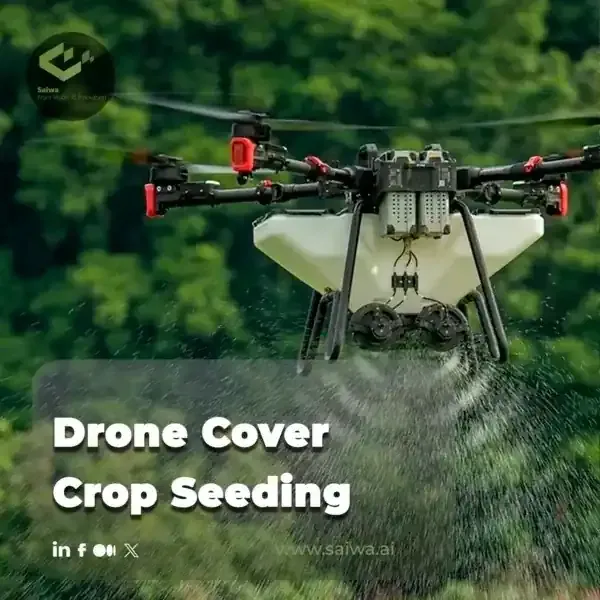
Drone Cover Crop Seeding | A Comprehensive Guide
Drone cover crop seeding is an innovative agricultural technique that leverages unmanned aerial vehicles (UAVs) to distribute cover crop see

How to Increase Wheat Crop Yield - Modern Methods for Higher Output
What Does It Mean to Increase Wheat Crop Yield?Increasing wheat yield means sustainably maximizing grain output per unit of land a vital goa

Farming Drones for Crop Monitoring | Transforming Precision Agriculture
The global agricultural landscape is undergoing a technological revolution, driven by the need for increased efficiency, sustainability, and
Comments
Be the first to share your thoughts
No comments yet
Start the conversation by sharing your thoughts
Share this article
Help others discover this content
Table of Contents
No headings were found on this page.