All projectsDelivered

Automatic Pine Cone Pollination Bag Counting Using Drones

In early 2025, Saiwa and Airwyse collaborated to automate counting of pollination bags in pine orchards using autonomous drones and AI-driven image analysis. This innovative solution replaced labor-intensive manual counting, improving accuracy and efficiency in yield prediction. Tested on 44 pine trees, the system demonstrated promising results, paving the way for scalable orchard management automation.

Ordered byAirwyse
Timeline
Mar 2025 – May 2025
Platform
Country

Overview

In March 2025, we partnered with Airwyse, an innovator in autonomous drone technology, to address a critical challenge in yield prediction for pine orchards. The initiative aimed to automate the counting process of pollination indicators—originally pine cones, later adapted to pollination bags—to support more accurate forecasting of harvest yield.

Problem Statement

The client manages pine orchards where selective pollination is performed using pollination bags. Traditionally, the team manually counts these bags at various growth stages to estimate end-of-season yield—a labor-intensive and time-consuming task, especially as visibility and accessibility of cones and bags on tall pine trees pose significant difficulties.

Project Goal

To develop and deploy a solution that automates the counting of pollination bags in pine orchards using aerial imagery captured by autonomous drones, thereby increasing efficiency, accuracy, and scalability of yield estimation.

airways_1.png

Solution

Airwyse deployed autonomous drones capable of navigating through the pine orchard and capturing high-resolution images of the treetops. Saiwa contributed its expertise in computer vision and deep learning by developing an advanced tracking and counting algorithm tailored to detect and count pollination bags in the collected imagery.

Originally planned for pine cone detection, the scope of the algorithm was later adjusted to detect pollination bags, which are more visible and representative for tracking pollinated groups.

airways_2.png

Outcome

The collaborative system was successfully tested on a sample of 44 pine trees, achieving acceptable accuracy in pollination bag counting and operating with efficient time complexity. This proof of concept validated the potential of drone-based automation in orchard management and opened up opportunities for future scaling and refinement.

airways_3.png

Share this project

Help others discover this work
Related Projects

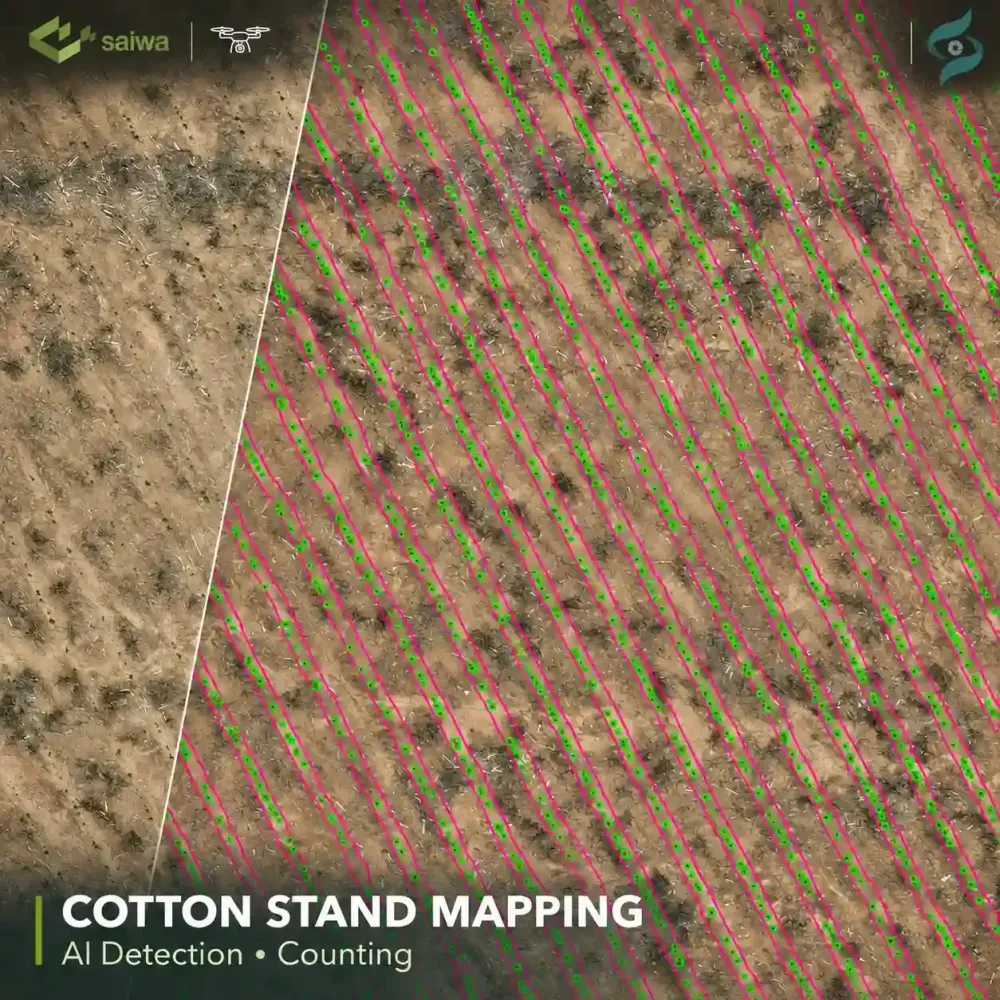
  • Drone-Based Cotton Stand Detection, Counting, and Mapping for Precision Agriculture
    Discover how Saiwa developed an AI-powered solution that detects and counts individual cotton plants from drone imagery, maps their locations, and generates John Deere Operations Center-compatible outputs to support automated weed management in cotton fields.
  • AI-Powered Tree Identification & Counting from Drone Imagery
    Saiwa collaborated with Windward Drones to develop an AI-powered solution that automatically identifies, counts, and maps individual trees from high-resolution drone imagery. By combining advanced computer vision with aerial data collection, the system transforms thousands of images into accurate, geo-referenced forestry insights in just minutes. The solution helps forestry professionals, landowners, and environmental organizations streamline inventory management, monitor large landscapes more efficiently, and make faster, data-driven decisions with detailed visual reports and spatial analytics.
  • Seedling Detection and Empty Cavity Counting
    GreenTech Projects partnered with Saiwa to develop an AI-powered computer vision workflow for automated seedling tray analysis using drone imagery. The project focused on detecting and localizing seedling blocks, identifying empty cavities within propagation trays, and improving the speed and consistency of nursery monitoring operations. By combining aerial imagery with machine learning–based image analysis, the project demonstrated the potential of automated nursery assessment for large-scale propagation environments. The solution utilized RGB drone imagery collected over seedling fields and propagation areas. Saiwa developed and trained custom machine learning models capable of identifying tray structures and detecting empty cells across nursery blocks. The project was successfully completed and validated the feasibility of applying AI-based image processing to greenhouse and nursery production workflows
  • Automatic Purple Loosestrife Detection with AI-Powered Semantic Segmentation
    Discover how Saiwa built a custom computer vision model that automatically detects and maps Purple Loosestrife infestations from high-resolution aerial imagery, deployed as an operational service on Sairone.
  • Molecular and Machine Learning-Based Monitoring of Fusarium Dry Rot in Potatoes
    The project introduces a groundbreaking solution to combat Fusarium dry rot, a major issue for potato producers in Alberta, causing millions in annual losses. The solution combines two advanced technologies: eDNA monitoring to track Fusarium spore populations and AI-powered wounding detection to identify mechanical damage during harvest. With industry partnerships, the project aims to develop species-specific Fusarium detection kits, integrate real-time monitoring, and reduce storage waste. By providing predictive insights, the project seeks to improve storage yield retention and offer proactive disease management tools to producers.
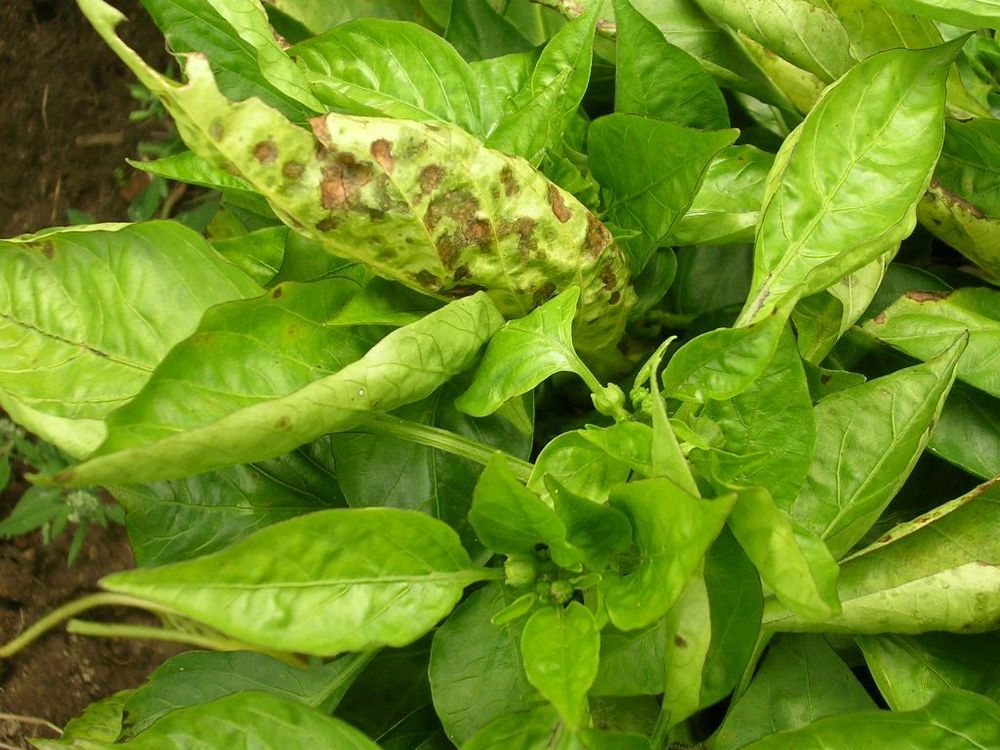
  • Aerial Monitoring of Plant Stress in Greenhouse Grown Seedlings and High-Wire Sweet Pepper
    In partnership with Vineland Research and Innovation Centre and with funding support from the Ontario Centre of Innovation (OCI), Saiwa is developing an advanced computer vision and AI-powered platform for early stress detection in greenhouse-grown sweet peppers. This project replaces an earlier cucumber-focused initiative and targets sweet pepper crops—another economically significant greenhouse product in Ontario. By leveraging drone and robotic imagery acquisition, alongside real-time deep learning models, this initiative aims to reduce losses from disease, optimize intervention timing, and improve crop yield and quality.