
Anomaly Detection
Mar 2, 2022
Aug 24, 2026
Written by: Amirhossein Komeili
Written by: Amirhossein Komeili
Anomaly Detection addresses the challenging problem of detecting automatically exceptions or defects in a background image, i.e. identifying rare cases that differ from the typical cases that make up the majority of a dataset. Here, we investigated several types of Surface Defects and will add more and more anomalies in future. Multiple classification and segmentation deep networks are employed for each case and dataset. Please note that the training process was supervised now and the service has to be tested by images and defects similar to the ones in the dataset. Currently, 15 different datasets and their corresponding surface defect detection algorithm is ready for try. These datasets cover defect on surfaces like: Metal, Steel, Polymer and Texture. You may try the algorithms freely by our simple UI on your own images and in case of interest, you may leave us a customization request to retrain the networks on your specific dataset or other type of surfaces and defects. saiwa Anomaly Detection service provides the following features: • Detecting multiple anomaly types using one single interface • Covering 15 different datasets of various defects on Metal, Steel, Polymer and Texture surfaces • Providing state-of-the-art recent deep learning based methods for each dataset • Multiple classification and segmentation deep networks • Preview samples of defects of each dataset • Image aggregation to apply the algorithm on several images at once • Preview and download the results • Exporting and archiving the results in user cloud space or locally • Service customization by saiwa© team using “Request for customization” option https://cms.saiwa.ai/uploads/Defect_Detection_1080_Link_Cover1_0f9e22ec0d.m4v
Note: Some visuals on this blog post were generated using AI tools.

Over half of AI development projects struggle with unclear objectives and poorly defined success metrics which later on leads to wasted reso
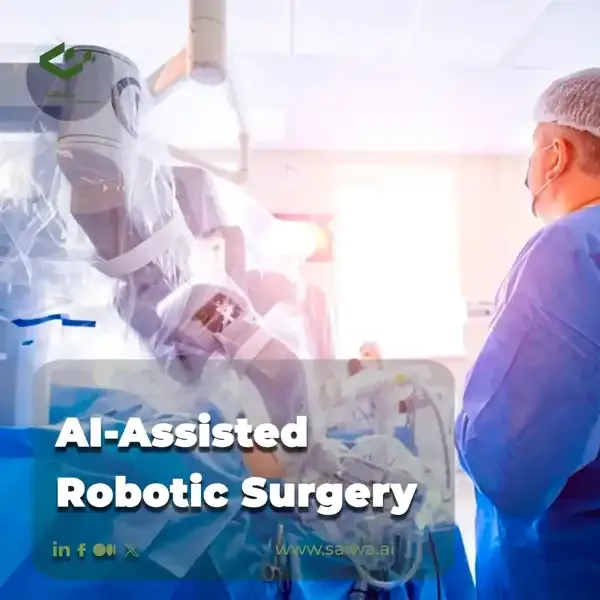
The field of robotic surgery has experienced remarkable advancements in recent years, driven by the integration of artificial intelligence (

Bringing a new drug to market is an enormously complex and expensive process, often taking over a decade and costing upwards of $2 billion.

Artificial intelligence (AI) is rapidly transforming our world, driving innovation across various domains. As we enter 2024, several key tre

Many organizations that have made the decision to deploy artificial intelligence have encountered many problems along the way. These include

Quality control, a critical aspect of any manufacturing process, has undergone significant transformation over the years. From manual inspec
Be the first to share your thoughts
Start the conversation by sharing your thoughts
Share this article
Help others discover this content
Get expert insights, product news, and industry trends delivered straight to your inbox.
No spam, unsubscribe anytime. We respect your privacy.