



How to Accurately Estimate Corn Yield: Methods, Technologies, and Tips for Farmers
Estimate corn yield accurately using advanced technology, data analytics, and precision farming techniques.
Written by Amirhossein
Reviewed by Boshra
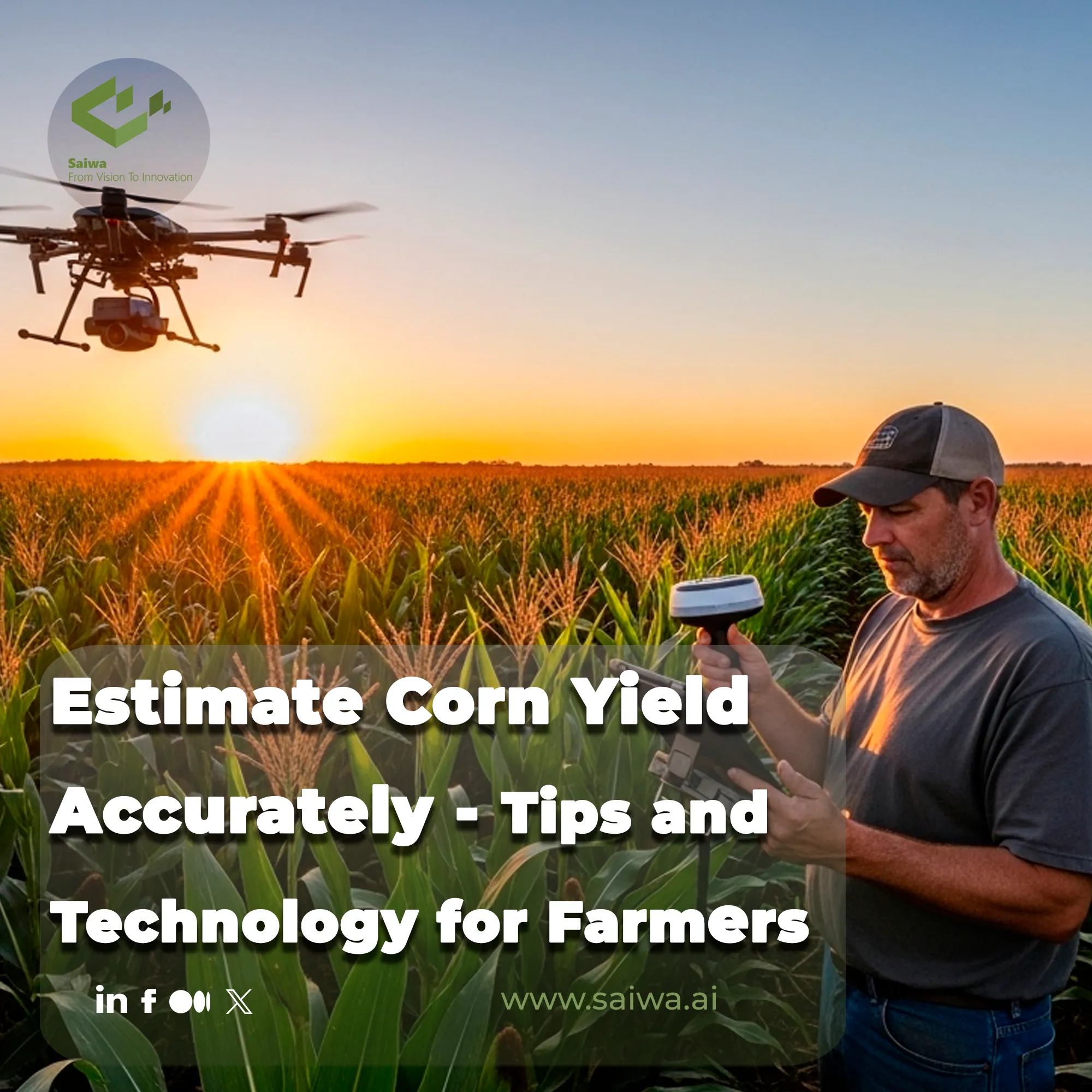
Modern growers face more uncertainty than ever, from shifting weather patterns to rising input costs. Estimating corn yield by sight alone often leaves too much room for guesswork, which can lead to storage shortages, missed marketing opportunities, or poorly timed logistics. Reliable forecasting matters because the entire season’s strategy, from harvest planning to grain contracts, depends on it. Accurate yield insight gives farmers the clarity needed to protect profits and reduce risk.
In this guide, you will learn how experts evaluate yield potential, how traditional methods compare with advanced analytics, and how new technologies such as AI powered drone systems can turn field observations into precise, timely forecasts. This overview will help you gain practical tools and forward looking strategies to improve the accuracy of your corn yield estimates.

Understanding Corn Yield Potential
Corn yield potential is fundamentally determined by three primary factors: the number of ears per acre, the number of kernels per ear, and the final weight of each kernel. While environmental conditions throughout the growing season heavily influence these components, understanding their interplay is the first step toward a reliable forecast. A solid grasp of these variables allows for a more informed assessment when you step into the field.
Common Methods for Estimating Corn Yield
For decades, farmers have relied on manual methods that, while effective, require careful sampling to achieve accuracy. Let’s explore two of the most trusted approaches:
Method 1: Visual Estimation Method: This rapid technique involves a farmer visually assessing a field and using their experience to estimate the yield. It's fast but highly subjective and often lacks precision.
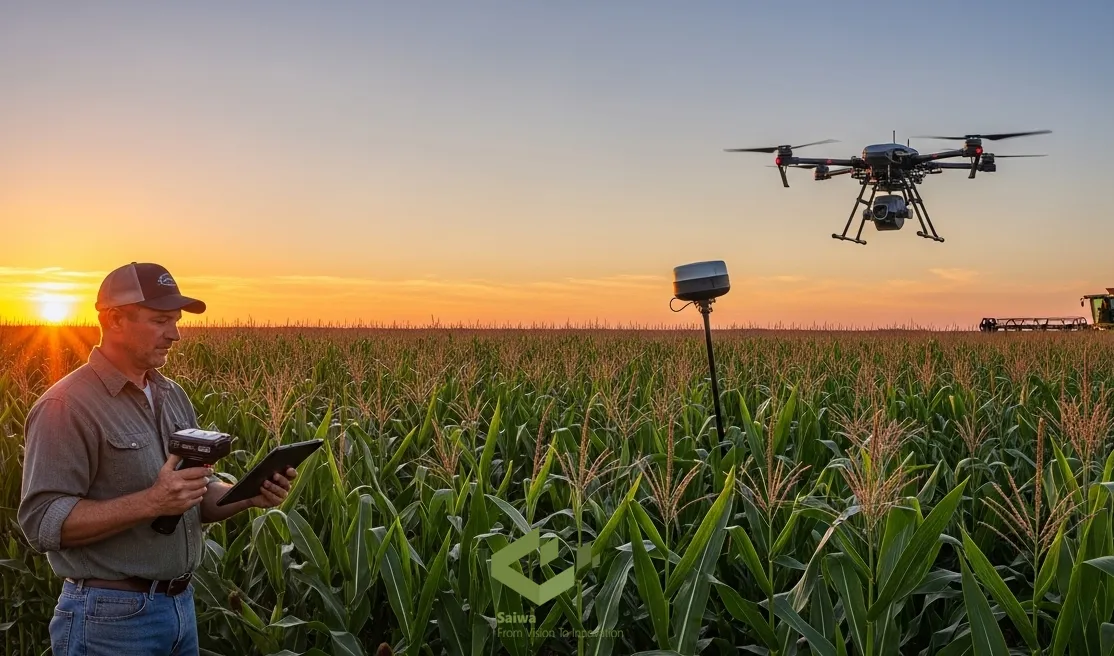
Method 2: Yield Component Method: A more systematic approach, this method is best used at or after the R3 (milk) stage. It involves counting harvestable ears in a measured area (typically 1/1000th of an acre) and then calculating the average kernels per ear to forecast bushels per acre.
Improving Field Accuracy Before You Scale Up
Traditional corn yield estimates are still useful, but only when sampling is done carefully and interpreted with the right level of caution. Purdue Extension notes that the Yield Component Method can be used as early as the R3 milk stage, yet estimates made too early may be overly optimistic if later stress causes kernel abortion or poor grain fill.[4]
That is why experienced growers treat early yield estimates as planning tools, not final answers.
Where manual estimates go wrong
The Yield Component Method is built on sound agronomic logic: ears per acre, kernels per ear, and kernel weight drive final yield.[1][4]
The problem is that the first two are easy to measure in the field, while the third must be estimated with a kernel-weight “fudge factor,” which can vary significantly by hybrid and grain-fill conditions. Purdue reports that kernel counts per 56-pound bushel can range from less than 65,000 to more than 100,000, and can vary by more than 20,000 kernels per bushel for the same hybrid from one year to the next.
That variability is exactly why two fields with similar ear counts can finish very differently at harvest. A late-season drought, nitrogen limitation, or heat stress may reduce kernel depth and final weight even when early reproductive counts looked promising.
A more reliable sampling approach
To improve the accuracy of manual forecasting, growers should sample enough locations to capture field variability rather than relying on one or two strong-looking areas.[4]
Purdue specifically notes that less uniform fields require more samples, because uneven stand establishment, variable soil conditions, or localized stress can skew estimates sharply if sampling is not representative.
A better field routine includes:
Sample multiple zones instead of one central area, especially where soils, drainage, or stand quality differ.
Count only harvestable ears, not dropped ears or severely lodged plants that the combine may not recover.
Exclude aborted tip kernels and obviously abnormal ears unless they fairly represent the area.
Calculate a yield range using multiple kernel-weight factors rather than a single fixed assumption. Purdue recommends running separate estimates using 75, 85, and 95 as the divisor.
Sampling issue | Why it distorts yield estimates | Better practice |
Sampling only the best part of the field | Overstates whole-field potential. | Sample across zones with different vigor, stand density, and drainage. |
Using one kernel factor | Ignores hybrid and grain-fill variability. | Use a yield range with multiple kernel-weight assumptions. |
Counting non-harvestable ears | Inflates potential beyond what the header can recover. | Count only ears likely to make it into the grain tank. |
Estimating too early | Misses later-season stress effects on kernel fill. | Recheck estimates as grain fill progresses. |
Why UAV and AI tools add value
This is where drone-based analytics become more than a convenience. High-resolution UAV multispectral data can improve corn yield prediction by replacing sparse manual samples with field-wide measurements of canopy condition, chlorophyll-related indices, and spatial stress patterns.
In a 2023 study using UAV multispectral data, ensemble machine-learning models achieved  and RMSE of 0.86 Mg ha-1, outperforming individual models and showing how explainable AI can improve both accuracy and trust in corn yield prediction.
For growers, the practical advantage is simple: manual checks remain important, but aerial analytics make those checks more targeted, more representative, and more useful for harvest planning, logistics, and in-season management.
Technologies Driving Accurate Yield Estimation
While manual methods are foundational, technology is revolutionizing the speed and accuracy of yield forecasting. Modern tools offer a far more granular and objective view of crop potential, making it easier than ever to Accurately Estimate Corn Yield. Here's a look at the key technologies leading this change.
Drones and High-Resolution Aerial Imaging
Drones capture detailed aerial images that reveal variations across a field invisible to the naked eye. This high-resolution data provides precise counts and health assessments.
AI and Machine Learning
Artificial intelligence processes vast datasets from drones and other sources to identify patterns. Machine learning models can analyze images for Crop yield estimation with remarkable precision.
Satellite Imagery
Satellites provide a broader view of fields over time. This technology helps monitor large-scale crop health and development trends throughout the entire growing season.
Sairone: AI-Powered Drone Platform for Yield Estimation
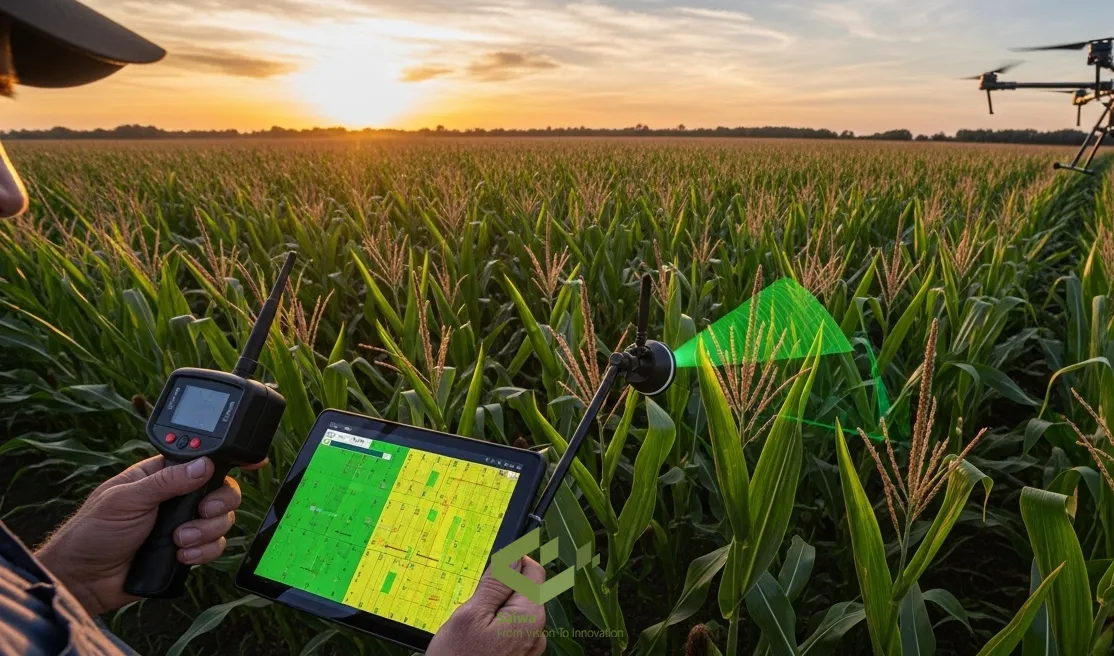
At Saiwa, we built our Sairone platform to harness the power of AI and high-resolution drone imagery. Sairone automates data analysis, turning complex aerial images into actionable insights that go beyond yield prediction, including services for Weed detection and Plant health monitoring. This allows growers to make informed decisions quickly.
How Sairone Helps with Corn Yield Estimation
Sairone’s upcoming Crop yield estimation service will analyze drone-captured data for precise stand counts and overall plant wellness. By integrating this with weather and soil information, it provides a comprehensive and dynamic yield forecast.
Future Trends in Corn Yield Estimation
The field of yield estimation continues to evolve rapidly, driven by technological advancements. Keep an eye on these developments:
AI and Data-Driven Models: Predictive models will become increasingly sophisticated, integrating more data layers for higher accuracy.
Automation and Remote Sensing: Drones and sensors will collect data autonomously, providing real-time insights without manual intervention.
Precision Agriculture: Yield data will seamlessly connect with variable-rate technology to optimize fertilizer and water application.
Conclusion
Accurately estimating corn yield has shifted from a manual, experience based process to a more predictable and data supported practice. By combining field checks, kernel counts, and modern sensing technologies, growers can understand crop potential earlier and react with confidence. Tools like drones, satellite imagery, and machine learning bring a level of visibility that transforms yield forecasting from an uncertain task into a strategic advantage.
From my perspective, the greatest value of AI assisted yield estimation lies in its consistency. Even skilled farmers face natural limitations when evaluating large acreages, but intelligent systems never tire, never overlook subtle changes, and never lose historical context. As platforms like Sairone continue to integrate drone imaging with agronomic data, the industry will gain forecasting tools that feel less like predictions and more like informed decisions. The future is not about replacing farmer judgment, it is about strengthening it with timely, reliable intelligence.
Note: Some visuals on this blog post were generated using AI tools.
References (3)
About the team
Continue reading

Nitrogen Deficiency in Plants | How to Detect and Fix It
Nitrogen is a vital macronutrient that drives plant growth and development, influencing a multitude of characteristics, including the green

Revolutionizing Agriculture | Enhanced Soil Monitoring Using AI Insights
Soil health is critical to functional and productive agricultural systems. Regular monitoring of soil parameters is crucial for high-quality

Revolutionizing Agriculture | A Comprehensive Guide to IoT-Based Irrigation Systems
The global demand for food is projected to increase significantly in the coming decades, placing immense pressure on existing agricultural p
Reducing Herbicide Costs with AI-Driven Weed Maps
Weed Patchiness and the Case for Site-Specific ControlModern agriculture operates on increasingly tight margins, pushing agronomists to opti

Smart Strategies for Managing Goosefoot with AI-Driven Tools
Goosefoot (Chenopodium album), also known as white goosefoot, is a widespread and competitive annual weed that affects agricultural fields a

The Power of Agriculture Drone Images - All You Need to Know
Agricultural drone imagery refers to aerial photos and video captured by drones flying over fields and farms. These bird's-eye views provide
Comments
Be the first to share your thoughts
No comments yet
Start the conversation by sharing your thoughts
Share this article
Help others discover this content
Table of Contents
No headings were found on this page.