



How Much Nitrogen Does Corn Need?
Learn the right amount of nitrogen corn needs for healthy growth. Discover fertilization tips, soil management, and yield optimization
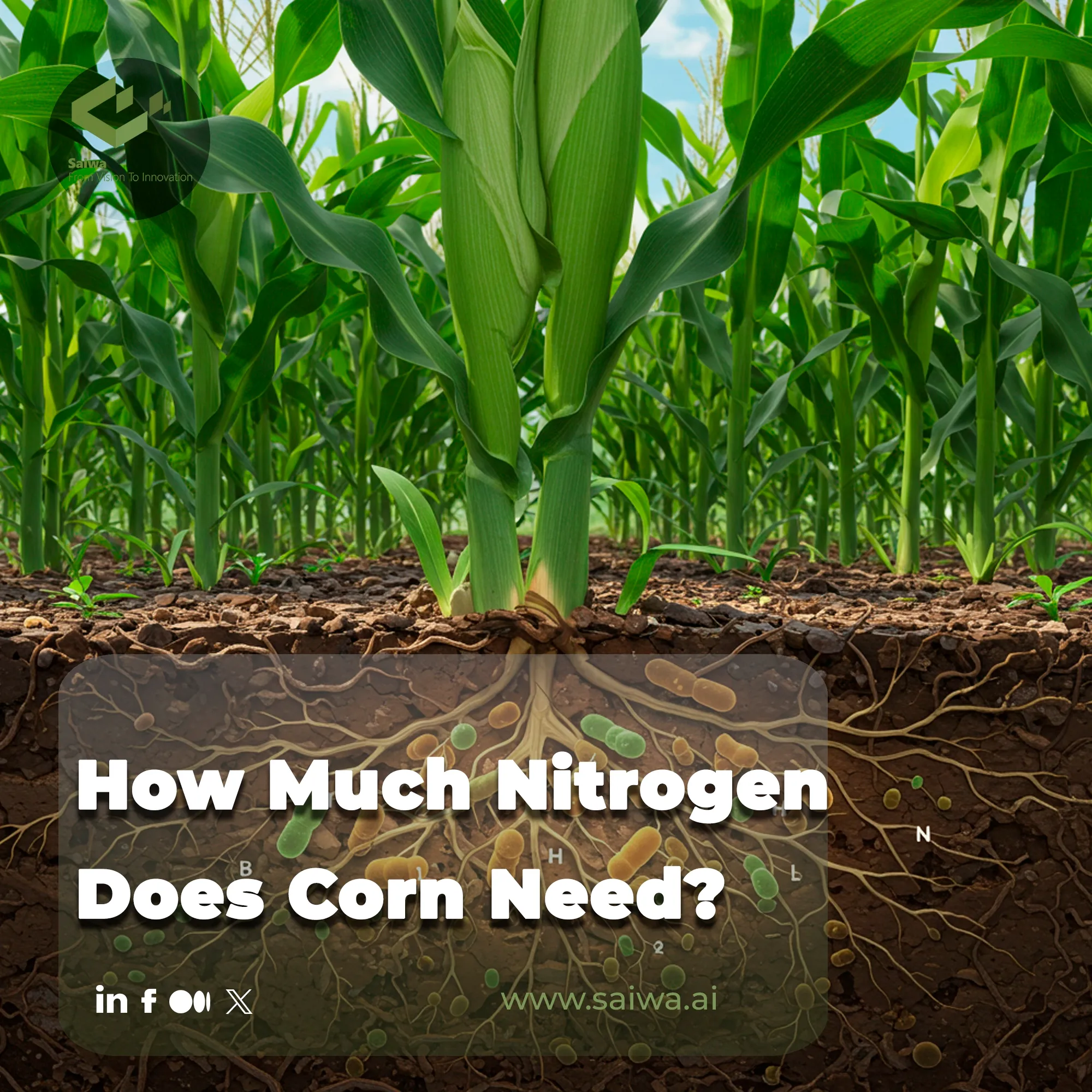
Determining the precise nitrogen requirement for corn is a critical agronomic challenge that extends far beyond traditional, simplified formulas. Over-application is not just a waste of capital but also an environmental hazard, while under-application directly cuts into profitability. The future of effective farming hinges on shifting from static assumptions to dynamic, data-driven nutrient management.
Saiwa’s innovative technologies are at the forefront of this evolution, translating complex field data into actionable intelligence. This guide will explore the key variables dictating nitrogen needs and the advanced tools enabling precision management.

What Affects How Much Nitrogen Corn Needs?
The classic "one-pound-per-bushel" guideline is an insufficient oversimplification. A truly accurate assessment of the corn's need for nitrogen must integrate a host of interconnected, field-specific factors. To fine-tune your strategy, it is essential to consider the distinct variables that collectively determine nutrient demand, as we will explore in the following points:
Target Yield Expectations: This must be a realistic, multi-year average for a specific field, not an optimistic or inflated figure.
Crop Rotation History: Corn planted after soybeans requires significantly less nitrogen than corn planted after another corn crop, due to the nitrogen credit left behind by the legume.
Soil Type and Organic Matter: Sandy soils are prone to nitrogen leaching, while heavier clay soils can lose nitrogen through denitrification. Furthermore, soil organic matter acts as a natural reservoir, mineralizing and releasing nitrogen throughout the growing season.
Manure Application: Any applied manure must be factored in as a significant nitrogen credit, with its nutrient content properly analyzed.
Climate and Weather: Environmental conditions, particularly heavy rainfall, can drastically increase nitrogen loss from the root zone.
How to Set a Practical Nitrogen Strategy for Corn
Corn nitrogen management works best when rate, timing, and field conditions are treated as one system rather than three separate decisions. The current article already explains that yield goals, crop rotation, soil type, manure history, and weather all affect nitrogen demand, and that is exactly why a fixed “one pound of N per bushel” rule is too simple for modern corn production.
A more dependable approach starts with an economic target rate and then adjusts that plan using field evidence during the season. Extension guidance commonly frames this through the Maximum Return to Nitrogen concept, which focuses on the rate most likely to maximize profit rather than simply maximize yield.
Start with the field, not the formula
The first step is to recognize that not all corn fields lose or supply nitrogen the same way. The article correctly notes that corn after soybean usually needs less fertilizer nitrogen than corn after corn, that manure must be credited, and that sandy soils are more prone to leaching while heavier soils may face denitrification losses.
Those factors are not minor adjustments. They are the reason a profitable nitrogen plan should begin with realistic field history and nitrogen credits before any fertilizer is scheduled.
A practical starting framework looks like this:
Set a realistic productivity target based on multi-year field performance, not an optimistic best-case season.
Use a research-based economic rate framework such as MRTN where local guidance is available.
Subtract nitrogen credits from soybeans, manure, or other known sources before finalizing the fertilizer plan.
Leave room for in-season adjustment rather than committing the entire nitrogen budget too early.
Why timing matters as much as total rate
The article already recommends split application, and that is a strong agronomic point. In wet years especially, split nitrogen programs can improve efficiency and reduce the amount of fertilizer needed compared with putting all N out up front.[6]
This matters because nitrogen loss risk changes through the season. Heavy rainfall can move nitrate below the root zone, while dry weather can limit uptake even when nitrogen is still present in the soil.
Pre-sidedress nitrate testing also becomes valuable in this window. Extension guidance identifies the PSNT as a useful tool for measuring how much nitrate is already available before sidedress, helping growers avoid unnecessary application or confirm the need for additional N.
What to watch in the crop
Signal | What it may indicate | Best response |
Yellowing on lower leaves with a V-shaped pattern along the midrib | Classic nitrogen stress symptom in corn because N is mobile and deficiency shows first on older leaves. [9][10] | Confirm with field context, recent weather, and, where possible, tissue or nitrate testing before reacting. [2] |
Uneven canopy greenness across zones | Spatial differences in N supply, moisture, compaction, or root activity. [7] | Use imagery or scouting to isolate zones instead of treating the entire field uniformly. |
Late-season lower leaf firing during drought | Nitrogen remobilization can increase when water stress limits uptake, even if some soil N remains. [11][7] | Distinguish drought-driven stress from true under-fertilization before changing future rates. [11] |
A better decision process
The strongest nitrogen strategy for corn is not built from a single number. It is built from a sequence: start with a research-based base rate, account for crop and manure credits, split the application, test before sidedress when appropriate, and use in-season crop signals to refine the plan.[2][1]
That is also where Sairone fits naturally into the workflow. Its corn and crop-health capabilities support early stress detection, nitrogen-content estimation, geotagged outputs, and map-based recommendations, which can help growers move from broad assumptions to zone-specific nitrogen management.
For professional corn production, the real goal is not simply applying more nitrogen or less nitrogen. It is applying the right amount at the stage and place where the crop can convert that input into profitable yield.
Benefits of Nitrogen for Corn Production
Nitrogen is one of the most important nutrients for growing healthy, high-yield corn. It fuels growth by helping the plant produce chlorophyll, the green pigment that captures sunlight for photosynthesis, and by building essential proteins and enzymes. When corn has an adequate supply of nitrogen, it develops strong stalks, lush green leaves, and larger, fuller ears. In contrast, a nitrogen shortage leads to pale, yellowing leaves and stunted growth, often resulting in smaller harvests. Balanced nitrogen management boosts yield and improves grain quality and overall crop health. By providing corn with the appropriate amount of nitrogen at the optimal time, farmers can maximize their field's potential while safeguarding the soil and the environment.
How to Make Sure Corn Has Enough Nitrogen
To ensure your corn gets enough nitrogen, start by testing the soil before planting to measure the available nutrients. Watch for yellowing of the lower leaves, which is an early sign of deficiency. Use drone or satellite imagery to spot uneven growth. Tissue testing during key stages, such as the V6 stage, helps confirm nutrient levels. Applying nitrogen in split doses, part at planting and part later, improves efficiency and reduces losses. Modern tools like Sairone use AI and remote sensing to analyze soil, weather, and crop data. This helps farmers deliver precise amounts of nitrogen for healthier plants, higher yields, and reduced environmental impact.
Tools and Technologies for Estimating Nitrogen in Cornfields
Fortunately, modern agriculture offers a sophisticated toolkit to move beyond guesswork. By leveraging precise measurements and analytics, these technologies empower growers to make informed, timely decisions. Here's a closer look at the key innovations shaping modern plant health monitoring and nutrient management.
Soil Nitrate Testing Methods
Direct measurement remains fundamental. Pre-Sidedress Nitrate Tests (PSNT) or deep soil sampling before planting provide a clear baseline of the nitrogen already available in the soil, preventing unnecessary fertilizer application.
Sensor-Based Nitrogen Management
Handheld or tractor-mounted optical sensors (e.g., NDVI sensors) can assess the nitrogen in plants status of the crop in real-time. Research shows the V6 to V8 growth stage is a critical window where sensor readings correlate strongly with final yield, guiding precise in-season fertilizer adjustments.
Satellite and Aerial Imagery with Multispectral/Hyperspectral Analysis
Drone and satellite platforms equipped with advanced cameras capture data from across the light spectrum, revealing subtle variations in crop health and nitrogen stress that are invisible to the naked eye. This allows for creating variable-rate application maps.
Machine Learning and Ensemble Decision Tools
This is where true optimization begins. AI-driven platforms can integrate data from all the aforementioned sources—soil tests, sensor readings, and imagery—to provide a holistic analysis, leading to a much more accurate crop yield estimation.
Read Also: Mapping Nitrogen Content in Crops
Introducing Sairone: A Smarter Way to Manage Nitrogen
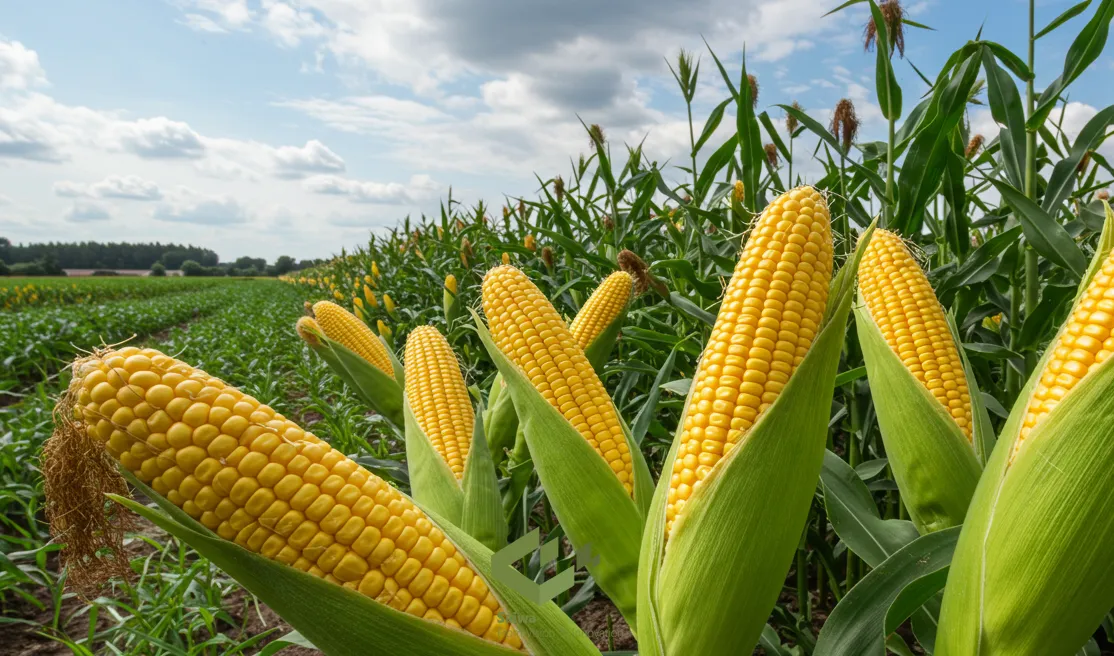
Manually interpreting layers of complex agricultural data is a significant challenge. This is the precise problem Sairone solves. By applying powerful AI to high-resolution drone imagery, Sairone automates the analysis of field variability and crop stress. It empowers growers and agronomists to transform raw data into precise, actionable nitrogen management plans with unparalleled efficiency. We invite you to see how Sairone’s analytical power can be integrated into your operations.
Conclusion
Optimizing the corn's need for nitrogen is no longer about following a single rule but about embracing a dynamic, systems-based approach. By integrating soil data, crop history, and advanced AI-powered analytics, growers can achieve the ultimate goal: maximizing economic returns while championing responsible environmental stewardship and ensuring long-term soil productivity.
Note: Some visuals on this blog post were generated using AI tools.
Continue reading

Leaf Nutrient Analysis - Unlocking Plant Health with Precision
Importance of Leaf Nutrient Analysis in Modern AgricultureManaging crop nutrition effectively is a cornerstone of modern agriculture, requir

Invasive Plant Monitoring - AI-Powered Farming Insights
The unchecked spread of invasive flora threatens agricultural productivity and ecological balance, demanding a paradigm shift in farm manage

Plant Disease Detection Using Image Processing - Transforming Agriculture
Plant diseases threaten global food production by weakening crops and reducing yields, yet many issues are noticed only after significant da

Weed Control in Cropping Systems | Key Strategies and Innovations
Weed control is a critical component of successful crop systems, as weeds compete with crops for essential resources such as sunlight, water

Weed Detection in Soybean Crops | Leveraging AI for Precision Agriculture
Soybean, a globally important crop and key source of protein and oil, suffers substantial yield losses from weed competition, affecting food

Uncovering the Vital Role of Nitrogen in Plant Growth: A Comprehensive Guide
Only about half of the nitrogen applied to crops is actually taken up by the plants, with the rest lost to runoff, volatilisation, or leachi
Comments
Be the first to share your thoughts
No comments yet
Start the conversation by sharing your thoughts
Share this article
Help others discover this content
Table of Contents
No headings were found on this page.