


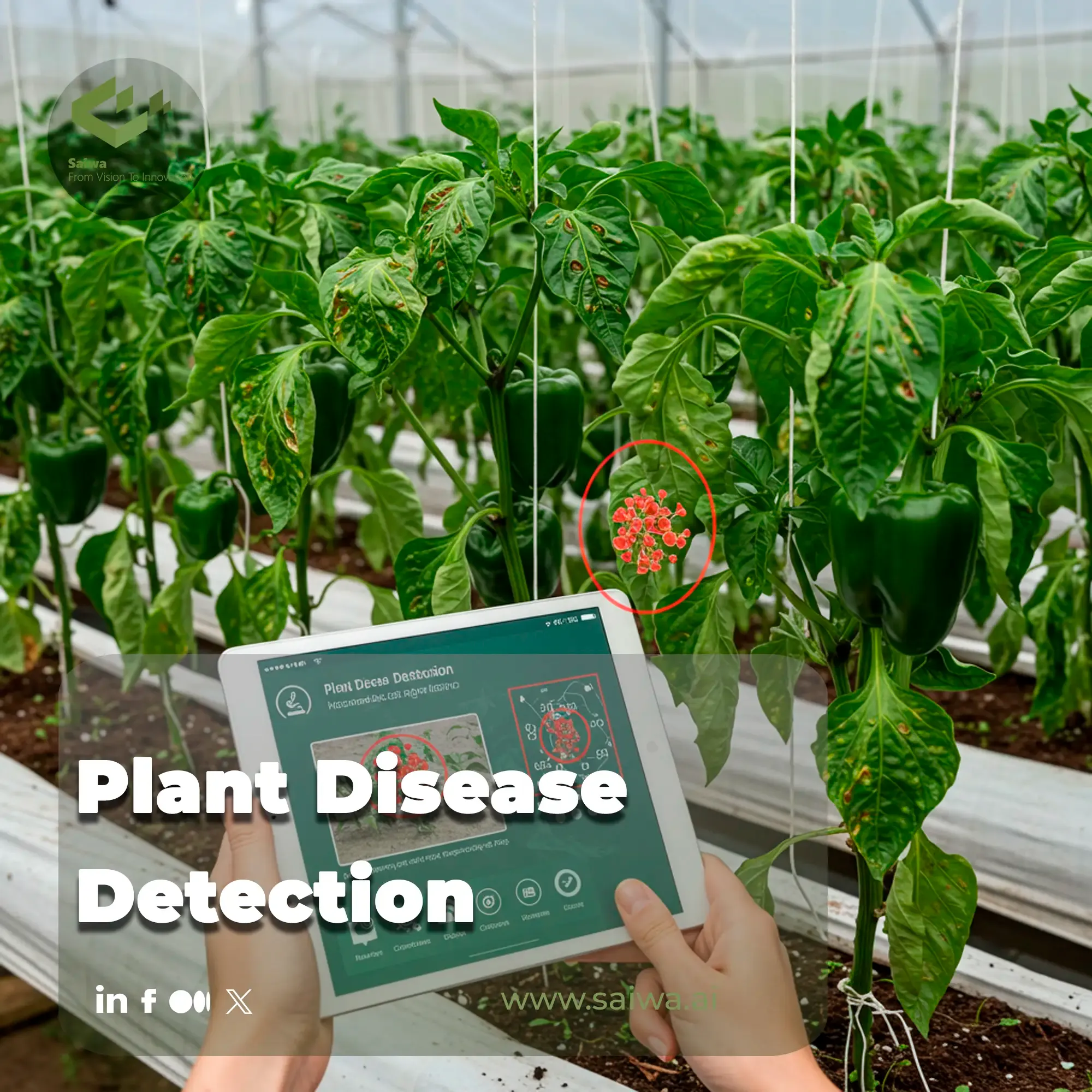
Plant Disease Detection - A Key Strategy for Sustainable Crop Management
AI-driven plant disease detection ensures early diagnosis, healthier crops, improved yields, and sustainable farming for global food security.
Written by Amirhossein
Reviewed by Boshra
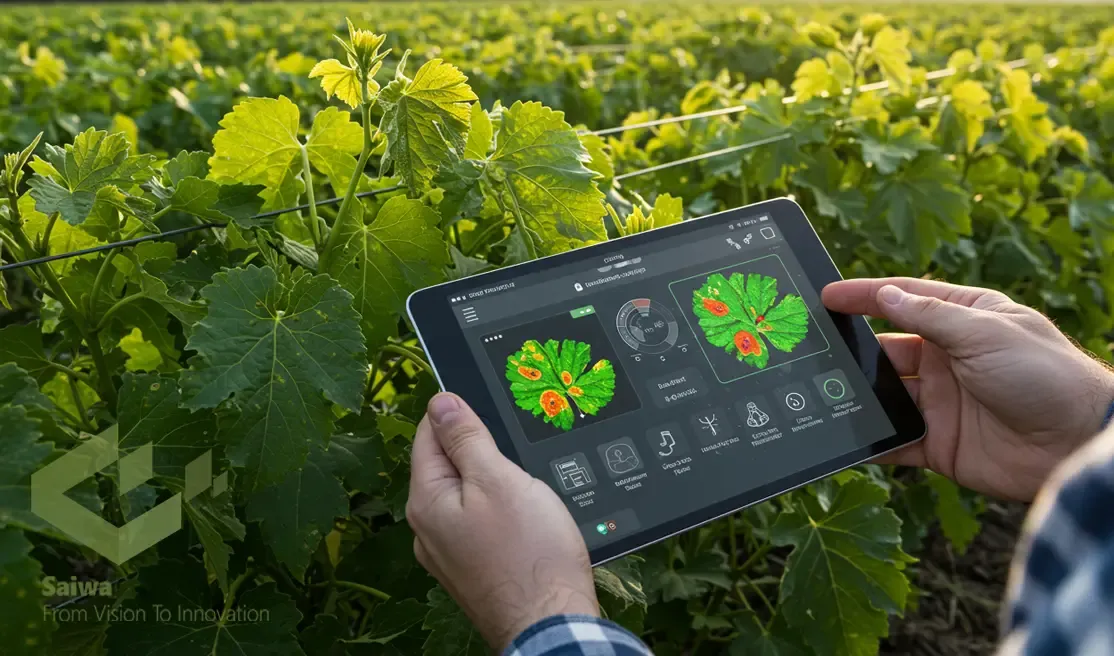
Ensuring global food security is directly threatened by the silent spread of crop diseases, which can decimate harvests before symptoms are even widely visible. Traditional diagnostic methods are often too slow and localized to mount an effective, large-scale response. This is where advanced AI transforms the agricultural landscape.
At Saiwa, we are at the forefront of this evolution, leveraging powerful tools like our Sairone platform to provide immediate, data-driven insights. This article explores the sophisticated technical strategies behind modern plant disease detection, moving from traditional practices to cutting-edge, scalable AI-driven solutions for sustainable crop management.

Why Early Detection Matters
The importance of early detection in agriculture cannot be overstated. Intervening at the initial stage of an infection is the difference between a manageable localized issue and a full-blown epidemic that could compromise an entire season's yield.
Early, precise identification allows for targeted treatments, drastically reducing the reliance on broad-spectrum chemical applications and minimizing input costs. This proactive approach not only safeguards immediate harvests but also promotes long-term soil health and environmental sustainability, forming the bedrock of modern, efficient farming.
How Plant Diseases Are Detected Today
The field of diagnostics has evolved significantly, transitioning from centuries-old manual methods to highly sophisticated, automated systems. Understanding this spectrum of techniques reveals the technological leap that now enables proactive crop management. Let's explore these distinct approaches.
Traditional Approaches
For generations, plant disease identification relied on a combination of hands-on expertise and localized resources. These foundational methods include:
Visual scouting by experts or farmers: This involves physically walking through fields to identify visual cues of disease—a process that is laborious, prone to human error, and highly dependent on individual experience.
Laboratory-based testing: Sending physical plant samples to a lab provides highly accurate, definitive diagnoses. However, this method is time-consuming and expensive, making it impractical for continuous, large-scale monitoring.
Local agronomic extension services: Farmers have traditionally relied on regional experts for advice, but their availability can be limited, leading to delays in critical decision-making.
Modern Approaches and Techniques
Today's technological solutions integrate advanced imaging and artificial intelligence, offering unparalleled speed and accuracy. The modern approach to Plant Disease Detection is best understood through its two core components: a structured workflow for processing visual data and the sophisticated learning models that analyze it. This combination automates what was once a purely manual and intuitive process.
Image Processing Workflow:
Before any learning model can perform its magic, the raw visual data must be systematically refined. This crucial process involves a sequence of steps:
Preprocessing: Raw images captured in the field are rarely perfect. This stage enhances them by correcting lighting inconsistencies, removing background noise, and using segmentation techniques like K-Means clustering or U-Net to isolate the plant leaf from its surroundings.
Feature extraction: Here, the system quantifies the visual information. It extracts key descriptors related to color (histograms), texture (GLCM analysis), and shape from the segmented area to create a unique numerical signature for the symptoms.
Classification: The extracted feature vector is fed into a classifier. Simpler models like one-class Support Vector Machines (SVM) use these features to distinguish between healthy and diseased samples, forming the basis for Anomaly Detection.
Machine Learning & Deep Learning Models:
This is where automated learning brings immense power, as models learn to identify patterns directly from pixels without manual feature engineering. Key architectures in this space include:
CNNs (e.g., ResNet, MobileNet): Convolutional Neural Networks are the workhorses of modern computer vision. Models like ResNet and MobileNet have demonstrated accuracies often exceeding 98% on benchmark datasets by automatically learning hierarchical features, from simple edges to complex lesion patterns.
Vision Transformers (e.g., PlantXViT): A newer architecture gaining traction, Vision Transformers process images by treating them as a sequence of patches. This allows them to capture long-range dependencies across the image, offering a different and sometimes more robust way of understanding context.
Hybrid models: Some of the most effective solutions combine deep learning and traditional machine learning. A common approach involves using a pre-trained CNN to extract highly descriptive features, which are then fed into a more traditional but computationally efficient classifier like an SVM for the final diagnosis.
Turning Detection Into Field Action
Detecting symptoms is not the same as diagnosing a crop problem correctly. In practical crop management, the highest-value systems are the ones that connect image-based alerts to field verification, disease severity assessment, and treatment planning rather than stopping at classification alone.
Why validation still matters
Computer vision has become a powerful tool in plant pathology, but review literature shows that field deployment remains challenging because lighting variation, occlusion, complex backgrounds, and symptom similarity can affect performance outside controlled datasets.
That limitation matters on commercial farms because chlorosis, necrosis, wilting, and spotting can be caused by pathogens, nutrient deficiencies, drought stress, or chemical injury, especially in early stages when symptoms are subtle.
For that reason, disease alerts should be treated as decision triggers rather than final diagnoses. A strong operational workflow usually combines AI-based image analysis with targeted scouting, agronomic context, and, where needed, laboratory confirmation for high-risk or high-value cases.
Why hyperspectral and multi-sensor data matter
Hyperspectral remote sensing is especially important because it can detect physiological changes before disease symptoms become clearly visible to the human eye. A peer-reviewed review notes that semantically rich hyperspectral data supports timely and rational implementation of plant protection measures and represents a major advance in early plant disease detection.
Wageningen University researchers likewise describe hyperspectral remote sensing as a promising tool for operational crop disease monitoring and highlight its value for distinguishing stressors, detecting early disease, and assessing resistance at broader scales.
At the same time, hyperspectral systems are not a universal shortcut. Reviews also note important constraints, including equipment cost, computational complexity, and the lack of standardized field protocols, which means successful deployment still depends on careful calibration and crop-specific validation.
A practical decision workflow
For growers, agronomists, and ag-service providers, a reliable disease-detection workflow should follow a clear sequence:
Capture imagery regularly so disease risk is evaluated as a trend, not a one-time snapshot.
Use AI or spectral analysis to flag abnormal zones, lesion patterns, or canopy changes early.
Ground-check the highest-risk areas first to confirm whether the signal reflects disease, abiotic stress, or mixed pressure.
Rank the response by severity, crop stage, and spread risk before applying fungicides or other interventions.
Re-monitor the same area after treatment to verify whether the intervention reduced stress signatures and slowed spread.
Choosing the right detection layer
Detection layer | Best use case |
Visual scouting | Fast field confirmation and symptom interpretation where trained staff are available, but limited in scale and consistency. |
RGB image analysis | Useful for visible lesions, color shifts, and surface symptoms when disease is already visually expressed. |
Hyperspectral sensing | Best for early-stage physiological detection and more detailed disease discrimination before obvious symptoms appear. |
UAV or field-scale remote sensing | Best for mapping hotspots, prioritizing scouting, and supporting precision treatment across larger areas. |
Why this improves sustainability
This approach strengthens sustainable crop management because it reduces unnecessary blanket spraying and improves the timing of targeted intervention. Reviews of remote sensing in plant disease monitoring consistently show that earlier, more precise detection supports more efficient plant protection over large areas.
For modern farms, the goal is not simply to find disease faster. The goal is to make disease detection accurate enough, explainable enough, and scalable enough to support confident action from leaf level to landscape level.
Scalable Detection: From Leaf to Landscape
Effective disease management requires insights at multiple scales. A single diseased leaf can be an early warning sign, but understanding its prevalence across a field or region is essential for strategic intervention. Modern Plant Disease Detection technologies are therefore designed to operate across a scalable hierarchy, which we can explore in more detail below:
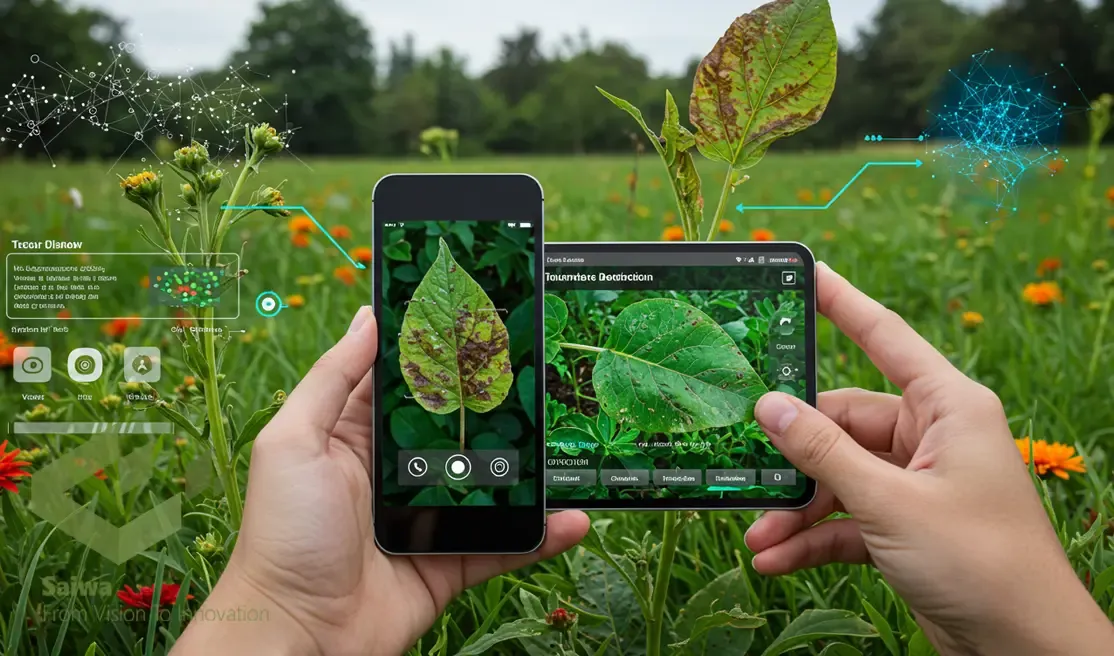
Leaf-level: This is the most granular scale, often performed using smartphone applications like Agrio or handheld sensors. It allows for the detailed inspection of individual lesions, enabling a highly specific diagnosis of the pathogen or nutrient deficiency affecting a single plant.
Field-level: At this scale, technologies like drones equipped with high-resolution cameras become essential. By scanning an entire field, systems can create detailed maps pinpointing disease hotspots, enabling precision spraying and targeted resource allocation. This is a core capability of platforms like Sairone, which automates the analysis of drone imagery for comprehensive Plant health monitoring.
Region-wide: Leveraging satellite imagery and geospatial data, this scale provides a macroscopic view of crop health. It helps in tracking the spread of disease across large geographical areas, modeling epidemic risk, and informing regional agricultural policies.
Read Also: Nutrient Management Plans in Ontario: A Guide for Farmers
Benefits of Early, Accurate Detection
The shift towards AI-powered, data-driven disease detection unlocks substantial benefits that resonate across the agricultural value chain. By moving from reactive to proactive management, stakeholders can realize a more efficient and sustainable production system. Key advantages include:
Reduces crop loss and input costs: By identifying threats early, interventions are smaller, more targeted, and more effective.
Enables smarter resource use (e.g., precision spraying): Mapping disease hotspots means pesticides and fungicides are applied only where needed.
Supports sustainable practices by minimizing over-reliance on chemicals: This protects the environment, improves soil health, and aligns with consumer demands.
Challenges and Limitations
Despite its immense potential, the real-world implementation of automated Plant Disease Detection faces several technical and practical hurdles. These challenges must be addressed to ensure that these powerful tools are robust, reliable, and accessible to all. Among the most significant limitations we can identify:
Visual similarity between different diseases: Many distinct pathogens produce visually similar symptoms (e.g., yellowing or spots), which can confuse even advanced models.
Image quality: Field-captured images are affected by variable lighting, shadows, motion blur, and complex backgrounds (e.g., soil, other plants), degrading model performance.
Low technology access and internet coverage in rural regions: The full potential of cloud-based AI systems is limited in areas with poor digital infrastructure.
Need for more explainable AI to increase farmer trust: For many farmers, AI models operate as "black boxes." Building trust requires systems that can explain why they reached a particular diagnosis.
The Future of Plant Disease Detection
The next wave of innovation in Plant Disease Detection is already taking shape, driven by a convergence of more efficient hardware, smarter algorithms, and a focus on user trust. The evolution of this technology will likely be defined by three key trends we’re already beginning to see emerge:
Edge AI: Processing data directly on the device—be it a drone, tractor, or smartphone—eliminates the need for constant cloud connectivity. This reduces latency and makes powerful AI tools accessible in remote areas.
Few-shot learning: Training models on massive, perfectly labeled datasets is not always feasible. Few-shot learning techniques allow models to accurately identify new diseases from just a handful of examples, drastically speeding up deployment for emerging threats.
Explainable AI (XAI): As models become more complex, their ability to provide transparent, interpretable results will be paramount. XAI techniques help demystify the decision-making process, building the trust necessary for widespread adoption and enhancing tasks like Crop yield estimation by providing clearer risk factors.
Read Also : Crop Scouting Tools Every Farmer Should Use
Conclusion
The transition from manual inspection to automated systems marks a pivotal moment for agriculture. Intelligent and scalable Plant Disease Detection is no longer a futuristic concept but a practical strategy for ensuring a resilient and sustainable food supply. By embracing these data-driven tools, we can mitigate risks, optimize resources, and cultivate a healthier, more productive future for farming across the globe.
Note: Some visuals on this blog post were generated using AI tools.
About the team
Continue reading

Harnessing Agriculture Data Analytics for Smarter Crop Yield Prediction
Traditional farming intuition is powerful, but it faces limitations in a world demanding greater efficiency and sustainability. Predicting c
Drones and GIS Mapping | Best Drones for Aerial Precision
Geographic Information Systems (GIS) have transformed spatial data collection, analysis, and visualization, benefiting several fields includ
Remote Sensing in Agriculture: Revolutionizing Farming Practices
Remote sensing technology has become an essential tool for modern agriculture, providing valuable insights that enable farmers to make infor

AI for Seed Quality | Smarter Farming Solutions
Seed quality plays a pivotal role in agriculture, directly influencing crop yield, plant health, and overall food security. Traditional meth

Daisy Fleabane Control - Advanced Solutions for Accurate Eradication
Physical Characteristics of Daisy Fleabane (Erigeron spp.)Daisy Fleabane (Erigeron spp.) presents a significant challenge in pastures and no
Crop Yield Estimation with NDVI: What Farmers Should Know
Farming has always relied on careful observation, but in recent years it has also become a field of precise measurement. With satellites and
Comments
Be the first to share your thoughts
No comments yet
Start the conversation by sharing your thoughts
Share this article
Help others discover this content
Table of Contents
No headings were found on this page.