



Count Crops with Precision - Modern Methods in Smart Agriculture
Count Crops with precision using AI, drones, and smart tools. Improve yield forecasts, resource use, and crop health with modern methods in smart agriculture.
Written by Amirhossein
Reviewed by Boshra
The Significance of Accurate Crop Counting in Modern Agriculture
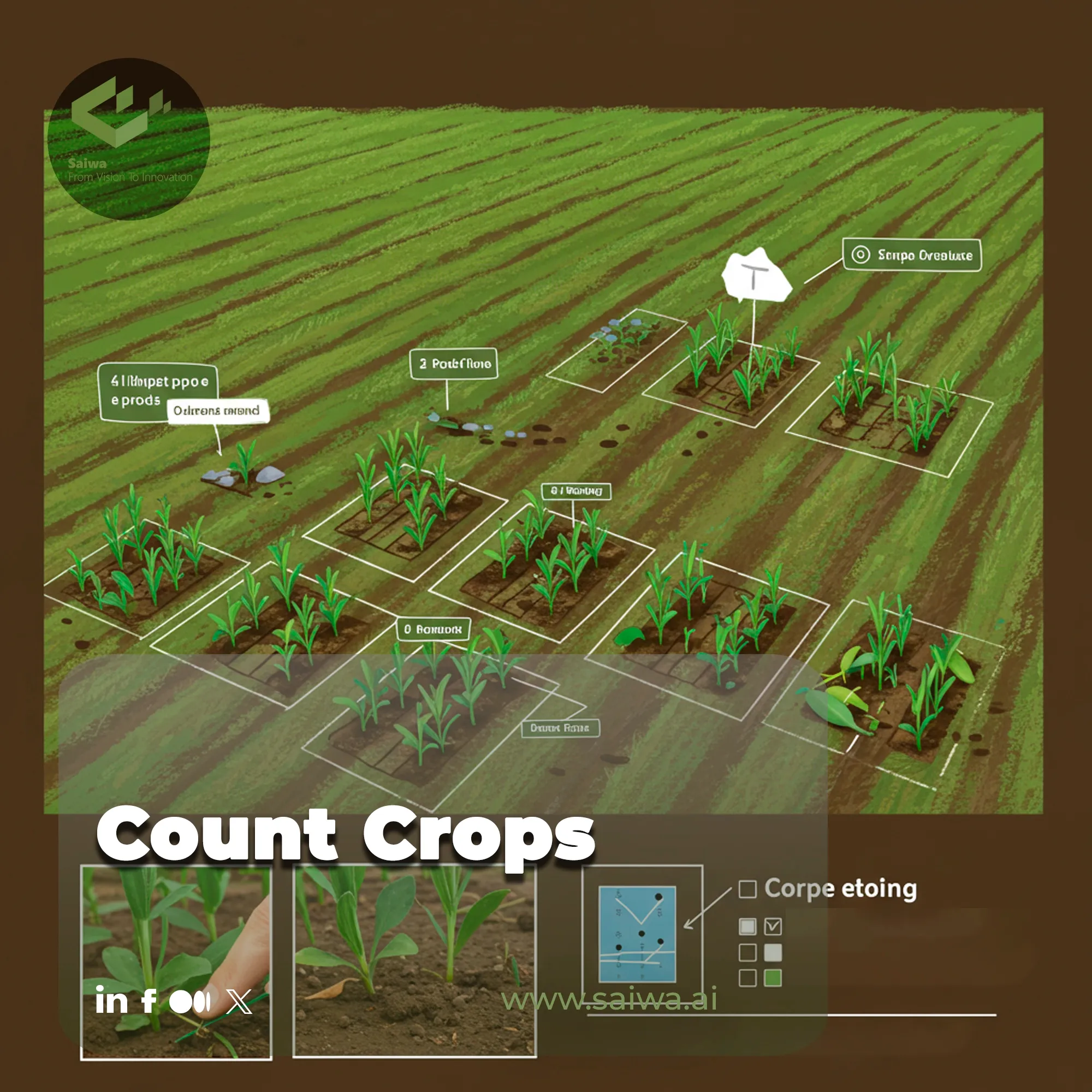
In modern agriculture, operational success hinges on data-driven decisions. The ability to Count Crops is no longer a luxury but a foundational pillar for strategic farm management. This key metric moves beyond simple inventory, directly influencing profitability and sustainability. Accurate data provides the backbone for optimizing the entire growth cycle, from planting to harvest. To fully appreciate its impact, consider how precise crop counts revolutionize core agricultural processes, such as:
Yield Estimation and Forecasting: Precise plant counts are the most reliable input for Crop yield estimation. This allows growers to secure better contracts and plan logistics with confidence.
Resource Allocation and Input Management: Knowing the exact plant density enables targeted application of water, fertilizers, and pesticides, minimizing waste and environmental impact.
Crop Health and Stress Detection: Gaps or inconsistencies in plant populations often serve as the earliest indicator of issues. Utilizing advanced platforms like Sairone to analyze aerial data allows for the swift detection of these anomalies, enabling rapid intervention before pests or disease spread.

Common and Traditional Methods to Count Crops
Historically, crop counting relied on methods that, while foundational, were inherently limited by their manual nature. These techniques, passed down through generations, formed the basis of farm management for centuries. The most prevalent of these traditional approaches include:
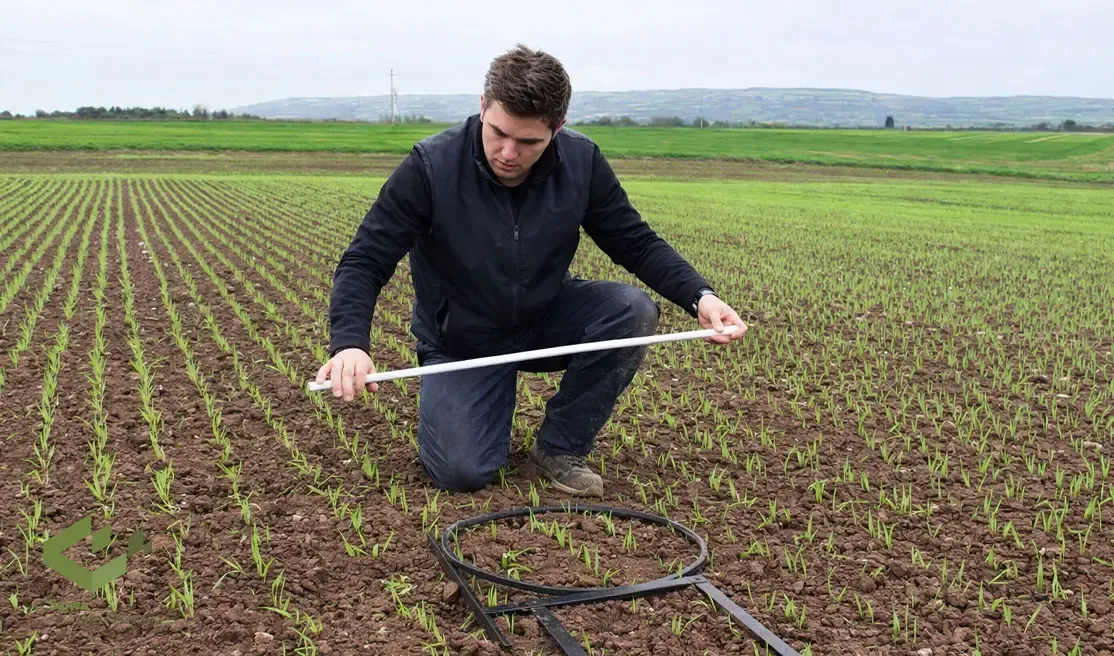
Manual Crop Counting Techniques: Physically walking through fields and tallying individual plants.
Ground Sampling and Field Survey: Counting plants in a small, designated plot and extrapolating that number across the entire field.
Visual Inspection and Estimation Methods: Relying on a farmer’s experienced eye to estimate plant populations.
Challenges of Traditional Crop Counting Methods
These traditional approaches, however are fraught with inherent challenges that limit their effectiveness in modern farming. Their dependency on human labor and subjective judgment creates significant bottlenecks and inaccuracies that can prove costly. The primary difficulties include:
Labor-Intensive and Time-Consuming Processes
Manual counts are slow and require immense human effort, making them impractical for large-scale operations.
Human Error and Inconsistencies
Fatigue, human error, and subjective judgment lead to inconsistent and unreliable data.
Limited Scalability for Large Farms
These methods do not scale effectively, leaving large commercial farms with incomplete or outdated information.
Difficulties in Dense Crop Environments
In densely planted crops like grains, accurate manual counting is nearly impossible.
Advanced Methods for Counting Crops
Advanced technologies have emerged to overcome the limitations of traditional field scouting and manual estimation, transforming how agricultural data is gathered, analyzed, and applied. These approaches combine aerial perspectives, ground-based insights, and computational intelligence, giving farmers greater precision and efficiency.
Precision Drone Technology
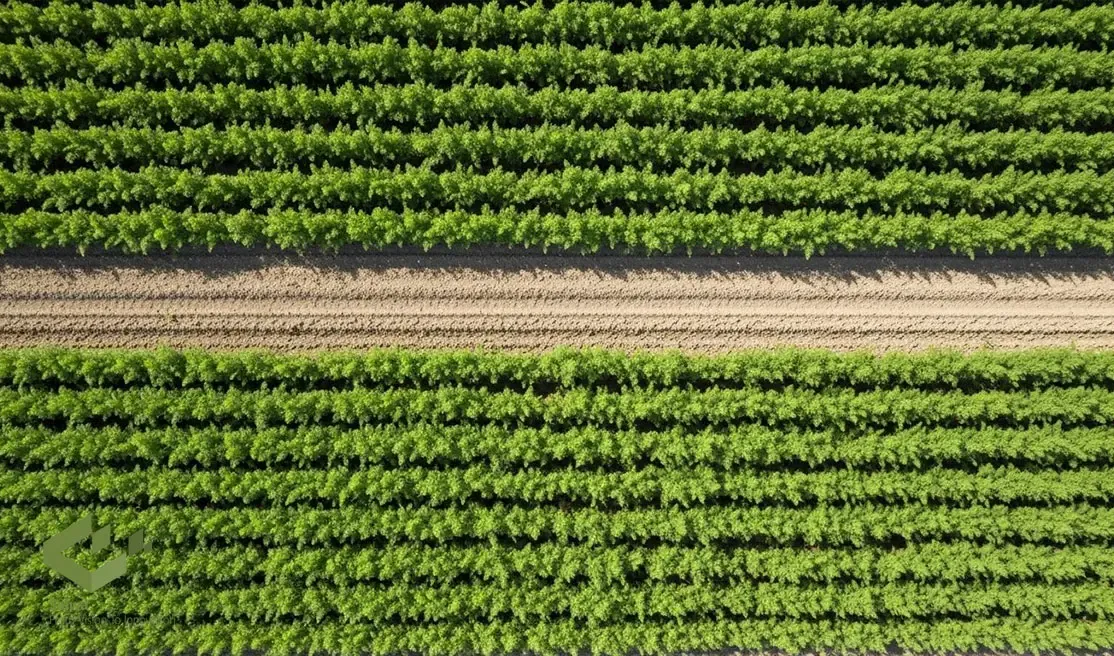
Drones equipped with high-resolution cameras can scan entire fields in minutes, capturing details at the plant level that would take hours to collect manually. They provide real-time, bird's-eye views that enhance accuracy and reduce labor costs. They are especially valuable for detecting irregularities within rows, identifying gaps, and spotting early signs of stress across large acreages.
AI-Powered Stand Counting
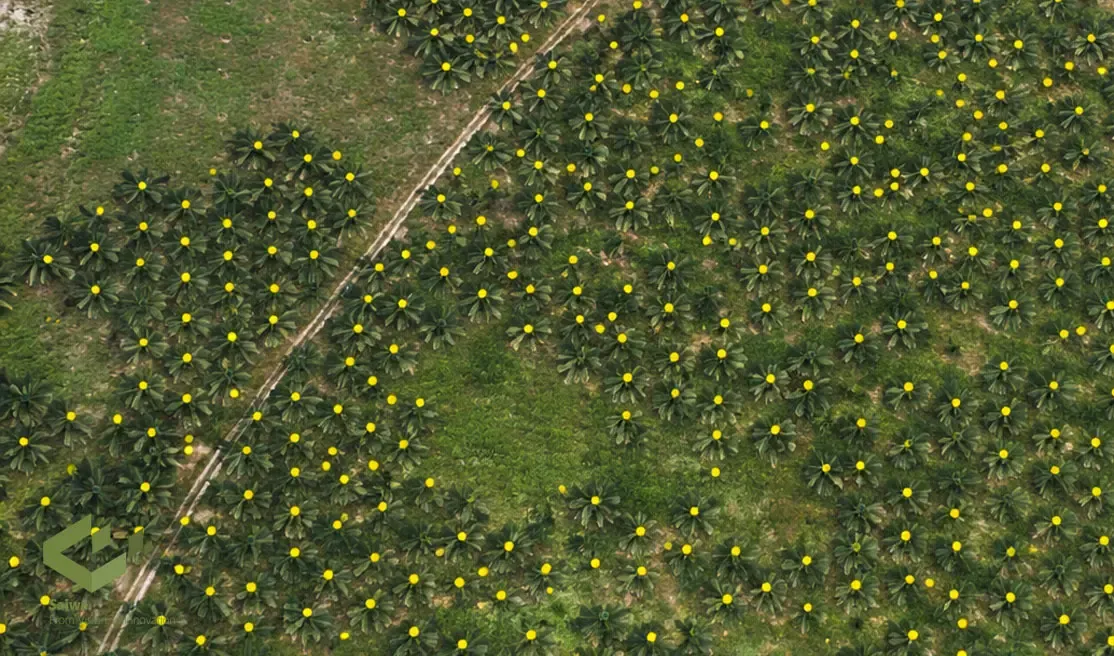
Modern crop monitoring relies on AI and machine learning. These algorithms can analyze thousands of images and distinguish crops from weeds, soil, and residue with remarkable precision. AI models can do more than just count plants; they can also predict growth stages, assess uniformity, and flag anomalies that might signal nutrient deficiencies, diseases, or pest infestations.
Satellite and Remote Sensing Technologies
Satellites provide consistent, large-scale monitoring across entire regions, making them ideal for tracking seasonal growth patterns, crop health trends, and changes in land use. With their frequent revisit times, satellites also provide temporal insights that help farmers continuously monitor field conditions and compare performance across growing seasons.
Turning Crop Counts Into Better Field Decisions
Accurate crop counting becomes most valuable when it is used early enough to influence management, not simply to document what has already happened. The current article correctly explains that precise crop counts support yield estimation, input planning, and early detection of field irregularities, which means counting should be treated as a decision tool rather than a reporting exercise.
For professional growers and agronomy teams, that distinction matters because plant population is one of the earliest measurable indicators of whether the season is on track or already losing yield potential.
Timing matters as much as accuracy
One of the biggest advantages of drone- and AI-based counting is that it can be done at the stage when corrective action is still realistic. Saiwa’s plant-counting workflow notes that flights are most effective 2 to 4 weeks after planting, when seedlings are visible but before canopy closure makes individual plants harder to separate.
That timing is important because late counts may still describe stand quality, but they are less useful for decisions such as replanting, gap assessment, or early input adjustment.
This is also consistent with broader research on UAV-based stand counting. A published review of unmanned aerial vehicle methods for plant stand count evaluation in row crops shows that aerial counting has become a serious precision-agriculture tool for assessing emergence and population density in a scalable way across commercial fields.
In practice, the earlier a reliable stand map is produced, the more time a grower has to respond before uneven emergence turns into season-long variability.
Count first, then interpret the pattern
A raw plant total is useful, but spatial pattern is usually even more important. A field with an acceptable average count may still contain large underperforming zones caused by planter skips, poor emergence, compaction, crusting, pest injury, or localized moisture stress.
That is why modern crop counting should move beyond simple enumeration and into mapped interpretation. Saiwa’s workflow describes preprocessing, model-based plant detection, validation against manual checks, and visualization through density maps and summaries, which is the kind of process needed for field-ready decisions.
A practical workflow usually looks like this:
Capture high-resolution imagery early, before overlap and canopy closure reduce visibility.
Use AI to detect and count individual plants across the full field rather than relying on small sample plots.
Validate the results against representative ground-truth areas to confirm that the model is performing well under actual field conditions.
Convert the count into management actions such as replant review, stand-uniformity assessment, or zone-specific input planning.
Counting output | Why it matters |
Total plant population | Establishes the baseline for early yield estimation and season planning. |
Stand uniformity map | Reveals where acceptable averages may still hide weak zones. |
Underperforming patches | Helps identify where emergence problems or early stress need field verification. |
Validated AI count | Gives teams more confidence to act on the results at scale. |
Why this improves farm efficiency
This workflow reduces one of the biggest weaknesses of traditional counting: small samples can miss the spatial variability that drives real yield loss. The current article already notes that manual counting is slow, inconsistent, and difficult to scale, especially in dense crops, while UAV-based approaches were developed precisely to overcome those limitations.
It also strengthens yield planning. Since the article already positions crop counting as a core input for yield estimation, early stand data becomes much more powerful when it is connected to mapped field variability instead of a single field-average number.
This is where Sairone fits naturally into the workflow. Saiwa’s crop yield estimation and counting pages position AI-driven counting as a way to deliver accurate, real-time insight, stronger forecasting, and better operational decisions from aerial imagery.
For modern agriculture, the real value of counting crops is not just knowing how many plants emerged. It is knowing early enough, and precisely enough, to protect yield before the season’s mistakes become permanent.
Benefits of Crop Counting with Innovative Technology
The shift toward innovative technology for crop counting delivers tangible and transformative benefits, moving farm operations from guesswork to data-driven certainty. Adopting these tools yields significant advantages across multiple facets of farm management, most notably:
Increased Accuracy and Precision: Automated systems provide accuracy rates often exceeding 95%, eliminating human error and delivering reliable data for critical decisions.
Faster Data Collection and Analysis: Tasks that once took days of manual labor are now accomplished in just a few hours, dramatically accelerating the decision-making process.
Cost Efficiency Over Time: Despite an initial investment, these technologies generate long-term savings by optimizing the use of fertilizers and water and significantly reducing manual labor costs.
Better Plant Health Monitoring: Precise, continuous monitoring allows for the early detection of issues like pest infestations or disease, facilitating timely interventions that prevent widespread crop loss.
Transforming Crop Counting with Sairone’s Advanced Solutions
This is where technology transforms potential into reality. Platforms like Sairone from Saiwa leverage drone imagery and AI to automate analysis, removing the bottlenecks of traditional methods.
By processing high-resolution aerial data, Sairone offers farmers a way to Count Crops with Precision, assess plant health, and optimize resource allocation. The platform's capabilities extend beyond simple counting to include critical functions like Weed detection and nitrogen estimation.
Conclusion
The evolution from manual estimations to automated analysis marks a new era in smart agriculture. Embracing innovative technologies to count crops accurately is fundamental for enhancing productivity, ensuring resource efficiency, and promoting sustainable farming practices. Solutions like Sairone are not merely tools; they are strategic partners, turning complex data into the actionable insights needed to feed the future securely and intelligently.
Note: Some visuals on this blog post were generated using AI tools.
Comments
No comments yet!
Table of Contents
No headings were found on this page.