
Transformer-Based Pose Estimation in Real-World Applications: A Technical Evaluation of ViTPose
Aug 18, 2026
Written by: Amirhossein Komeili
Reviewed by: Boshra Rajaei, PhD
Aug 18, 2026
Written by: Amirhossein Komeili
Reviewed by: Boshra Rajaei, PhD
Human pose estimation has become a fundamental component of many computer vision applications, including activity recognition, sports analytics, healthcare, surveillance, and human-computer interaction. Modern pose estimation frameworks such as MediaPipe and OpenPose provide reliable performance in many standard scenarios and have become widely adopted due to their efficiency and ease of deployment.
You can try these two models on our Fraime product.
However, real-world environments often introduce challenges that are not fully represented in benchmark datasets. As a result, models that perform well under controlled conditions may experience noticeable performance degradation when deployed in practical applications.
During our evaluation of existing pose estimation solutions, two challenges consistently emerged as major sources of failure.
When body parts become partially occluded or subjects adopt highly articulated poses, accurately localizing keypoints becomes significantly more difficult. Missing visual evidence often leads to unstable predictions, inconsistent skeleton structures, and incorrect estimation of hidden joints.
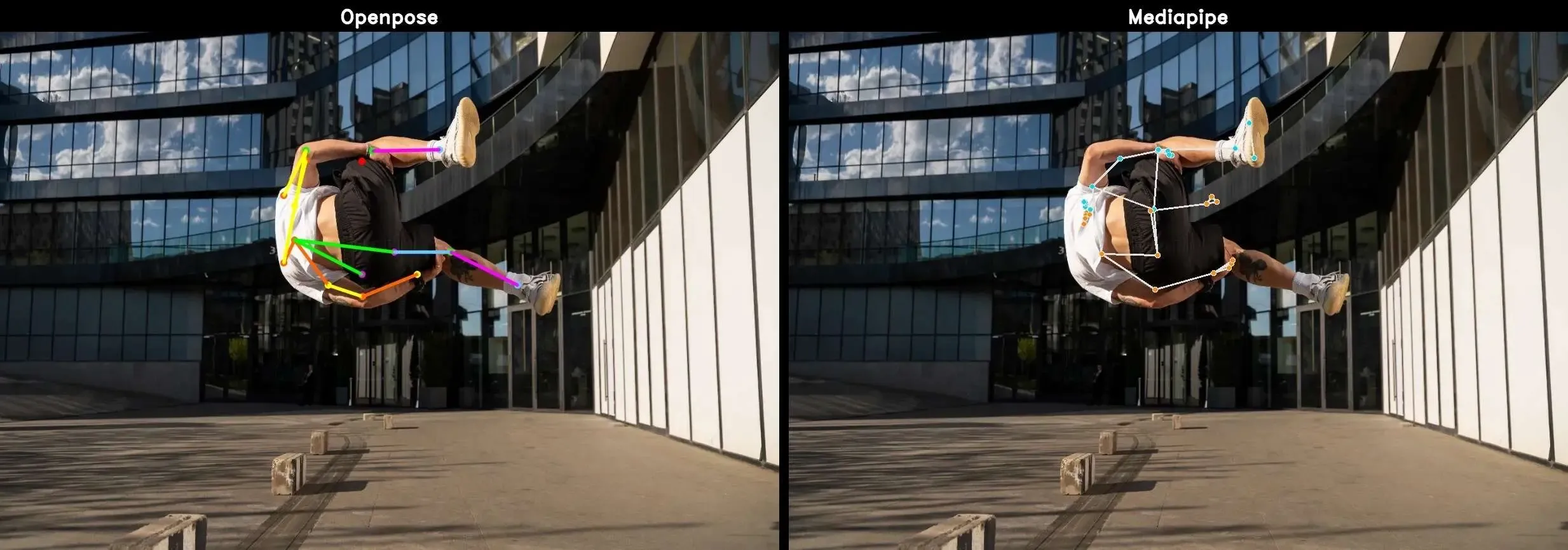
Another common challenge occurs when people appear far from the camera. As the apparent body size decreases, fine anatomical details become increasingly difficult to preserve. Smaller joints—particularly wrists, ankles, elbows, and knees—are more likely to be inaccurately localized, reducing the overall quality of pose estimation.
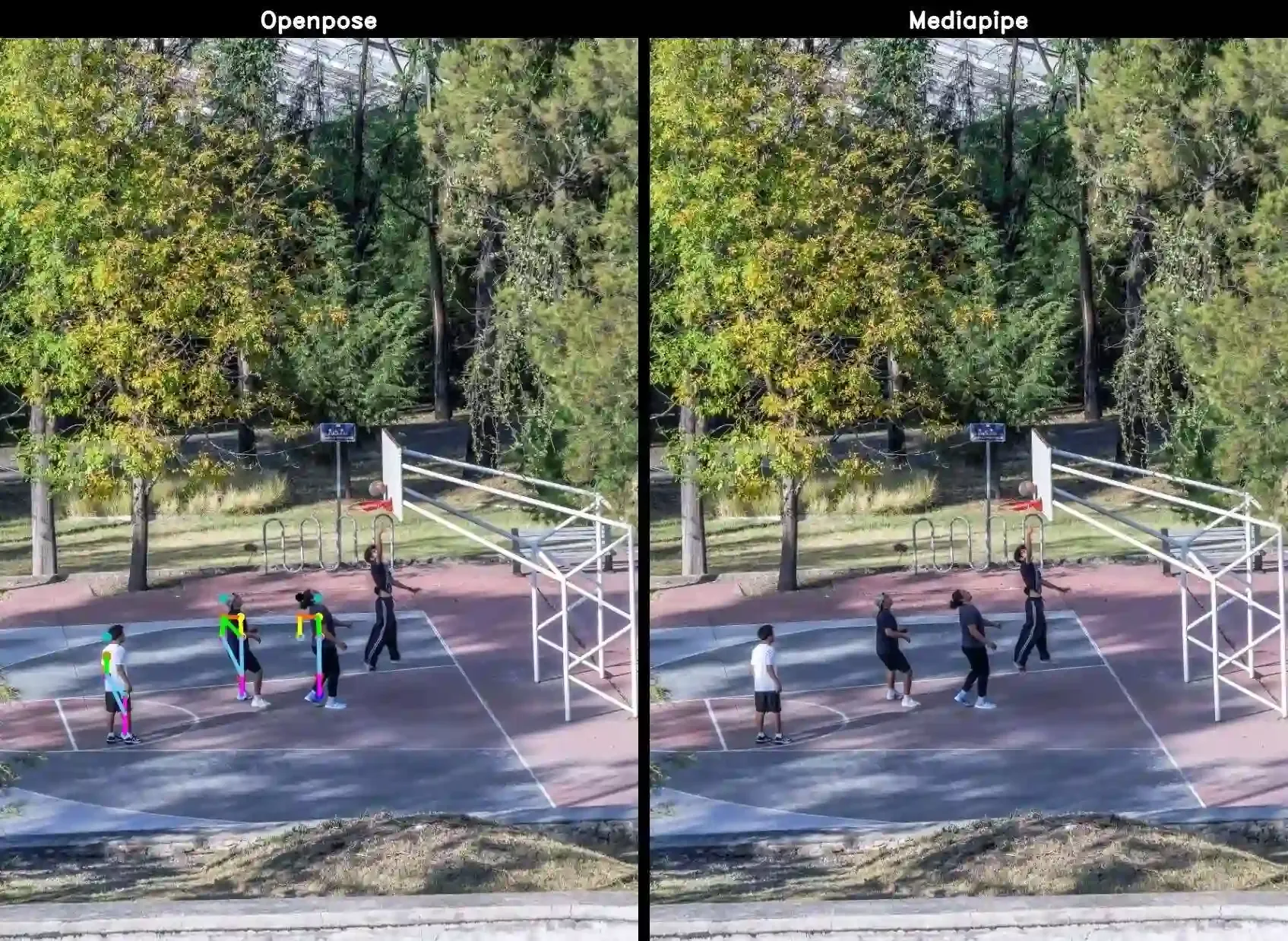
Recent advances in pose estimation have increasingly adopted Transformer-based architectures. Unlike conventional CNN-based approaches that primarily extract information from local receptive fields, Vision Transformers utilize self-attention mechanisms to model relationships across the entire image.
This global reasoning capability enables the network to simultaneously leverage both local appearance features and long-range contextual information when predicting body keypoints.
Such architectural characteristics provide several important advantages:
Improved reasoning about partially occluded body parts by incorporating contextual information from visible regions.
Better handling of complex human poses through modeling long-range dependencies between body joints.
Increased robustness to scale variations, allowing more reliable localization of keypoints for small or distant subjects.
Enhanced global consistency of predicted skeleton structures.
Although these architectural improvements cannot eliminate every challenging scenario, they provide stronger representational capabilities that have demonstrated promising results across many pose estimation benchmarks.
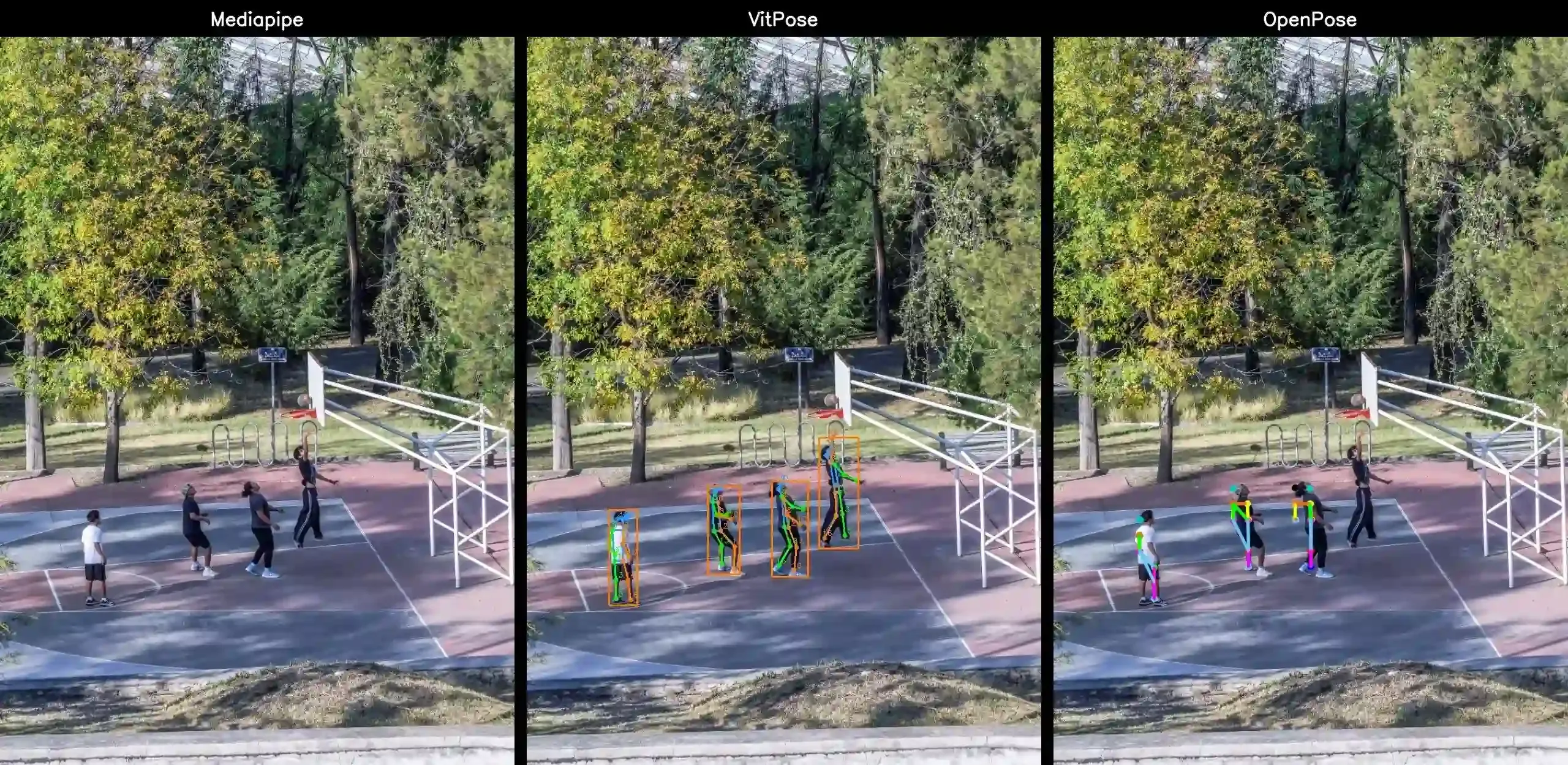
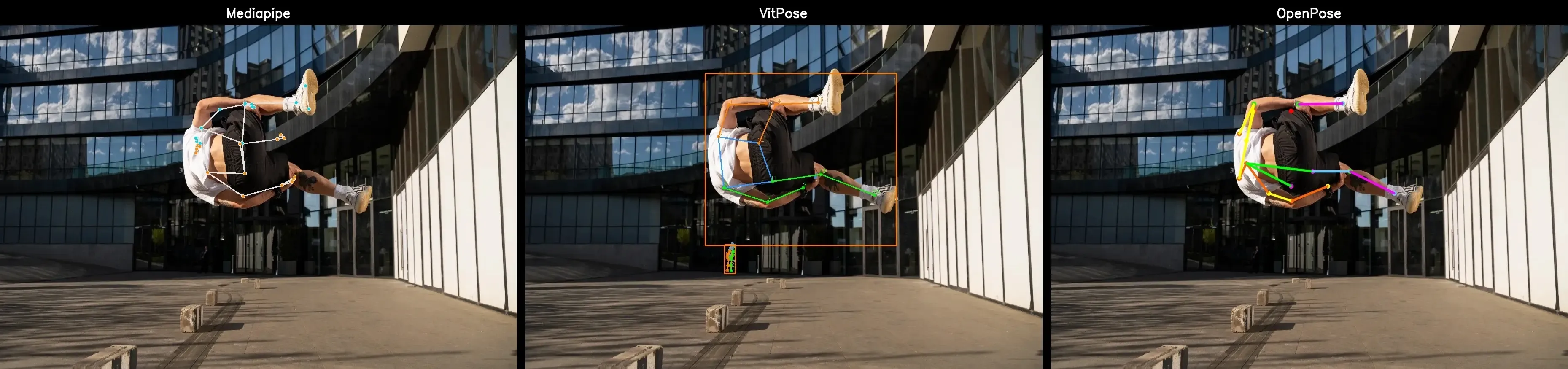
To investigate whether these architectural improvements translate into practical benefits, we evaluated ViTPose, a Vision Transformer-based pose estimation model, on the same challenging scenarios discussed above.
Rather than focusing solely on benchmark metrics, our objective was to examine qualitative performance under real-world conditions involving occlusions, complex poses, and varying subject scales.
Our experiments showed that ViTPose consistently produced:
More stable keypoint predictions
Better skeleton consistency
Improved localization accuracy for challenging joints
Greater robustness under partial occlusion
Stronger performance on small-scale and distant subjects
In several cases, the improvements exceeded our initial expectations, suggesting that the advantages of Transformer-based architectures extend beyond benchmark evaluations and can provide meaningful benefits in practical deployments.
Please examine ViTPose on your own image using our Pose Estimation Service.
It is important to emphasize that no pose estimation model is universally optimal. Extremely severe occlusions, very low image resolutions, and uncommon body configurations remain difficult for current state-of-the-art methods.
Nevertheless, our evaluation indicates that Transformer-based pose estimation models such as ViTPose offer substantial improvements in robustness and prediction quality compared to previous generations of pose estimation approaches.
As pose estimation continues to be deployed in increasingly demanding real-world applications, architectures capable of reasoning over global image context are likely to play an increasingly important role.
Traditional pose estimation models continue to provide strong performance for many practical applications. However, real-world deployment often exposes limitations related to occlusions, complex poses, and scale variation.
Transformer-based architectures address many of these limitations by incorporating global contextual reasoning through self-attention mechanisms. Our experimental evaluation of ViTPose demonstrates that these architectural improvements lead to more stable predictions and improved keypoint localization across a variety of challenging scenarios.
These findings suggest that Vision Transformer-based pose estimation models represent a significant step toward building more accurate, robust, and reliable pose estimation systems for real-world applications.