


Crop Monitoring Tools Explained: Key Technologies, Features, and Selection Tips
Discover top crop monitoring tools that help farmers track growth, detect stress early, and make data-driven farming decisions.
Written by Maryam
Reviewed by Boshra
The evolution of precision agriculture is fundamentally shifting farm management from reaction-based remedies to proactive, data-driven strategies. This transition is powered by advanced analytical platforms that convert raw field data into strategic insights, enabling early interventions that were previously impossible.
For industry pioneers like Saiwa, the goal is to push this boundary further with AI-powered tools such as Sairone. This guide offers a technical breakdown of the core technologies, essential features, and key selection criteria to help you navigate this transformative landscape.

Understanding Crop Monitoring Technologies
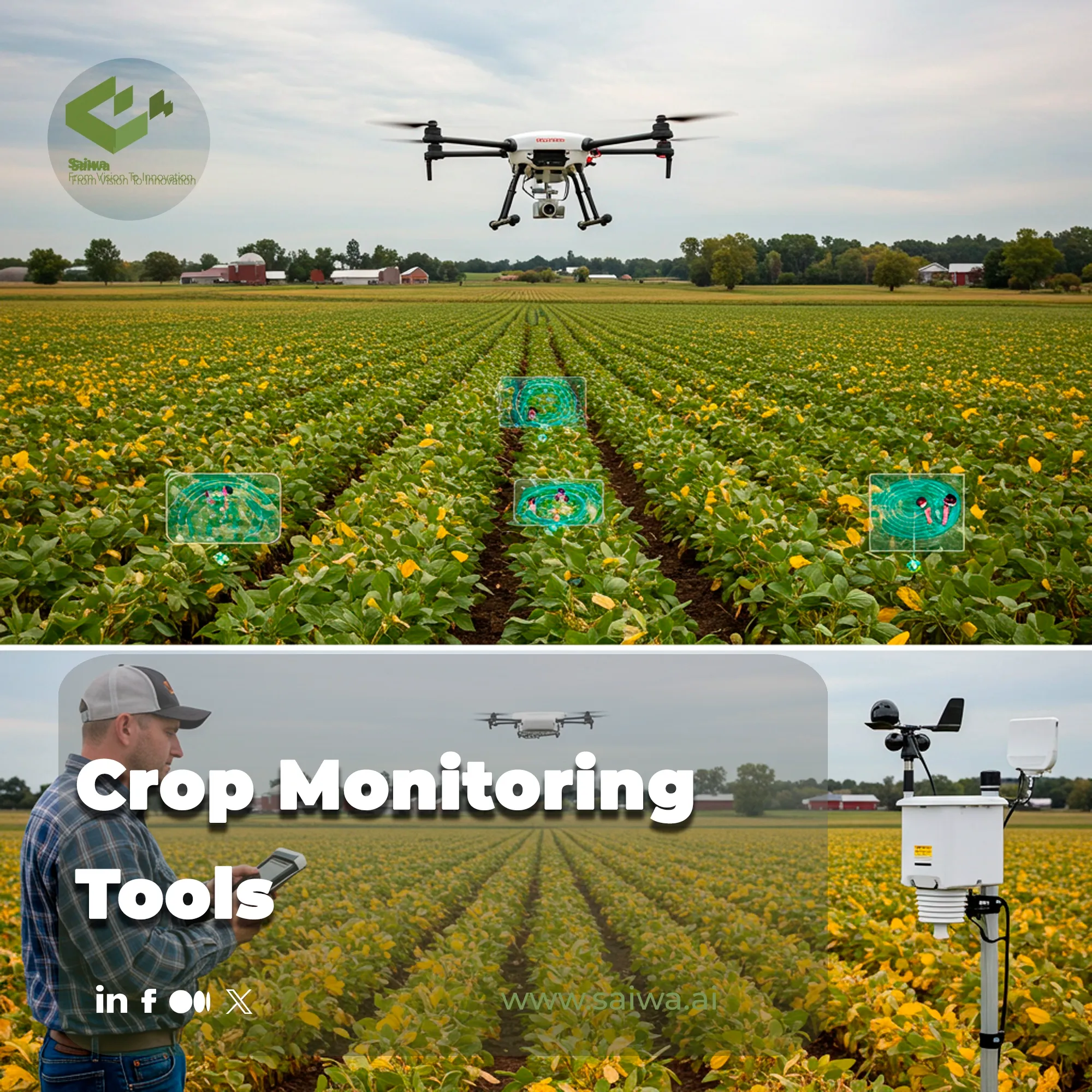
Crop monitoring technologies are transforming modern agriculture by providing farmers with real-time insights into crop health, soil conditions, and environmental factors. This enables them to make data-driven decisions that enhance efficiency and sustainability. Remote sensing tools, such as satellites and drones, can capture large-scale field imagery to reveal variations in crop growth and detect early signs of stress. IoT-based sensors deliver precise measurements of soil moisture, nutrient content, and microclimate conditions. AI and machine learning platforms then analyze these data streams to generate clear recommendations for irrigation, fertilization, and pest control. Understanding and effectively integrating these technologies allows farmers to select the appropriate tools to increase productivity, minimize waste, and ensure long-term agricultural resilience.
Key Technologies Behind Crop Monitoring Tools
The effectiveness of modern Crop Monitoring Tools is rooted in their ability to synthesize data from multiple high-tech sources. To appreciate their function, it's essential to understand the individual components that form these integrated systems.
Satellite and Aerial Imagery: Drones and satellites capture high-resolution images, providing an invaluable macro-level view to identify spatial inconsistencies across fields.
Remote Sensing and Vegetation Indices: Sensors analyze reflected light from plants to calculate health metrics like NDVI, quantitatively assessing crop vigor.
IoT Sensors and In-Field Devices: Placed directly in the soil or canopy, these devices provide granular, real-time data on moisture, temperature, and nutrient levels.
Mobile and Web Applications: These platforms serve as the central hub, translating complex datasets into intuitive dashboards, maps, and actionable alerts.
Integrated Data Systems: The true power emerges from systems that merge all the above data streams into a single, cohesive operational picture.
How to Build an Effective Crop Scouting Workflow
The best crop scouting tools do more than collect data. They help growers move through a repeatable cycle of detection, verification, action, and review.
That matters because modern scouting is no longer limited to walking field edges or reacting after visible damage appears. The current Saiwa articles describe a more structured process built around digital field mapping, aerial data collection, AI-based analysis, and targeted follow-up in the field.
Start with broad coverage, then narrow the search
A practical scouting workflow usually begins with wide-area visibility. Satellite imagery and drone flights are useful because they reveal spatial inconsistency across the whole field faster than random walking can.
This broad view is especially valuable for spotting uneven vigor, moisture-related stress, emergence gaps, or pest-driven anomalies that are easy to miss from ground level. A potato scouting case study found that UAV-based scouting maps can support phytosanitary surveillance and quickly produce usable maps for producers when paired with field validation.
In other words, the first job of a scouting tool is not to diagnose every problem immediately. It is to tell the agronomist where closer inspection will have the highest value.
Verification is what turns imagery into agronomy
Aerial scouting is powerful, but it should not replace field confirmation. The crop scouting workflow on Saiwa’s site already emphasizes action and follow-up after analysis, which is an important reminder that maps are only the beginning of the decision process.
This point is also supported by recent UAV stress-detection guidance. A 2024 review on crop stress detection from UAVs emphasizes the importance of mission planning, calibration, ancillary data, and quality control, and notes that multi-sensor campaigns need careful procedures to avoid unstable or biased measurements.
For growers, that means a red zone on a map should trigger targeted field checks, not automatic treatment. A low-vigor patch could be caused by nutrient deficiency, water stress, compaction, disease onset, or weed competition, and each one requires a different response.
The most useful scouting tools support action
Once a problem is confirmed, scouting tools should help the farm act precisely. The current article already highlights integrated data systems and dashboards, while the crop scouting guide points directly to prescription maps and targeted treatment as the next step after analysis.
That is where tool choice becomes important. A system is more valuable when it does all three of the following well:
Flags abnormal zones early enough to prevent spread or yield loss.
Connects those zones to GPS-based field locations for fast verification.
Converts confirmed findings into treatment-ready outputs instead of leaving the team with raw imagery.
Scouting stage | Best tool role | Why it matters |
Field-wide screening | Satellite or drone imagery. | Finds anomalies faster than manual coverage alone. |
Cause verification | Ground scouting plus sensor or imagery review. | Prevents misreading one visual pattern as the wrong agronomic problem. |
Targeted response | AI platform, dashboards, and prescription-ready outputs. | Turns observation into zone-specific action. |
Follow-up evaluation | Repeat scouting and comparison over time. | Confirms whether the intervention actually solved the problem. |
Why this approach improves field decisions
This workflow is also where Sairone fits naturally. Saiwa’s scouting and monitoring pages describe a system built to map fields, process drone and satellite imagery, identify anomalies, and support targeted interventions rather than passive observation alone.
For professional growers, agronomists, and ag-service providers, the best crop scouting tools are not just the ones with the highest image resolution. They are the ones that shorten the path from early signal to confident action in the field.
Key Features of Crop Monitoring Tools
Beyond the hardware, the software's capabilities determine its real-world utility. When evaluating platforms, a specific set of features are non-negotiable for achieving comprehensive oversight of your agricultural operations.
Health Monitoring and Early Alerts
The cornerstone of any effective system is its capacity for continuous plant health monitoring. These tools should automatically detect anomalies and generate immediate alerts for biotic stresses like pests or abiotic issues like nutrient deficiency, enabling rapid, targeted responses.
Weather Forecasting and Soil Data Analysis
Integrating hyper-local weather predictions with real-time soil condition data allows for precise planning of irrigation, fertilization, and other crucial field activities.
Yield Prediction and Mapping
By analyzing current and historical performance data, advanced tools can generate highly accurate yield forecasts and create detailed maps that highlight high- and low-productivity zones.
Farm Activity Tracking and Field Logging
A digital log of all farm activities; from planting to harvest, is essential for operational analysis, compliance verification, and improving future crop cycles.
System Integration Capabilities
The tool must seamlessly integrate with existing farm machinery and management software to create a unified data ecosystem.
Selecting and Implementing a Crop Monitoring System
Integrating a crop monitoring system into daily operations requires both strategic planning and adaptability. The goal is not just to install new tools but to create a data-driven workflow that improves productivity, sustainability, and long-term decision-making. Successful implementation ensures that monitoring technologies become an active part of farm management rather than an isolated add-on.
Steps to Effective Implementation:
1.Assess Operational Needs: Begin by identifying the characteristics of your farm,crop varieties, field size, environmental conditions, and key challenges such as irrigation, nutrient management, or pest control.
2.Select Suitable Technologies: Match technologies to your operational scale and goals. Large farms may benefit from satellite-based insights, while smaller farms often achieve better results with drones or IoT-enabled sensors.
3.Integrate with Existing Practices: Smooth adoption requires compatibility with current systems and workflows. This may involve training staff, aligning new processes with existing schedules, and ensuring interoperability with your broader farm management platform.
4.Establish Data Protocols: Set up clear standards for data collection, storage, and analysis. Proper calibration of sensors, reliable connectivity, and access to advanced analytics platforms, such as Aether are critical for generating actionable insights.
5.Monitor, Evaluate and Improve: Implementation is not a one-time process. Continuously review the system’s performance, validate data accuracy, and refine workflows to maximize efficiency and ROI over time.
By following these steps, farmers and agronomists can transform raw data into practical strategies that drive higher yields, reduce input costs, and support sustainable farming practices.
The Importance of Crop Data Analysis in Modern Farming
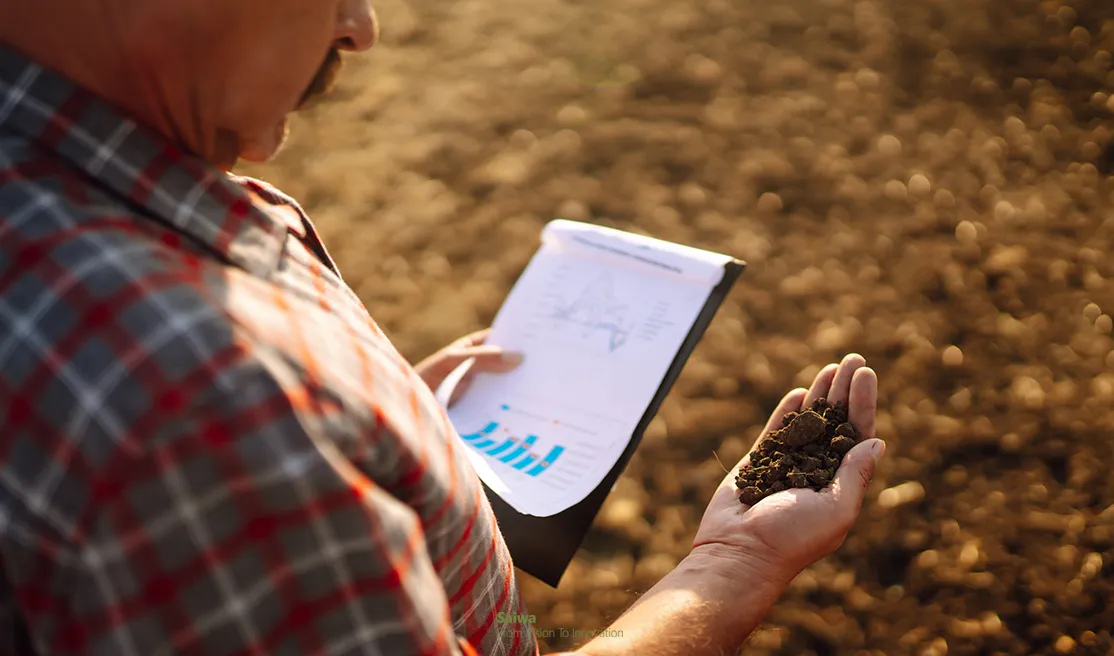
Analyzing crop monitoring data is essential to transforming raw information into practical insights that lead to better agricultural decisions. Without proper analysis, even the most advanced monitoring systems offer little value. Here’s why crop analysis is so important:
- Optimized resource management: Data analysis helps determine precise irrigation and fertilization needs, reducing waste and improving efficiency of inputs.
- Early problem detection: By identifying patterns in crop growth or stress indicators, farmers can detect diseases, nutrient deficiencies, or pest outbreaks before they spread.
- Improved yield forecasting: Analyzing trends over time allows for accurate predictions of crop performance, supporting planning and market readiness.
- Sustainability and cost reduction: Insightful analysis minimizes unnecessary field operations, conserving water, energy, and chemicals.
- Continuous improvement: Comparing data across seasons helps refine strategies, leading to smarter, more adaptive farming practices over time.
Emerging Trends: Multi-Modal Fusion and Edge AI in Crop Monitoring
As precision agriculture continues to mature, crop monitoring tools are rapidly evolving beyond single-sensor telemetry and delayed cloud processing. Modern systems are integrating advanced technologies that bridge the gap between high-volume data collection and immediate field action. Understanding these emerging trends is essential for agronomists and farm managers aiming to future-proof their operations.
Multi-Modal Data Fusion
Early crop monitoring implementations often relied on isolated data streams—such as periodic satellite passovers or standalone soil moisture sensors. Today, the cutting edge of modern agriculture lies in multi-modal data fusion. By dynamically combining high-resolution multispectral imagery from drones, continuous IoT soil telemetry, and hyper-local atmospheric data, AI platforms construct a unified, multidimensional model of crop health.
This holistic approach resolves the blind spots inherent in isolated monitoring tools. For instance, while a satellite NDVI reading might indicate general vegetation stress, fusing this data with real-time soil moisture sensors and thermal drone imaging allows the system to differentiate instantly between water deficit, nitrogen deficiency, or early-stage root pathogen infections.
Real-Time Processing via Edge AI
Another significant leap forward is the shift toward Edge AI processing. Traditionally, visual data captured by UAVs or smart farm equipment had to be uploaded to cloud servers for computational analysis, creating delays in time-sensitive operations. Edge AI integrates optimized deep learning models directly onto drone payloads or embedded hardware installed on tractor sprayers.
By executing computer vision algorithms locally at the field edge, smart sprayers can perform targeted weed detection and precision chemical application in real time during a single pass. This dramatically reduces chemical usage, minimizes crop exposure to unnecessary treatments, and eliminates the bandwidth dependencies often encountered in remote rural locations.
Generative AI and Conversational Diagnostics
Additionally, modern agricultural platforms are beginning to incorporate specialized large language models and generative analytics. Rather than requiring users to manually interpret complex spectral heatmaps and diagnostic graphs, generative interfaces synthesize multi-sensor data into plain-language summaries and step-by-step operational recommendations. Agronomists can query system dashboards naturally—asking for optimal spraying windows or spatial yield risk assessments—and receive instant, data-backed insights tailored to their specific field conditions.
How Sairone Enhances Crop Monitoring and Management
Standard systems show you data; Sairone tells you what to do with it. As a specialized AI solution, it elevates standard Crop Monitoring Tools by automating the most critical analytical tasks.
Using high-resolution drone imagery, Sairone moves beyond simple observation to deliver decisive actions, such as automated Weed detection for precision spraying and early pest identification. While Sairone offers a holistic agricultural solution, developers aiming to craft bespoke models for complex agricultural tasks can leverage specialized services within Saiwa's Fraime platform to build their own powerful tools.
Conclusion
Successfully adopting crop monitoring technology hinges on selecting a system that aligns with your specific agricultural needs and integration capabilities. The clear trajectory of this field is towards greater automation and AI-driven analysis, where platforms no longer just present data but deliver clear, actionable intelligence that drives efficiency and profitability.
Note: Some visuals on this blog post were generated using AI tools.
Comments
No comments yet!
Table of Contents
No headings were found on this page.