



Predictive Analytics in Agriculture: Enhancing Crop Yields
Explore how predictive analytics in agriculture helps forecast crop outcomes, optimize resources, and improve decision-making for better farming practices.
Written by Maryam
Reviewed by Boshra
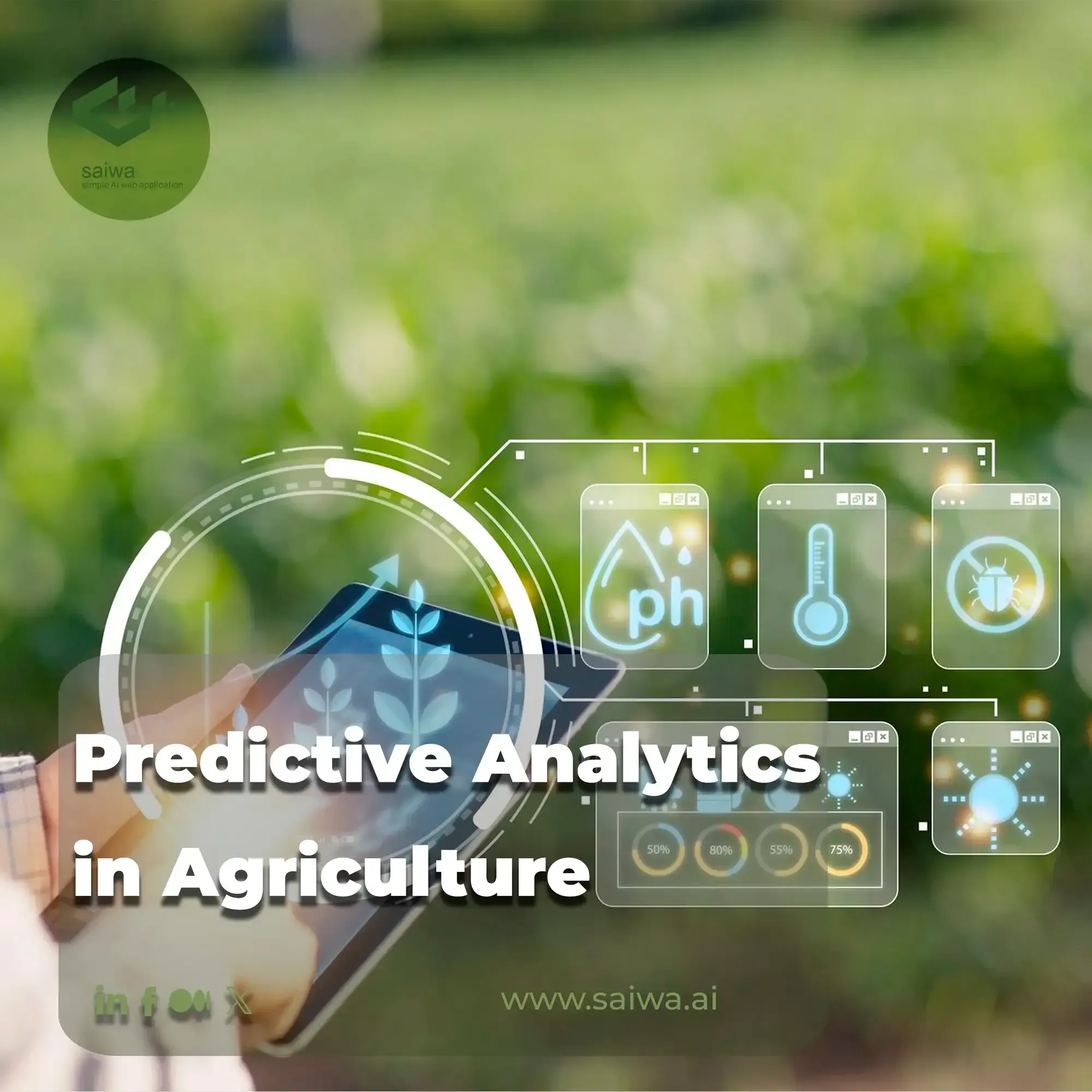
Agriculture is becoming increasingly shaped by data as farms face shifting weather patterns, rising production demands, and tighter resource constraints. Traditional observation and experience are no longer enough to keep up with these changes, especially when conditions vary from one season to the next. These uncertainties make it difficult to plan accurately, manage inputs efficiently, or respond to emerging risks. Predictive analytics provides a way to interpret patterns within large volumes of agricultural data, helping farmers anticipate outcomes instead of reacting to them. By understanding how predictive models use historical records, sensor data, imagery, and environmental information, readers can better see how these tools support smarter decisions and more resilient production systems.
This article outlines the role of predictive analytics in agriculture, the techniques behind it, and the practical benefits it brings to modern farming.
Read Also: The impact of machine learning in agriculture

The Growing Role of Agricultural Data
Advanced predictive analytics in agriculture rely on large, high-quality data sets. In agriculture, relevant data is increasingly abundant, including data from planting/harvesting equipment, soil sensor measurements, weather and climate records, satellite imagery, and aerial imagery captured by AI drones. However, effectively managing and preparing multimodal data for modeling requires significant effort. Real-world data require cleaning and preprocessing to handle missing values, redundancies, and inconsistencies before analysis. Domain knowledge also informs useful derived variables and data representations to best capture key agricultural factors.

Predictive Modeling Techniques for Agriculture
Time series models such as ARIMA and Prophet capture seasonal patterns and meteorological dependencies in crop yield data. Regression and random forest models incorporate factors such as soil properties, fertilizer inputs, and irrigation to estimate yield outcomes. Recurrent neural networks learn complex temporal dependencies from multidimensional time series data. Physics-based neural networks encode domain knowledge into model architectures and loss functions for improved generalization. Ensemble approaches aggregate disparate models to reduce bias and variance.
However, challenges remain in representing complex agricultural phenomena such as weather, biology, and equipment reliability in tractable modeling paradigms. Complex deep-learning models also face transparency and debugging issues. Hybrid techniques that combine mechanistic and data-driven components are often the most effective, balancing tractability with flexibility. Overall, multivariate modeling, uncertainty quantification, and model ensembling help overcome the inherent variability of agriculture.
Key Application Areas
Various applications of predictive analytics in agriculture can provide many benefits in the agriculture industry for a more optimized and productive food chain.
Crop Yield Predictions
Crop yield predictions guide inventory planning, logistics, and export volumes. Within-season forecasts at higher granularity inform supplemental irrigation, fertilizer, and pesticides to optimize outcomes. Modeling by crop variety and region enables insights at appropriate scales.
Crop Health Insights
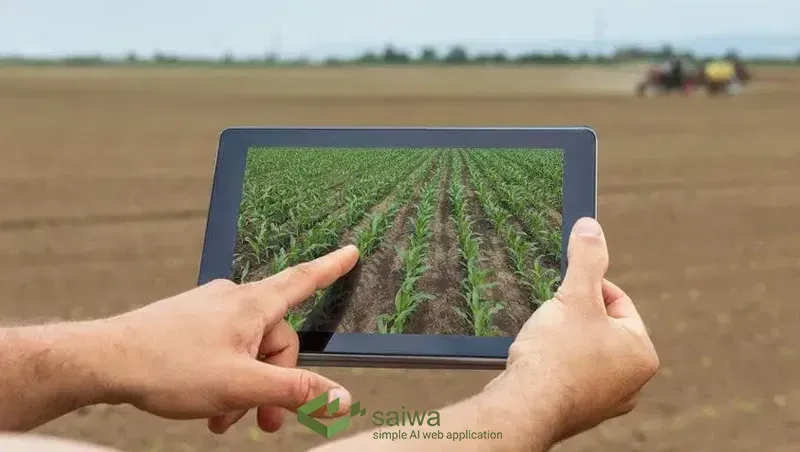
Crop health insights from aerial imagery fuel early disease and infestation detection allowing rapid, targeted response before widespread impact. Computer vision techniques can classify crop stress and nominate affected areas for ground inspection. This shifts disease management from reaction to proactive prevention.
Read Also: An Over View Applications of Computer Vision in Agriculture
Predictive Maintenance Analytics
Predictive maintenance analytics on telemetry from pumps, vehicles, and other farm equipment reduces downtime through prompt repairs before total failure. Optimization algorithms schedule maintenance to minimize disruptions during critical seasons. This improves equipment reliability and availability.
Optimized Field Treatment
Optimized field treatment prescription maps for fertilizers, pesticides, and irrigation help reduce resource usage and environmental impact while maintaining yields. Prescriptions based on predictive crop needs analysis enable precise efficient application.
Read Also: Practical Application & Future of AI in Agriculture
Agricultural Digital Twins and Climate Resilience
As climate volatility introduces unprecedented unpredictability into farming, predictive analytics is advancing beyond traditional forecasting models toward the creation of Agricultural Digital Twins (DTs). Digital twins act as real-time, virtual replicas of physical farm environments, continuously synchronizing with biological and environmental data. By integrating live feeds from soil sensors, weather stations, and drone-captured multispectral imagery, these virtual models can run millions of micro-simulations to test agricultural scenarios before any physical resources are committed.
This synthesis of high-throughput phenotyping and advanced predictive modeling enables agronomists to proactively manage climate risks. Rather than relying on reactive observation, farmers can use digital twins to forecast how specific crop varieties will perform under projected environmental stressors, such as extreme heat, drought, or shifting precipitation patterns. By continuously modeling the complex interactions between a plant’s genetics, real-time soil health, and anticipated climate shifts, these systems enable precision interventions—effectively allowing agricultural resilience to outpace the velocity of climate change.
Deep Learning for Granular Yield Zoning
Traditional yield prediction has historically provided farm-wide averages, which fail to capture the immense variability present within a single field. Modern AI-driven predictive analytics have overcome this limitation by deploying deep learning architectures that process multimodal data, including historical climate shifts, soil nutrition maps, and Normalized Difference Vegetation Index (NDVI) data captured by UAVs. These machine learning models excel at identifying hidden correlative patterns across vast spatial datasets that are impossible to detect manually.
The result is highly accurate, hyper-localized yield forecasting—often achieving accuracy rates between 85% and 92%—broken down into specific management zones within a single plot. This level of spatial granularity allows farm managers to stop treating their land as a uniform unit. Instead, they can predict exactly how different micro-zones will respond to specific fertilizer rates or irrigation schedules, optimizing inputs on a per-square-meter basis.
Generating Actionable Insights
Predictions should be packaged with operational recommendations to enable informed actions. For example, yield forecast reports could include specific suggestions on procuring transportation, storage, and marketing based on the quantified predictions. Crop disease alerts can prescribe appropriate fungicides or insecticides along with application maps. This decision support bridges the gap between raw predictions and field actions.
User experience design is crucial for adoption. Farmer-centric visualizations, notifications, and intuitive interfaces facilitate seamless workflow integration and build trust in model outputs. Interactive tools also support collaborative analysis, customization, and sharing of insights within farmer communities. Respecting end-user contexts maximizes the likelihood of impact.
The Multifaceted Benefits of Predictive Analytics in Agriculture
The rise of data-driven predictive analytics presents agriculture with immense opportunities to enhance productivity, efficiency, sustainability, and resilience against increasing climate volatility. Predictive insights enable proactive agile management as opposed to reactive approaches.

forecasting crop yields
One major benefit is forecasting crop yields months or weeks ahead of harvest with increasing granularity. This allows for optimizing plans around storage, transportation, marketing, and export volumes. During the growing season, yield forecast updates at finer farm-level resolution help guide supplemental irrigation, fertilizers, and pesticides to correct any shortfalls predicted. The precision-optimized application reduces unnecessary wastage and environmental impacts.
Automated predictive crop health
Automated predictive crop health analytics powered by aerial imagery enable early detection of disease outbreaks and infestations before they escalate into devastating losses. This shifts disease management from reaction to prevention. Prompt identification allows the deployment of targeted suppression measures while infections remain localized. Forewarned of potential issues, farms are also better positioned to secure crop insurance and financing contingencies if required.
Predictive maintenance analytics
Predictive maintenance analytics prevent operational disruptions by flagging impending equipment failures based on telemetry monitoring and scheduling preventive repairs. Optimized maintenance routines minimize disruption during critical harvest windows. Improved uptime through predictive maintenance increases farm productivity and profitability.
Intelligent allocation of resources such as irrigation water, fertilizer, pesticides, and labor optimizes usage and reduces waste based on predictive crop demand forecasts. Prescriptive application maps guide variable rate equipment. The overall optimized use of resources increases yields while reducing costs and environmental impact.
In summary, predictive analytics can help transform agriculture into a more efficient, productive, and sustainable data-driven managed ecosystem. Timely, actionable insights improve decision-making in the face of increasing variability and demands. However, careful, ongoing integration of these tools into existing practices and workflows remains critical to realizing the broad potential benefits.
Adoption Challenges
Significant upfront costs for sensors, connectivity, and analytics inhibit adoption by small farms, although cooperatives can pool resources. At the enterprise scale, change management is key as predictive approaches disrupt traditional practices and roles. Without participatory development, tools may fail due to a lack of relevance or mistrust.
On the technical side, data sets spanning different geographies, crops, climates, and equipment are needed to train robust models. High-quality labeled data for model monitoring remains scarce. Agricultural expertise is as important as statistical knowledge to properly structure problems. Democratizing these skills for users without a data science background remains a challenge.
The Future of Predictive Analytics in Agriculture
As research continues to advance techniques such as computer vision, IoT integration, and hybrid AI, predictive insights will become increasingly accurate and pervasive. Cloud platforms are also democratizing access to advanced analytics. However, thoughtful contextualization of these tools through participatory development and inclusive data practices will remain essential to translating predictions into positive impact. Overall, when used responsibly, data-driven intelligence can help address growing agricultural challenges.
Conclusion
Predictive analytics is becoming a central component of modern agriculture by transforming large, complex data sets into practical guidance. It supports early interventions, more efficient input use, better risk planning, and more reliable yield expectations. These capabilities strengthen both productivity and long term sustainability.
At the same time, the success of predictive tools depends on thoughtful integration into existing workflows and a clear understanding of the challenges farmers face. When combined with field expertise and developed in ways that reflect real farm conditions, predictive analytics can offer dependable support for informed, forward looking decisions. Its continued evolution will play an important role in building stronger and more adaptable food systems.
Note: Some visuals on this blog post were generated using AI tools.
References (4)
Comments
No comments yet!
Table of Contents
No headings were found on this page.