




- Precision Agriculture
- Agriculture
- AI in Business
Weed Control in Corn Fields: Effective Methods and Precision Strategies
Learn effective weed control methods for corn fields, including herbicide timing, mechanical control, crop rotation, and AI-powered weed detection.
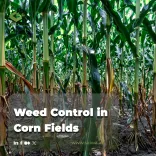

Effective weed control in corn fields begins with preventing early-season competition, identifying problematic weed species, and selecting appropriate treatments throughout the growing season. Combining crop rotation, mechanical cultivation, herbicides, and regular field scouting can help protect corn yield and reduce long-term weed pressure.
Corn plants are particularly vulnerable to weed competition during their early development. Uncontrolled weeds compete for sunlight, water, nutrients, and growing space, potentially reducing crop productivity and increasing harvesting difficulties.
Herbicide resistance, prolonged weed emergence, rising operational costs, and environmental concerns make weed management increasingly complex. Modern technologies, including artificial intelligence (AI) and drone-based weed mapping, provide additional opportunities to identify infestations and support targeted treatment decisions.
This guide explains common weeds in corn fields, effective control methods, optimal treatment timing, and how precision agriculture can support more efficient corn weed management.
Why Is Weed Control Important in Corn Fields?
Weeds can interfere with corn production from planting through harvest. Their impact depends on species, population density, emergence timing, soil conditions, and the competitiveness of the crop.
Effective weed management provides several important benefits:
- Protects crop yield: Reduces competition for essential resources during crop development.
- Supports healthy crop establishment: Gives young corn plants better access to light, moisture, and nutrients.
- Reduces harvesting difficulties: Limits interference from tall, dense, or climbing weeds.
- Prevents future infestations: Reduces the number of weeds capable of producing and dispersing seeds.
- Supports resistance management: Encourages diversified treatments instead of repeated reliance on a single herbicide.
- Improves operational efficiency: Helps farmers prioritize treatments according to actual field conditions.
The University of California Integrated Pest Management Program identifies the first three to five weeks after corn emergence as a particularly important period for managing weed competition.
However, the exact period during which corn must remain relatively weed-free varies among fields. Effective management therefore requires both early intervention and continued monitoring.
For a broader overview of agricultural management practices, see our guide to weed control methods and strategies.
What Are the Most Common Weeds in Corn Fields?
Identifying weed species is an essential first step in developing an effective corn weed control program. Different weeds have distinct growth habits, emergence patterns, reproductive strategies, and susceptibility to treatments.
Corn fields in North America may contain annual grasses, annual broadleaf weeds, and persistent perennial species.
| Common Weed | Scientific Name | Weed Type | Main Management Challenge |
|---|---|---|---|
| Waterhemp | Amaranthus tuberculatus | Annual broadleaf | Prolonged emergence and herbicide resistance |
| Palmer amaranth | Amaranthus palmeri | Annual broadleaf | Rapid growth and prolific seed production |
| Common lambsquarters | Chenopodium album | Annual broadleaf | Early establishment and crop competition |
| Giant ragweed | Ambrosia trifida | Annual broadleaf | Aggressive growth and potential herbicide resistance |
| Foxtail | Setaria spp. | Annual grass | Competition during early crop development |
| Barnyardgrass | Echinochloa crus-galli | Annual grass | Repeated emergence under favorable conditions |
| Canada thistle | Cirsium arvense | Perennial broadleaf | Extensive underground root system |
| Horseweed (Canada fleabane) | Erigeron canadensis | Annual broadleaf | Wind-dispersed seeds and herbicide-resistant populations |
The dominant weed species vary according to geography, climate, crop rotation, tillage practices, and historical management decisions.
Waterhemp and Palmer Amaranth
Waterhemp and Palmer amaranth are particularly challenging weeds in many North American corn production systems.
Their ability to grow rapidly, produce numerous seeds, and develop resistance to multiple herbicide modes of action can complicate long-term management.
Waterhemp may continue emerging after earlier weed control operations, making repeated scouting essential. Preventing surviving plants from reproducing is also important for reducing future infestation pressure.
Annual Grass Weeds
Foxtail, barnyardgrass, and other annual grasses can compete strongly with young corn plants.
Because corn is also a grass, selecting suitable treatments requires attention to crop tolerance and the characteristics of the target weed species.
Early identification and appropriate treatment timing are important for preventing these weeds from becoming established.
Perennial Weeds
Perennial weeds, such as Canada thistle, may reproduce through underground structures as well as seeds.
Removing visible shoots does not necessarily eliminate the entire plant. Management often requires repeated interventions and a multiseason strategy that addresses both aboveground growth and underground reserves.
What Is the Critical Period of Weed Control in Corn?
The critical period of weed control is the stage of crop development during which weed competition must be limited to avoid unacceptable yield losses.
In corn, this period is particularly important because young plants initially have limited canopy coverage and may struggle to compete with rapidly establishing weeds.
Research from the University of Nebraska–Lincoln demonstrates that the critical period can vary according to management practices, including nitrogen availability.
Other factors influencing the critical period include:
- Weed species and population density.
- Weed emergence relative to corn emergence.
- Soil moisture and nutrient availability.
- Corn planting density and row spacing.
- Crop growth rate and environmental stress.
- Effectiveness of previous weed control treatments.
A fixed calendar date is therefore not sufficient for determining the best treatment time.
Farmers should monitor corn development and weed growth together, particularly during the early vegetative stages, and adjust their management program according to observed field conditions.
When Is the Best Time to Control Weeds in Corn Fields?
Corn weed management should begin before planting and continue throughout the growing season.
The appropriate intervention depends on the crop stage, weed emergence, previous treatments, and available equipment.
| Management Period | Main Objective | Common Strategies |
|---|---|---|
| Before planting | Reduce existing weed pressure | Field scouting, seedbed preparation, suitable pre-plant treatments |
| Pre-emergence | Suppress early weed establishment | Residual herbicides and preventive practices |
| Early post-emergence | Control emerged weeds during vulnerable crop stages | Cultivation and suitable post-emergence treatments |
| Mid-to-late season | Identify surviving weeds and limit reproduction | Scouting, mapping, and permitted follow-up interventions |
| After harvest | Reduce future infestation pressure | Post-harvest monitoring and multiseason management planning |
Pre-Plant Weed Control
Pre-plant weed control focuses on reducing existing infestations before corn is established.
Farmers can use historical field records and current scouting observations to identify problematic areas, assess weed species, and prepare an appropriate management program.
Depending on the production system, this stage may include seedbed preparation, cover crop termination, mechanical operations, or approved pre-plant herbicide treatments.
Starting with a relatively weed-free field can reduce competition during corn establishment.
Pre-Emergence Weed Control in Corn
Pre-emergence weed control aims to suppress weeds before they establish significant aboveground growth.
In conventional corn production, residual herbicides can provide early-season suppression of susceptible weed species. Their effectiveness depends on factors such as soil characteristics, moisture availability, herbicide properties, and application timing.
Pre-emergence programs may also provide additional time for farmers to assess whether post-emergence treatments are necessary.
However, residual herbicides do not guarantee season-long weed control. Continued scouting is needed to identify emerging weeds and potential treatment failures.
Post-Emergence Weed Control in Corn
Post-emergence control targets weeds that have already emerged.
Depending on the field conditions, available options may include inter-row cultivation, selective herbicides, and compatible precision spraying technologies.
Treatment decisions must consider both corn growth stage and weed size. Delayed applications may reduce weed susceptibility or exceed crop-stage restrictions for particular herbicides.
South Dakota State University Extension provides additional guidance on factors affecting post-emergence herbicide decisions.
Post-Harvest Weed Control
Weed management should not necessarily end when corn is harvested.
Post-harvest scouting can reveal persistent perennial weeds, surviving herbicide-resistant populations, and areas where unwanted plants may continue reproducing.
Recording infestation locations after harvest can help farmers improve future crop rotations, identify priority management zones, and prepare for the next growing season.
Effective Weed Control Methods in Corn Fields
There is no single weed control method suitable for every corn production system. Successful management generally involves combining preventive, cultural, mechanical, and chemical approaches.
Preventive Weed Control
Prevention aims to limit weed introduction and dispersal before infestations become established.
Important preventive measures include:
- Using crop seed that meets appropriate weed-seed purity standards.
- Cleaning agricultural machinery before moving between fields.
- Monitoring field boundaries and access routes.
- Preventing surviving weeds from producing mature seeds.
- Recording recurring infestation locations.
Preventive practices are especially valuable for managing herbicide-resistant weeds and limiting their movement between agricultural fields.
Cultural Weed Control
Cultural weed control modifies agricultural practices to improve the competitiveness of corn and reduce opportunities for unwanted plants to establish.
Common cultural methods include crop rotation, cover cropping, competitive crop establishment, and suitable planting arrangements.
Crop Rotation
Alternating corn with other crops changes planting schedules, crop competition patterns, and available management options.
Diversified rotations can disrupt recurring weed emergence patterns and reduce reliance on the same treatment program every season.
However, crop rotation alone may not adequately suppress weeds that are well adapted to multiple cropping systems. It should be combined with other suitable management practices.
Cover Crops
Cover crops can suppress weeds by competing for growing space and resources. Their residues may also reduce weed emergence by limiting light penetration and creating a physical barrier.
The effectiveness of cover crops depends on species selection, biomass production, termination timing, and local growing conditions.
Cover crop management must also consider potential competition with the following corn crop, particularly where soil moisture is limited.
Competitive Crop Establishment
Healthy, uniform corn establishment can help improve crop competitiveness.
Appropriate planting density, suitable row spacing, and balanced nutrient management may contribute to faster canopy development and reduce opportunities for some later-emerging weeds.
These practices should be selected according to local agronomic recommendations and production objectives.
Mechanical Weed Control
Mechanical weed control physically removes, damages, or disrupts unwanted plants without relying on herbicides.
Common methods used in corn production include:
- Pre-plant tillage.
- Inter-row cultivation.
- Rotary hoeing where suitable.
- Hand removal of isolated problematic weeds.
- Camera-guided mechanical cultivation.
Inter-row cultivation can be particularly useful when weeds are small and the soil is suitable for field operations.
However, mechanical methods may be less effective against weeds growing directly within crop rows. Poorly timed cultivation can also damage corn roots, disturb soil, or contribute to erosion.
The suitability of mechanical weed control should therefore be evaluated according to weed growth stage, crop spacing, equipment availability, and conservation requirements.
Chemical Weed Control
Chemical weed control remains an important component of many conventional corn production systems.
Herbicides may be used before planting, before emergence, or after emergence, depending on the product and cropping system.
Successful chemical weed management requires selecting treatments that are effective against the target weeds and compatible with the corn variety, crop development stage, and environmental conditions.
Key considerations include:
- Correct identification of target weed species.
- Herbicide mode of action and resistance history.
- Corn herbicide tolerance and growth stage.
- Soil characteristics and weather conditions.
- Application equipment and calibration.
- Product registration and label requirements.
Farmers should follow the approved herbicide label and consult relevant local agricultural guidance. Products suitable for one type of corn or geographic region may not be appropriate for another.
For additional information, Cornell University's weed management guidance discusses cultural, mechanical, and herbicide-based approaches to corn weed control.
Comparing Corn Weed Control Methods
Each management approach offers different advantages and limitations.
| Control Method | Main Advantage | Main Limitation | Suitable Application |
|---|---|---|---|
| Prevention | Limits new infestations | Requires continuous management | All corn production systems |
| Crop rotation | Diversifies weed suppression practices | Depends on rotation design | Multiseason weed management |
| Cover crops | Suppresses weed establishment | Requires suitable establishment and termination | Preventive and integrated programs |
| Mechanical cultivation | Provides nonchemical weed removal | May disturb soil or damage crops | Suitable row-crop systems |
| Herbicide application | Provides scalable weed suppression | Resistance and crop injury risks | Conventional production systems |
| Precision weed mapping | Identifies spatial infestation patterns | Depends on reliable imagery and detection | Scouting and targeted treatment planning |
Precision weed mapping is not a direct weed removal method. Instead, it provides information that can improve the selection and placement of other control measures.
Managing Herbicide-Resistant Weeds in Corn
Herbicide resistance develops when resistant individuals survive treatments and reproduce, gradually increasing the proportion of resistant plants within a weed population.
Repeated reliance on the same effective herbicide mode of action can increase selection pressure.
Waterhemp, Palmer amaranth, giant ragweed, and horseweed are examples of weeds with documented herbicide-resistant populations.
An effective resistance-management program may include:
- Diversifying herbicide modes of action using locally appropriate, effective programs.
- Integrating mechanical and cultural weed control.
- Monitoring fields for unexpected treatment failures.
- Preventing surviving weeds from producing seeds.
- Maintaining records of previous treatments and infestation locations.
- Investigating suspected resistance with assistance from qualified agricultural specialists.
Not every surviving weed indicates herbicide resistance. Application timing, weather conditions, equipment performance, weed size, and other factors can also contribute to inadequate control.
The International Herbicide-Resistant Weed Database provides information on documented resistance cases across weed species, crops, and herbicide modes of action.
Digital mapping can help agricultural teams locate recurring weed patches and prioritize further investigation. Learn more about AI weed detection and herbicide resistance management.
Integrated Weed Management in Corn Production
Integrated weed management (IWM) combines complementary control practices into a coordinated program designed to manage weeds throughout the cropping cycle.
Instead of treating weed control as a single field operation, IWM considers prevention, crop establishment, direct intervention, resistance management, and long-term monitoring.
A practical corn weed management program can follow five stages:
- Assess the field: Review historical infestations and identify current weed species.
- Plan preventive measures: Select suitable crop rotation, sanitation, and cultural practices.
- Protect early crop development: Implement appropriate early-season weed control.
- Monitor and respond: Identify surviving or newly emerged weeds and evaluate follow-up interventions.
- Review seasonal outcomes: Record treatment effectiveness and adjust future management decisions.
This approach allows farmers to respond to changing weed populations rather than relying on an identical treatment program every year.
How AI and Precision Agriculture Improve Corn Weed Control
Conventional weed scouting provides important field-level observations, but large agricultural areas can be difficult to inspect comprehensively within limited treatment windows.
Artificial intelligence, drone imagery, and geospatial analysis can complement traditional scouting by helping agricultural teams identify where weeds are distributed across a field.
AI-Powered Weed Detection
Computer vision models analyze agricultural images to identify weeds based on visual characteristics such as leaf shape, texture, growth patterns, and spatial context.
When trained for appropriate target species and field conditions, these models can help distinguish unwanted vegetation from corn plants.
However, corn and weeds may have similar visual characteristics, especially when plants overlap or are at early growth stages.
Detection performance also depends on image quality, lighting, model training data, and the visibility of target plants.
For more information about these technologies, see our comprehensive guide to weed detection.
Drone-Based Weed Mapping
Agricultural drones can collect high-resolution imagery across corn fields, providing a spatial record of crop and weed conditions.
AI-assisted image analysis can identify supported target weeds, while geospatial processing helps represent detected infestations on a field map.
These maps may support several agricultural activities:
- Identifying priority areas for field inspection.
- Locating recurring weed patches.
- Assessing spatial differences in infestation severity.
- Supporting site-specific treatment planning.
- Comparing field observations across different monitoring periods.
Unlike conventional scouting records that may describe only selected observation points, drone imagery can provide broader spatial coverage where field visibility and image acquisition conditions are suitable.
Explore how drone weed mapping supports precision agricultural management.
Precision and Spot Spraying
Precision spraying uses spatial information or real-time sensing to direct herbicide applications toward selected treatment areas.
In corn fields where weeds occur in scattered patches, targeted treatment may offer opportunities to avoid unnecessary application in unaffected areas.
Two common approaches include:
- Map-based spraying: Treatment areas are identified using previously collected imagery or field observations.
- Real-time spraying: Equipment-mounted sensors detect weeds during field operations and trigger compatible application systems.
The effectiveness of these approaches depends on detection reliability, equipment compatibility, treatment accuracy, and agronomic requirements.
Targeted application may reduce herbicide use under suitable conditions, but savings are not guaranteed and must be evaluated for each field.
Robotic and Automated Mechanical Weeding
Agricultural robots and camera-guided cultivators can use sensing technologies to identify crop rows and guide physical weed removal.
These systems provide additional options for reducing reliance on chemical treatments.
Their suitability depends on corn spacing, weed size, operating speed, field conditions, equipment costs, and the ability to distinguish crops from unwanted plants.
Automated systems should be considered part of an integrated weed management program rather than a universal replacement for established control methods.
Case Study: AI-Powered Waterhemp Detection in Corn Fields
Saiwa conducted an internal research and development project to investigate the use of aerial imagery and artificial intelligence for detecting waterhemp infestations in corn fields.
The project used drone-captured RGB imagery and semantic segmentation, a computer vision technique that assigns categories to individual image pixels.
The research workflow involved:
- Collecting aerial imagery of corn fields.
- Annotating relevant vegetation and crop-condition regions.
- Developing an AI model to distinguish waterhemp-infested areas from healthy and visibly stressed corn.
- Evaluating model outputs against annotated reference imagery.
The resulting model demonstrated the ability to distinguish these field regions within the evaluated imagery.
This research contributed to the development of Sairone's waterhemp detection capabilities and illustrates how aerial imagery can support species-specific weed monitoring.
The project focused on detection and crop-condition analysis. Its findings should not be interpreted as a guarantee of herbicide savings, yield improvements, or equivalent detection performance in every field.
Read the complete AI-powered waterhemp detection and stress monitoring project.
How Sairone Supports Weed Control in Corn Fields
Sairone, developed by Saiwa, provides AI-powered weed detection and geospatial mapping tools that can support agricultural weed management.
Its weed and invasive plant control solution helps agricultural professionals analyze field imagery, identify supported target species, and generate spatial outputs for management decisions.
From Field Imagery to Weed Management Decisions
Step 1: Collect field imagery
Capture suitable imagery of the corn field using compatible aerial or ground-based imaging systems.
Step 2: Detect supported weed species
Sairone's computer vision models analyze the imagery to locate and classify supported target weeds.
Step 3: Generate weed distribution maps
Detection results can be converted into geospatial outputs that show the locations of identified infestations.
Step 4: Export field information
Available export formats include GeoJSON, Shapefile, KML, and CSV, supporting subsequent analysis and compatible precision agriculture workflows.
Step 5: Plan appropriate interventions
Farmers and agronomists can use the resulting information alongside field observations, equipment capabilities, and local recommendations to determine suitable management actions.
Sairone currently lists waterhemp and Palmer amaranth among its available weed detection services. Species availability should be checked before beginning a project.
By connecting image analysis with spatial field information, Sairone supports more informed weed management decisions without replacing the need for agronomic expertise.
Looking to improve weed detection and treatment planning in your corn fields?
Explore Sairone's AI-powered weed control solution to discover how automated detection and geospatial mapping can support your agricultural operations.
Conclusion
Effective weed control in corn fields requires early intervention, accurate weed identification, appropriate treatment selection, and continuous monitoring.
Preventive practices, crop rotation, cover crops, mechanical cultivation, and suitable herbicide programs each contribute to managing weed competition and limiting future infestations.
AI-powered weed detection and drone mapping can complement these established methods by providing additional information about infestation locations and field conditions.
Combining integrated weed management with reliable agricultural data allows farmers to develop more targeted, adaptable, and economically informed corn weed control strategies.
Frequently Asked Questions
What is the best method of weed control in corn fields?
There is no single best method for every corn field. Integrated weed management combines preventive practices, crop rotation, mechanical cultivation, and suitable herbicides according to weed species, crop stage, and field conditions.
When should weeds be controlled in corn?
Early-season weed control is particularly important because young corn plants are vulnerable to competition. Management should begin before planting and continue through crop establishment, with additional scouting throughout the growing season.
What are the most difficult weeds to control in corn?
Waterhemp, Palmer amaranth, giant ragweed, and persistent perennial weeds can be challenging. Their management difficulty depends on local populations, emergence patterns, growth habits, and herbicide resistance.
Can weeds be controlled in corn without herbicides?
Yes. Crop rotation, cover cropping, mechanical cultivation, hand removal, and automated physical weeding can contribute to nonchemical weed management. These practices often require careful timing and repeated monitoring.
What is the difference between pre-emergence and post-emergence weed control in corn?
Pre-emergence control aims to suppress weed establishment before emergence, while post-emergence control targets emerged weeds. Herbicide application timing must follow the product label and account for both crop and weed growth stages.
How can farmers manage herbicide-resistant weeds in corn?
Farmers can diversify effective herbicide modes of action, incorporate nonchemical control methods, investigate treatment failures, monitor surviving weeds, and prevent resistant populations from reproducing.
How does AI help with corn weed control?
AI can analyze agricultural imagery to detect supported weed species and identify infestation locations. Combined with geospatial mapping, this information can help agricultural teams prioritize scouting and plan targeted interventions.
References and Further Reading
- Cornell University — Weed Control in Corn
- Cornell University — Weed Management Methods
- University of Nebraska–Lincoln — The Critical Period of Weed Control in Corn
- University of California IPM — Integrated Weed Management in Corn
- Iowa State University — Critical Periods of Competition in Corn
- South Dakota State University — Considerations of Corn Postemergence Herbicides
- International Herbicide-Resistant Weed Database
- Saiwa — AI-Powered Waterhemp Detection and Stress Monitoring in Corn Farms
About the team
Maryam Rajaei
I am a software and AI developer with an M.Sc. in Software Engineering, specializing in machine learning, and scalable back-end systems. I leverage C# and Python to engineer high-performance services and AI solutions that transform intricate vision challenges into dependable, production-ready products. Additionally, I am passionate about conducting research and share my insights through writing.
Share this article
Help others discover this content
Comments
Be the first to share your thoughts
No comments yet
Start the conversation by sharing your thoughts