Project Overview

In collaboration with Tarmeez, Saiwa delivered and deployed the Hemaa.ai solution—our AI platform specifically tailored for date palm plantations. The Data‑Palm module caters to three main capabilities:

  1.Palm Tree Health Monitoring – Early detection of palm stress, nutritional deficiencies, or pest infestation using aerial imagery combined with deep learning analytics via the Hemaa.ai platform.

palm-health-monitoring.png


   2.Automated Tree Counting & Geolocation – High‑accuracy counting and mapping of individual trees across plantations using drone or satellite imagery processed through Hemaa.ai.

palm-counting.png


   3.Weed Detection & Mapping – Location-based identification of weeds around tree rows to support targeted field interventions.

palm-weeds.png


Key Features & Capabilities

Feature

Description

Multi-modal Data Inputs

Supports drone photography, high-resolution satellite imagery, and optional thermal or RGB sensors.

Advanced AI Models

Uses object detection networks like YOLO and EfficientDet for up to 99% detection accuracy and tree geolocation within ±2 m.

Proactive Health Alerts

Enables early-stage identification of Red Palm Weevil infestation and stress signs before they are visible.

Automated Tree Inventory

Efficiently catalogs thousands of date palms, providing spatial data and tree IDs for management.

Weed Cluster Mapping

Vendors precise weed maps to inform selective chemical application and minimize costs and environmental impact.


Workflow & Deliverables

  1. Data Capture – Imagery collected via drones or satellite over plantation fields.
  2. AI Analysis on Hemaa.ai – Algorithms process images to assess tree health, count palms, and detect weeds.
  3. GIS Mapping & Export – Georeferenced tree locations and anomaly zones visualized and exportable to GIS systems.
  4. Dashboard & Reporting – Insight dashboards for stakeholders to explore health alerts, weed zones, and inventory summaries.


Impact & Benefits

  • Highly Accurate Results – Achieves detection and counting precision above 95%, even under varying terrain and lighting conditions.
  • Early Pest Intervention – Significantly reduces damage by spotting infestations early and prompting timely treatments.
  • Operational Efficiency & Cost Savings – Automates labor-intensive field tasks, lowering deployment costs and reducing error.
  • Sustainability & Minimal Environmental Footprint – Weed detection minimizes pesticide usage by enabling selective treatment.


Roles & Collaboration

  • Tarmeez – Provided domain expertise, conducted field integration, and led project implementation at client sites.
  • Saiwa – Managed overall project coordination, customized integration with client systems, and delivered end-user dashboards and reporting tools.
  • Hemaa.ai – The AI‑platform powering all above capabilities (health analytics, tree detection, weed mapping); serves as the solution’s technical backbone (not co‑partner).


About Tarmeez

Tarmeez, also known as Tarmeez Tech, is a Saudi-based technology company specialising in digital transformation consultancy, enterprise architecture, and custom software development across multiple sectors, with a focus on emerging technologies like Internet of Things (IoT), artificial intelligence, and data-driven platforms Tarmeez. Through its expertise, Tarmeez integrates innovative AI-powered solutions with local domain knowledge, helping clients across agriculture, retail and public services to enhance productivity and user experience Tarmeez.

 

Related Links

  • Visit the Hemaa.ai platform to explore the palm‑specific services
  • Learn more about Hemaa.ai’s Health Monitoring • Counting & Mapping • Weed Detection modules


Related Projects

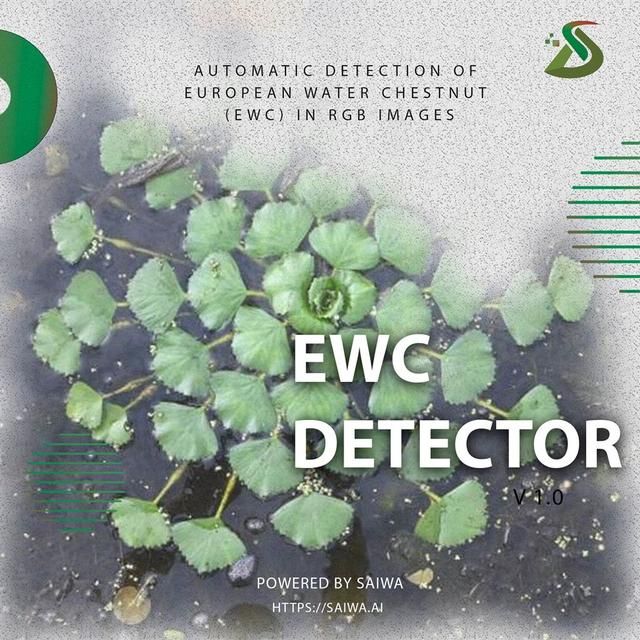
    Detection and Surveillance of European Water Chestnut
    European water chestnut (Trapa natans) is an invasive floating-leaved aquatic plant that is capable of out-competing native species and altering Ontario’s aquatic ecosystems. In addition to ongoing control of known populations in Ontario, this species is designated as a “Prohibited Species” in Ontario under the Invasive Species Act, 2015 to aid in prevention, detection and control of the species. Ducks Unlimited Canada (DUC) performs surveillance and control of this species in eastern Ontario in attempts to eradicate existing populations and prevent the establishment of new ones.
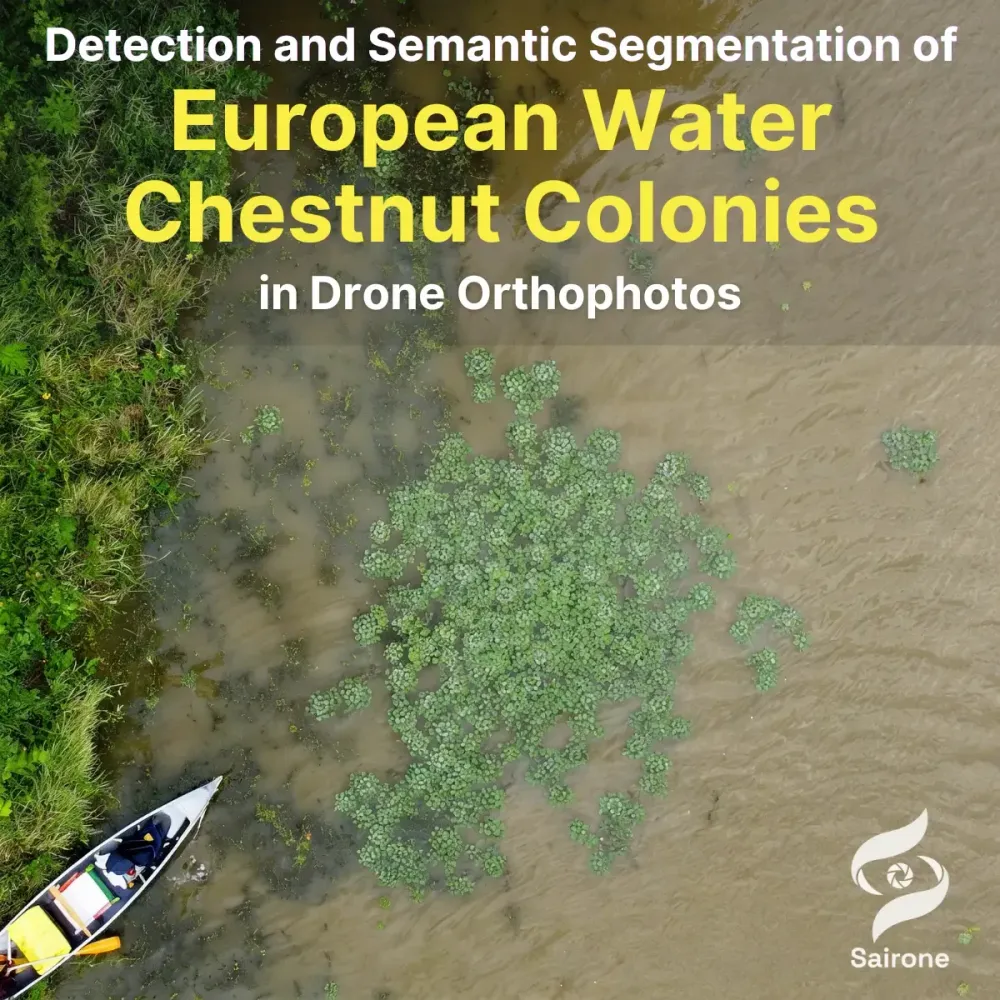
    Detection and Semantic Segmentation of European Water Chestnut Colonies in Drone Orthophotos
    In 2026, Saiwa continues its collaboration with Ducks Unlimited Canada (DUC) to advance drone-based monitoring of invasive aquatic vegetation. Building on previous phases focused on segmentation accuracy and geospatial localization, this phase introduces enhanced pixel-level semantic segmentation of European Water Chestnut (EWC) to enable detailed mapping of both individual plants and dense colonies across diverse aquatic environments.
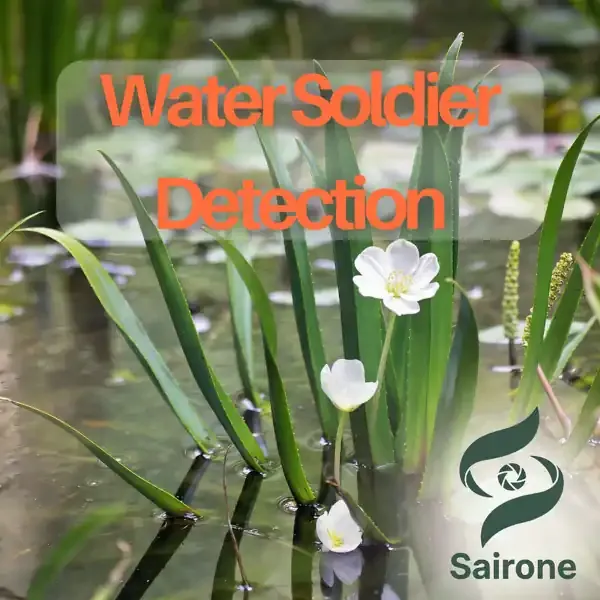
    Multispectral Submersion Classification of Water Soldier in Drone Imagery
    In 2026, Saiwa continues its collaboration with Ducks Unlimited Canada (DUC) to further enhance drone-based monitoring of invasive aquatic vegetation. Building on last year’s high-accuracy RGB-based Water Soldier detection pipeline, this new phase focuses specifically on determining whether each detected plant is located above or below the water surface.
    Detect Water Soldier RGB Drone Monitoring And Tracking
    In late 2024, Saiwa Co and Ducks Unlimited Canada launched a project to enhance UAV-based detection and surveillance of the invasive aquatic plant Water Soldier (Stratiotes Aloides) using advanced image processing and deep learning. The team addressed challenges from dense and submerged vegetation, environmental noise, and irregular plant shapes by reformulating the task as semantic segmentation. The project delivered a robust model achieving 95.52% pixel accuracy, enabling accurate monitoring of both isolated plants and dense colonies, supporting early intervention, efficient management, and a scalable foundation for future multispectral enhancements.
    Advancing UAV-based EWC surveillance
    To enhance Ducks Unlimited Canada (DUC)‘s capability for UAV-based surveillance of European Water Chestnut (EWC) through machine learning, we at Saiwa have previously implemented the initial version of the EWC detector software. In the second stage, we are in the process of finalizing the product’s features and upgrading its interfaces.The two primary features to be incorporated in this stage are as follows: Incremental learning for gradually training the deep network over time. This feature enables us to rectify false positive and false negative detections over time. Reporting the 3D universal coordinates of EWC locations using drone configuration and temporal GPS data.
    Phragmites Detector – AI-Powered Invasive Species Monitoring in Wetlands
    Phragmites Detector is an AI-driven system that uses drone imagery and adaptive machine learning to identify and track invasive Phragmites in wetlands. Designed for conservation groups, it offers scalable, accurate, and user-friendly tools for early detection, monitoring, and ecological reporting.