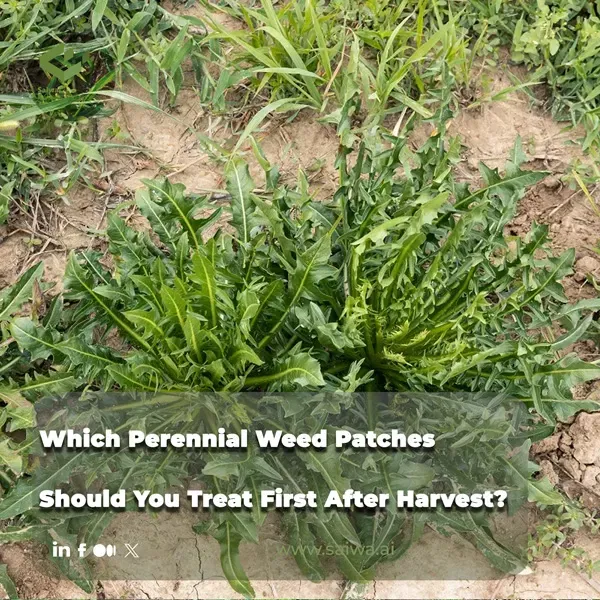
Which Perennial Weed Patches Should You Treat First After Harvest?
Oct 24, 2026
Written by: Amirhossein Komeili
Reviewed by: Boshra Rajaei, PhD
Written by: Amirhossein Komeili
Reviewed by: Boshra Rajaei, PhD
A scattered patch of perennial weeds after harvest can be easy to postpone. That is often the point at which it becomes a more persistent management problem. Perennials survive through roots, rhizomes, shoots, or other belowground structures, so destroying foliage alone may only produce a temporary setback. Their capacity to regrow, spread, and return from established root systems changes the order in which patches deserve attention.
Priority should go to patches where the cost of delay is biologically credible and the fall treatment window offers a workable opportunity. Species identity, actively growing regrowth, patch position, crop context, herbicide restrictions, and the area affected all determine whether a spot treatment, boom application, mowing program, or deferred action is appropriate. A sound plan focuses available time and chemical input on the perennial patches most likely to cause recurring field-level pressure.
Perennial weeds require a different post-harvest triage logic from annual weeds because their survival is not dependent on a newly germinated seedling each year. Many restart from established roots or shoots. A priority map should therefore identify patches where belowground persistence makes short-lived top-growth suppression inadequate.
Perennial weed root systems allow rapid regrowth whenever aboveground structures are killed. In vegetable production, perennial roots with annual tops can go unnoticed until they become a major problem. Yellow nutsedge, quackgrass, pokeweed, milkweed, and field bindweed are listed examples of herbaceous perennials with this growth habit. The immediate implication is that an apparently small post-harvest patch may represent an established belowground population rather than a new, low-risk infestation.
Contact herbicides may stunt perennial weeds and curl leaves, but spring and early-summer applications often move little activity to the roots because plants are growing rapidly. Mechanical treatments can also be unreliable: cutting rhizomes or roots may increase the number of plants instead of killing them, and deep roots can escape cultivation. Treating a patch with established root systems before the next growing season can therefore be more defensible than repeating superficial suppression after regrowth.
Species identification determines which patches are likely to be most difficult and which treatment route is plausible. NDSU identifies Canada thistle, absinth wormwood, perennial sowthistle, dandelion, and foxtail barley as cool-season perennials that respond particularly well to fall herbicide applications. Ohio State University identifies hemp dogbane, milkweed, and Canada thistle as leading perennial weed concerns in its forage context.
Species also differ in the herbicide program that supports control. Ohio State notes that glyphosate is the strongest listed option for milkweed, while Canada thistle responds best to fall glyphosate, clopyralid, or 2,4-D plus dicamba applications under the stated conditions. For Canada thistle and foxtail barley, NDSU recommends glyphosate alone because mixing other herbicides may antagonize glyphosate activity. A priority list that ignores species risks spending a treatment window on patches that either require a different approach or are poorly matched to the selected product.
Fall creates a physiological window that can make certain perennial patches better targets than they were earlier in the season. As plants prepare for winter, they shift energy storage toward their root systems. Systemic herbicides applied while that movement continues can reach underground growing points, which is the mechanism that makes an autumn pass worth considering.
Shorter days and cool nights initiate movement of carbohydrates from shoots to roots, where plants store reserves for the next season. ADAMA likewise describes perennial and winter annual weeds in fall as moving energy into root systems to survive winter and regrow in spring. This pattern increases the vulnerability of actively growing perennials to systemic herbicides that move within the plant and reach underground tissues.
Light frost does not necessarily close the opportunity. Ohio State states that Canada thistle can respond especially well after light frosts when the plant is still moving nutrients to the root system. NDSU gives a different operational timing direction for cool-season perennial, biennial, and winter annual weeds: apply after a freeze or after mid-October, whichever comes first, while recognizing that approaching cold conditions can eventually limit spraying. The appropriate window remains linked to the target species, local conditions, and active plant function.
Give priority to patches with sufficient, active regrowth rather than those recently cut, drought-stressed, or already shutting down. In grass forage stands, Ohio State recommends systemic herbicide treatment when plants are actively growing and have regrown to about 6 to 12 inches after the prior cutting. September is described as an optimal period for much of Ohio because it falls several weeks after the last cut and before hard frosts.
Minimum plant size is part of treatment feasibility. NDSU specifies at least 8 inches of plant height for Canada thistle, absinth wormwood, and perennial sowthistle, and likely 6 inches for foxtail barley when seeking strong perennial control. ADAMA similarly recommends applications after harvest and before a killing frost while weeds remain green and active. A map should consequently distinguish a large patch of recoverable, active plants from a recently disturbed patch that has not yet rebuilt enough leaf area to make a systemic treatment effective.
Treating a perennial patch after harvest may not deliver a direct yield response in the crop already removed. That makes the decision less intuitive than an in-season rescue spray. The comparison is forward-looking: whether treatment now reduces the labour, chemical input, operational disruption, and recurring weed pressure that an unmanaged patch can create.
Michigan State University Extension advises growers to inspect perennial patches in the fall and act before they become unmanageable, stating that control at this stage can reduce the time, effort, and money required later. NDSU also stresses the importance of limiting weed spread at field borders and in interior areas where crop plants are absent. Mowing these areas reduces viable seed entering the combine and helps prevent movement of weeds within the field.
Combine movement adds another reason to prioritize patches near harvest traffic. NDSU warns that resistant weeds moved farther into a field by the combine can establish a wider resistant population, and seed production can progressively move that problem farther through the field when the same herbicides are repeatedly used. Patches that threaten to seed into a combine or expand from the field edge toward productive ground deserve early review.
Agronomic benefit does not automatically translate into a known financial return for every patch. The available evidence supports the potential to reduce future pressure and management burden, but an individual treatment decision still depends on patch area, product and application cost, crop safety, label limitations, and whether control is feasible at the current growth stage.
This distinction protects treatment prioritization from becoming a blanket recommendation. A small isolated patch may be suited to a spot treatment, while a large dense infestation may require mowing plus systemic treatment or a broader boom application. Field conditions and the weed species determine whether a fall intervention is practical enough to justify the cost.
Not all patches create the same operational risk. A perimeter infestation can seed into machinery or migrate toward cropped ground. An interior patch in an unproductive gap can also be important if it is producing viable seed or serving as a source of repeated regrowth. Location provides an efficient first filter when a farm team cannot treat every area at once.
NDSU recommends mowing weeds close to standing crops and along outside field margins so they do not enter the combine. It also recommends mowing interior zones that are not supporting crops to reduce viable weed seed entering the machine. This turns perimeter and interior patches into a practical priority class, especially where harvest traffic can carry seed or resistant plants deeper into the field.
Herbicide coverage may be weaker at the outside edge of a boom if the required nozzle setup was not used. NDSU notes that a reduced herbicide rate on perimeter weeds can select for herbicide resistance. A patch map that marks field edges, non-crop interiors, and machinery travel paths can help managers identify zones where spread risk and application-quality risk overlap.
Application method should match patch size and crop context. Michigan State University Extension recommends either spot or boom spraying in late summer and early fall, depending on the affected area and crop. In asparagus, a spot sprayer or wick applicator is recommended to reduce damage to surrounding plants. The same principle applies more broadly: localized patches can justify localized application where the crop and equipment allow it.
For dense perennial patches in grass forage, Ohio State identifies frequent mowing as a useful tool and states that combining mowing with a systemic herbicide can further reduce the plants’ capacity to regrow in spring. Larger affected areas may justify a boom treatment, but the decision must remain consistent with the crop system, label, and future rotation. Treating more hectares is not a substitute for selecting the correct treatment method.
A treatment map is only useful when the response is compatible with the actual species and field situation. Products that provide meaningful activity on one perennial may be ineffective on another, and grass-only herbicides do not control sedges. Field teams should verify the weed before applying a program designed for a different botanical group.
Michigan State University Extension lists glyphosate, halosulfuron, and 2,4-D among general options for broadleaf perennial problems, while fluazifop, sethoxydim, and clethodim are possibilities where grasses are the principal target. The grass-specific options are described as more effective during active growth in early and midsummer. Sedges must be treated separately from grasses: a larger plant with a triangular stem is a sedge, while a round stem identifies a grass.
In forage systems, product availability changes with the stand. Ohio State cautions that systemic herbicides used for perennial control are generally unsafe for clovers, though they may be used in mixed grass-legume stands intended for frost seeding later in winter. In mixed alfalfa-grass stands, chemical options are limited, and metribuzin may not provide strong control of several problematic perennials, including quackgrass, Canada thistle, and yellow nutsedge.
Labels set the boundary for a workable treatment. Ohio State specifically advises checking treated-hay restrictions, plant-back intervals, application timing, and the age appropriateness of products for alfalfa stands. ADAMA states that applications of PRIORITY HL after August 1 limit the next crop to cereals or summer fallow, while also noting that Group 2 resistance means no control from that mode of action.
Weather and spray conditions require the same level of discipline. ADAMA recommends applying before a killing frost while weeds are green and active. NDSU asks growers to be patient in the fall because the target species determines what is needed for effective treatment. A patch should move down the priority list when the planned product conflicts with rotation, the weed has insufficient regrowth, or weather prevents an application that meets label and biological requirements.
Sairone provides a data workflow for agricultural service providers, agronomists, cooperatives, and other organizations that need to review field imagery and geospatial detections before allocating treatment resources. It uses AI, computer vision, machine learning, and geospatial analysis for weed and invasive-plant control alongside wider agriculture and environmental applications.
Its role in perennial-patch prioritization is decision support. The platform can organise image data, detect and locate mapped plants, support review of results, and export spatial outputs. Species identification, crop context, product selection, and final treatment decisions remain subject to field validation and agronomic judgement.
Sairone accepts high-resolution drone imagery, orthophotos, and georeferenced datasets, including GeoTIFF, TIFF, JPEG, and PNG. It can process images, videos, and orthomosaics, and can create orthomosaics from video inputs. Its file environment supports cloud storage and organisation of imagery, inputs, processed outputs, folders, and larger datasets.
The platform also includes annotation tools for polygons, bounding boxes, class definition, customised colours, and multi-class labelling. These tools can support structured dataset preparation and model refinement where an organisation requires a workflow tailored to the imagery and target objects it works with.
Sairone Weed Control is designed to detect, map, and analyse weeds and invasive plants in agricultural and natural environments. Its documented species include Taraxacum, Amaranthus tuberculatus, Amaranthus palmeri, European Water Chestnut, Water Soldier, Fleabane, and Thistle. Individual detections can carry a confidence score and precise geographic coordinates.
Users can review, correct, and approve AI-generated results through a validation process before final use. Validated detections can then transfer to Atlas, Sairone’s geospatial environment, where users can visualize distributions, analyse infestation patterns, create treatment maps, and use aerial or satellite imagery overlays. This review sequence supports the identification of spatially coherent patches rather than reliance on unverified automated outputs.
Sairone generates GIS-ready exports in GeoJSON, Shapefile, KML, and CSV formats. These outputs can move into existing geospatial and operational systems used for treatment planning and precision-spraying workflows. A mapped perennial patch can therefore be retained as a spatial layer during discussion of treatment area, field access, product restrictions, and operational timing.
Atlas also includes detection-clustering algorithms that group identified weeds into manageable treatment zones. This can turn a collection of geolocated detections into areas suitable for field review and prioritisation. Whether a zone receives a spot treatment, boom application, mowing, or deferral still depends on its species composition and the field conditions described above.
Saiwa develops and customizes AI models based on the user’s needs and data type, rather than treating every field workflow as identical. This can support post-harvest weed-review processes that use different imagery sources, management units, and reporting needs.
Sairone is available as a cloud platform, through customized API integration, and as a fully customized White Label platform. API integration can connect the service to existing client infrastructure, while White Label deployment can be built around a customer’s brand, needs, and workflow. Saiwa also describes BaaS and a multi-tenant structure for agritech organisations seeking outsourced product-development capabilities.
The first perennial patches to treat after harvest are the ones where established root systems, active fall regrowth, species-specific control difficulty, and a credible risk of spread make delay costly. Canada thistle, foxtail barley, dandelion, perennial sowthistle, and other cool-season perennials can be suitable fall targets when plants have adequate height, remain physiologically active, and the selected treatment matches label and rotation requirements.
Spatial prioritisation strengthens the use of limited post-harvest resources. It directs attention to crop-edge and interior seed-source areas, distinguishes small treatable patches from broad infestations, and documents where location, species, and treatment feasibility align. Image processing, validation, Atlas visualisation, detection clustering, and GIS-ready exports can make this prioritisation operational, while field-specific agronomic assessment determines the final treatment choice.
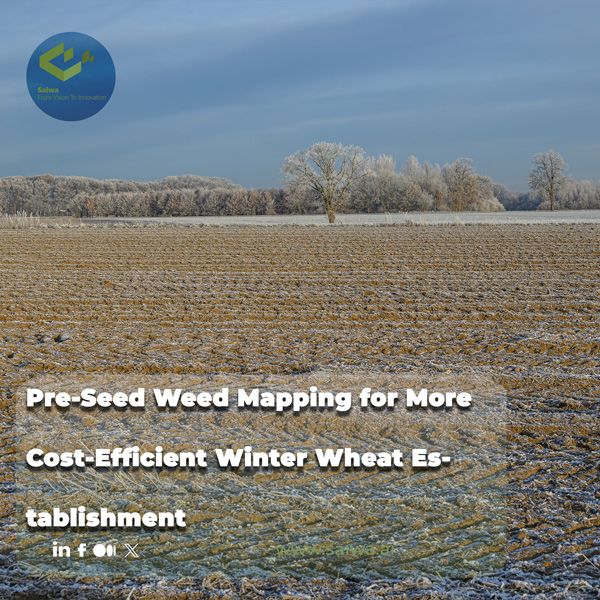
Winter wheat establishment begins before the drill enters the field. Weed pressure already present in the seedbed can compete for moisture,
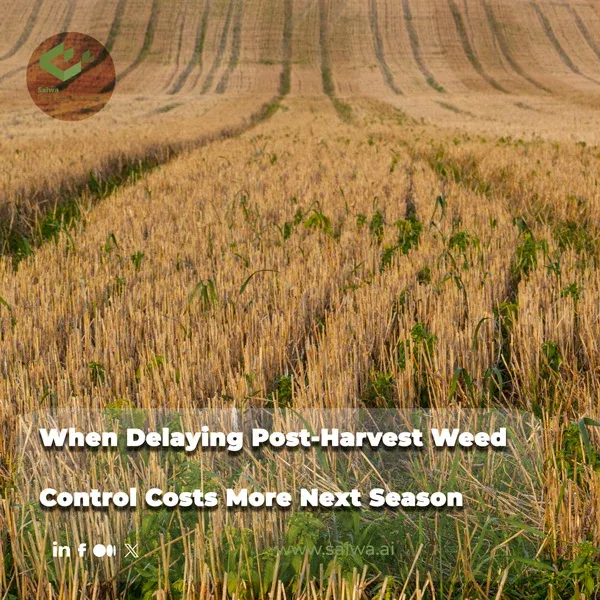
A post-harvest weed flush can look less urgent than a problem in a standing cash crop. That impression is often expensive. Escaped weeds con
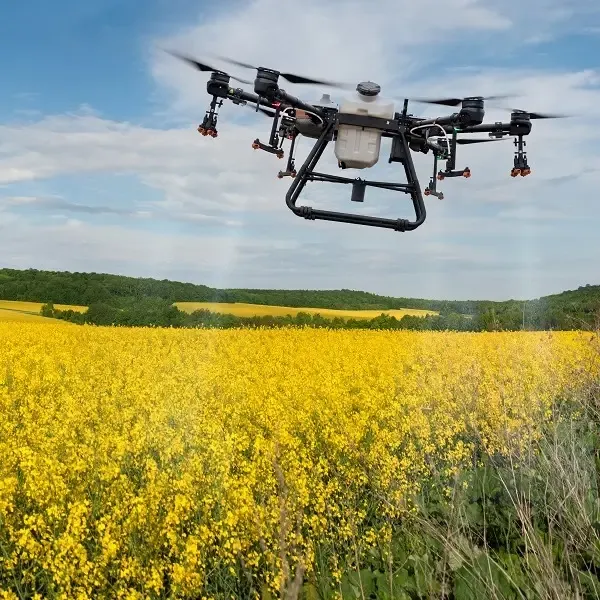
Volunteer canola is a post-harvest management issue with both immediate and multi-season consequences. Seed lost during combining can germin
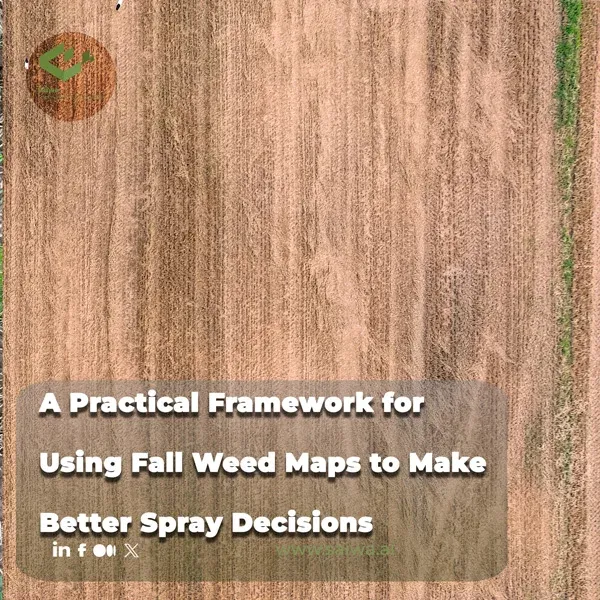
A fall weed map is useful only when it changes what happens next. It may show where weeds survived, where patches are recurring, or where a
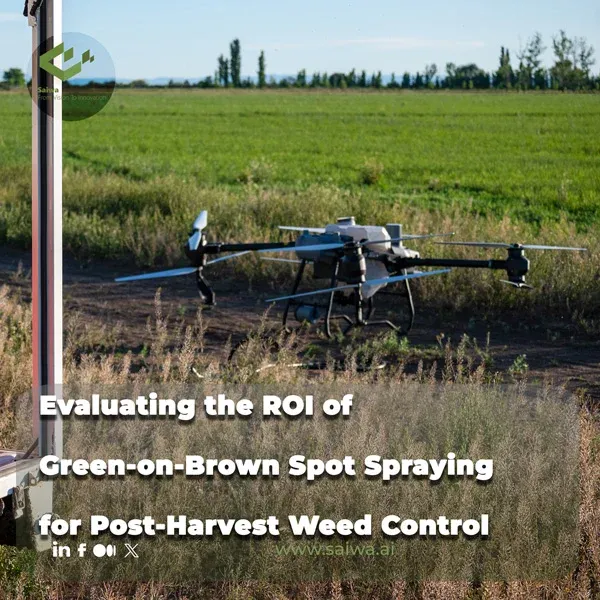
Post-harvest fields often show an uneven weed pattern: a few dense patches, thin linear infestations, and large areas with little green vege
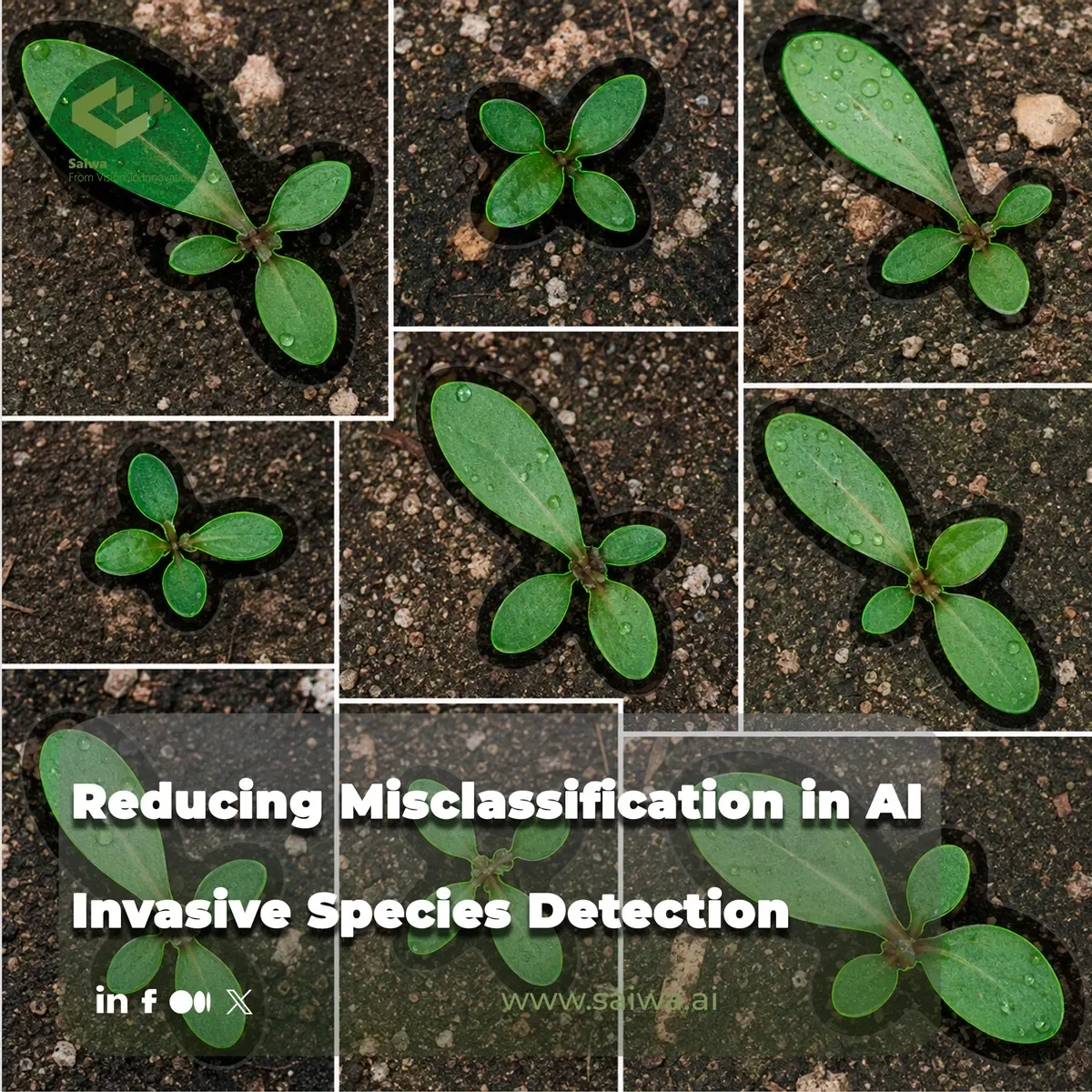
Misclassification can undermine an invasive-species monitoring program even when a model reports strong aggregate accuracy. A false positive
Be the first to share your thoughts
Start the conversation by sharing your thoughts
Share this article
Help others discover this content
Get expert insights, product news, and industry trends delivered straight to your inbox.
No spam, unsubscribe anytime. We respect your privacy.
