When Delaying Post-Harvest Weed Control Costs More Next Season
Oct 15, 2026
Written by: Amirhossein Komeili
Reviewed by: Boshra Rajaei, PhD
Written by: Amirhossein Komeili
Reviewed by: Boshra Rajaei, PhD
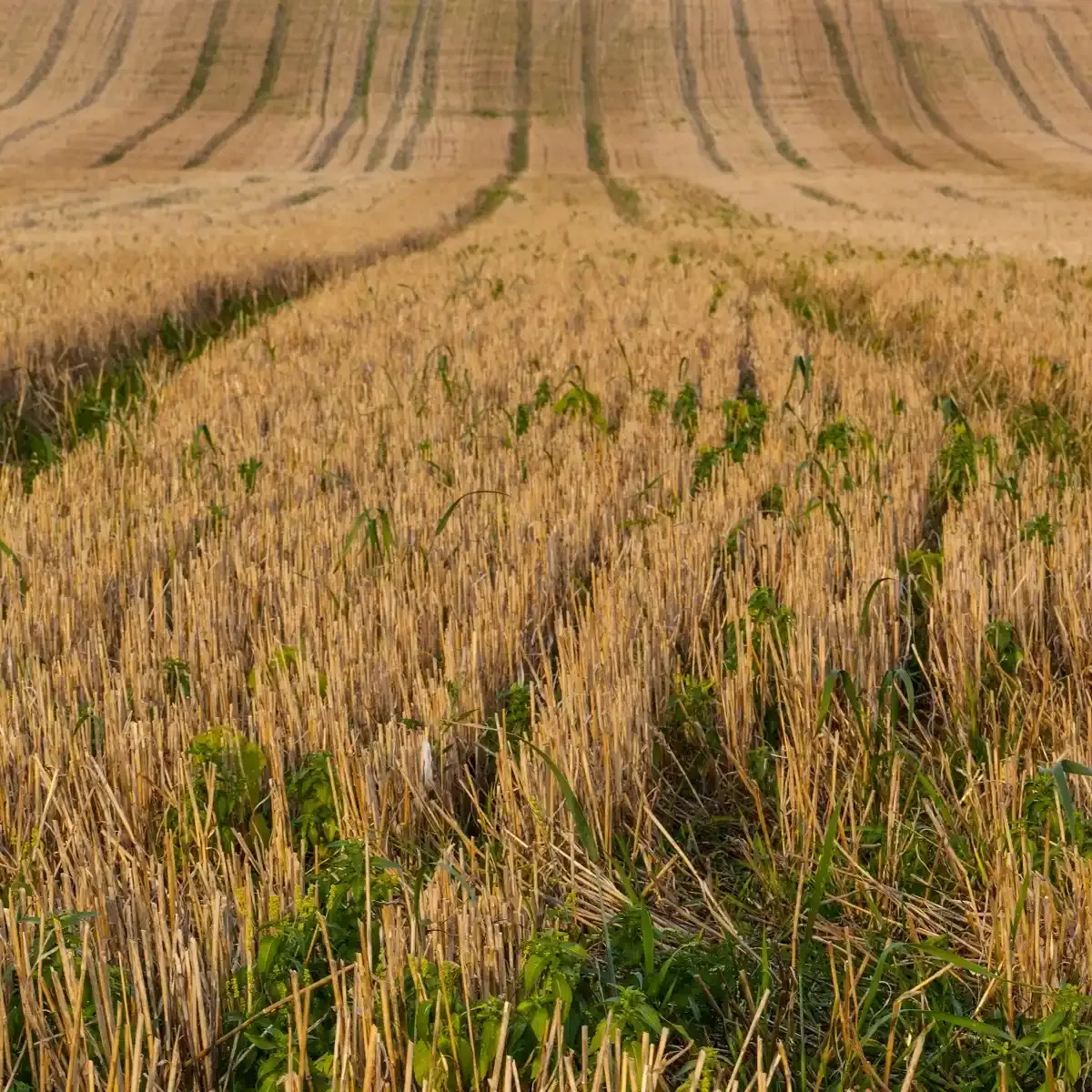
A post-harvest weed flush can look less urgent than a problem in a standing cash crop. That impression is often expensive. Escaped weeds continue to use water, can set seed, and may convert a manageable patch into a larger and more costly problem in the next crop. The decision to treat is therefore not limited to the price of a herbicide. It is a comparison between the cost of action today and the yield risk, seedbank replenishment, operational disruption, and potentially narrower control options that can follow a delay.
This article is written for agronomists, agricultural service providers, and farm managers who need to turn post-harvest observations into defensible treatment decisions. It examines why weed physiology and seed return make timing important, where targeted spraying can reduce treated area without accepting damaging escapes, and how Sairone can support image-based weed assessment and GIS-ready treatment planning. The objective is not to prescribe a universal spray pass. It is to identify the conditions in which postponement shifts more cost and risk into the next season.
The financial question is not whether a herbicide invoice is visible today. It is whether the untreated population will cost more than a timely treatment. Weed competition can lower crop performance through competition for light, nutrients, moisture, and space; weeds also create costs when they complicate field operations, reduce the reliability of later applications, or replenish the seedbank.
The right decision is field-specific. Weed species, size, density, likelihood of seed production, soil moisture, subsequent crop, crop rotation, and available treatment options all alter the balance. For this reason, post-harvest management should begin with identification and field assessment, not with a default product or rate.
Herbicide price is only one component of control cost. In a targeted-application study in soybean, the economic comparison included herbicide, application, subscription, fixed equipment, repair, fuel, and labour costs. Targeted equipment also travelled more slowly than the broadcast sprayer in that study, which affected fuel and labour cost calculations. This illustrates why an economic comparison must account for the delivery system as well as the product in the tank.
There are also costs that arrive indirectly. Early-established weeds compete during crop establishment and tillering, can intercept spring-applied nutrients, and may force more complex later tank mixes, higher rates, or less reliable control. In fallow situations, fast-growing weeds that recover after a knockdown treatment, or emerge after it, can set seed before the next application is made when labour, logistics, rainfall, and suitable spray conditions do not align.
Treating promptly can protect the next crop from a larger starting population. Kansas State University notes that every weed allowed to grow may produce seed, and that post-harvest control can reduce the weed seedbank, conserve water for following crops, and support crop performance. The economic value of this prevention will differ among fields, but the causal pathway is clear: fewer reproductive escapes mean less seed available for future recruitment.
Deferring treatment can make a later program more difficult. Larger overwintered weeds may require higher rates or more complex mixtures, and control may be less dependable. In soybean, Purdue advises that the two central respray considerations are the number of weeds still uncontrolled and the cost of a second application, while also recognizing the value of limiting seedbank growth for the following year. The apparent saving from skipping or delaying a pass should be tested against those later costs.
Herbicide performance is governed by plant condition as well as product choice. A treatment aimed at drought-stressed, damaged, or inactive weeds may underperform even if the selected active ingredient is otherwise appropriate. A timely decision therefore requires an agronomic read of regrowth and growth stage, not only a calendar date.
For translocated herbicides such as glyphosate, weeds need to be actively growing so the product can move through the plant and reach the target sites. Contact herbicides also need sufficient leaf area for absorption. After wheat harvest, Kansas State University recommends waiting for some weed regrowth when plants have been drought-stressed or partly harvested, because that regrowth improves the conditions for effective control.
Purdue similarly explains that postemergence activity depends on the target plant intercepting enough spray solution, absorbing the active ingredient through its leaves, and, for products requiring movement, translocating it to the site of action. Drought can thicken leaf cuticles and reduce absorption; extreme heat can slow active growth and reduce translocation. A rushed post-harvest application to physiologically inactive weeds can therefore be a poor substitute for a well-timed treatment after renewed growth.
Residual herbicides address a different part of the problem: weeds that have not yet emerged. Kansas State University advises considering residual activity in wheat stubble for future flushes, while noting that visible weeds can grow quickly once the wheat canopy is removed. This creates two distinct requirements in the same field: control the emerged plants and plan for the next emergence cohort.
WeedSmart identifies the period immediately after harvest as the best time to apply residuals when the aim is to capture suppression of summer emergence. Residuals can be used on bare stubble, in a blanket application with a knockdown or double-knock treatment, on selected field areas, or through an optical spot sprayer around individual weeds or known patches. Their use must be aligned with plant-back restrictions and the planned rotation. Soil type, organic matter, pH, rainfall, crop residue, planned crop, planting depth, and local climate risk all affect that fit.
The weed seedbank is the bridge between an unmanaged escape today and a more difficult field tomorrow. Weed-seed-loss mechanisms include predation, prevention of seed shedding, seed capture and destruction, microbial and allelochemical decay, and losses driven by germination. Across systems, the reviewed mechanisms contributed 20% to 99% of annual seedbank reductions, but their effect depended on strategic integration within context-specific farming systems.
Escapes matter because plants can reproduce even after a treatment has caused visible injury. Purdue warns that troublesome weeds should be managed to minimize seed production, not merely to reduce current crop competition. The publication notes that a single female waterhemp or Palmer amaranth plant can produce up to 500,000 seeds, making a small number of survivors consequential for future seedbank pressure, especially where herbicide resistance is involved.
The long-term signal is visible in multi-year data. In a three-year soybean experiment, Palmer amaranth germination in the seedbank increased by 783 plants m⁻² following broadcast applications, 1,077 plants m⁻² following targeted applications at the highest sensitivity, and 2,246 plants m⁻² following targeted applications at the lowest sensitivity. The trial does not make all targeted applications equivalent. It shows that insufficient detection sensitivity and resulting escapes can undermine a short-term savings strategy through a larger future seedbank.
The interval between crops is often too short for delayed decisions to remain consequence-free. In rice-wheat systems, later-maturing rice can postpone wheat sowing, while residue handling and soil-moisture restoration add further delay. The cited review reports that wheat sown after mid-November loses approximately 1% to 1.5% of yield per day under the conditions discussed, and delay can also favour early-germinating winter weeds.
This example is crop-system specific, but it demonstrates the broader operational issue. When a crop transition compresses the work window, outstanding weeds, residue tasks, soil preparation, and planting compete for the same labour and machinery capacity. The result can be a missed opportunity for early control and a crop that begins with more weed pressure. Planning post-harvest actions around the next crop is more reliable than treating weed control as a task that can always be postponed.
Respray decisions expose the economic cost of delay particularly clearly. Once an initial application fails or leaves recoverable plants, growers must decide whether the additional application is justified. The correct answer depends on the remaining population, its seed-production risk, present crop restrictions, and the probability that a second treatment will still work.
Purdue identifies two central factors for deciding whether to respray: the number of uncontrolled weeds and the cost of the second application. The decision should also account for preserving crop yield and reducing next year’s seedbank. Where surviving weeds have documented resistance, are difficult to control, or can produce enough seed to increase future herbicide costs, a second intervention can be justified even when the immediate yield response alone is uncertain.
Timely scouting is what makes this decision possible. Contact herbicides can be assessed within three to five days, whereas systemic herbicides may take two to three weeks before failure becomes apparent. Purdue recommends starting checks about one week after application and revisiting fields to confirm whether symptoms are progressing or whether the plant is producing new tissue. A plant that appears injured but is regrowing is not a solved problem.
As weeds get larger, later programs often become more costly and less reliable. Farmers Weekly reports that larger, overwintered broadleaf weeds can require higher rates and more complex tank mixes, with potential crop damage as an additional concern. This is why early control can simplify product selection later in the season rather than add an unnecessary pass.
Rescue options also narrow as the crop develops. Purdue notes that label restrictions may limit applications by crop growth stage, calendar date, preharvest interval, total annual active ingredient, or the number of applications. Plants taller than 12 inches are described as very difficult to control on either a first or second pass, and late “revenge spraying” may be ineffective for yield protection and only moderately effective at reducing seed production. Once the field reaches that point, a delayed treatment no longer has the same economics or biological likelihood of success.
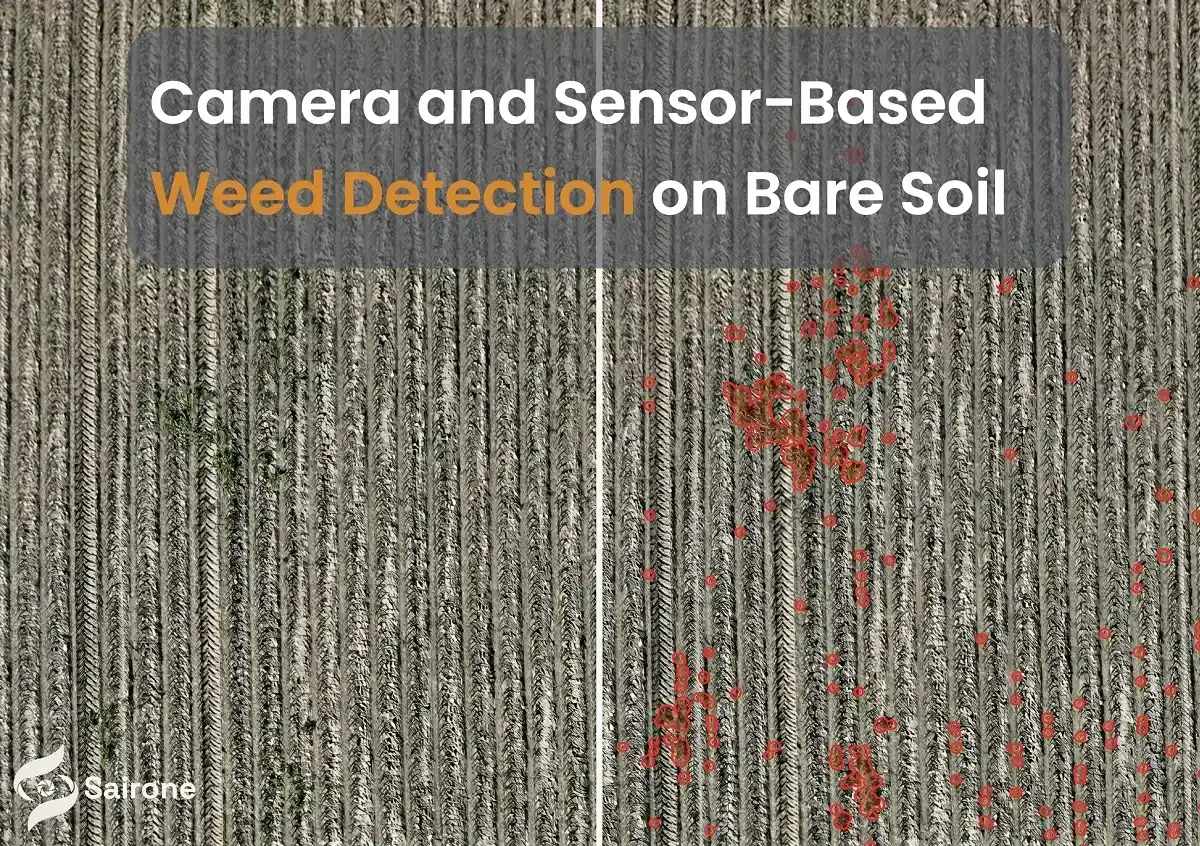
Targeted spraying is attractive because weeds commonly occur in patches rather than uniformly across an entire field. Site-specific management can reduce the treated area, pesticide loading, and potentially the cost of herbicide while retaining effective weed control. The key qualification is that savings are valuable only if the detection strategy avoids unacceptable escapes.
In the soybean experiment, both high- and low-sensitivity targeted applications reduced the sprayed area by 20% to 90% compared with broadcast treatments. At early postemergence, the low-sensitivity setting sprayed 41.3% of the area on average, compared with 57.9% for the high-sensitivity setting. Across the three years, targeted programs cost $140.89 ha⁻¹ at the highest sensitivity and $118.57 ha⁻¹ at the lowest sensitivity, compared with $227.22 ha⁻¹ for the broadcast program in that trial.
These figures demonstrate a potential return from treatment precision within the tested soybean program. They should not be applied automatically to another crop, sprayer, product program, or weed population. The study itself notes that outcomes can change with residual chemistry, weed density, detection settings, buffer and nozzle configuration, and production system.
The cost-saving setting is not automatically the best setting. In the same study, changing from broadcast to the lowest spray sensitivity reduced the likelihood of treating small Amaranthaceae weeds between soybean rows from more than 99% to about 55% when the weeds were 1.9 cm tall and 2.5 cm wide. The lowest sensitivity also produced 1,380 Palmer amaranth escapes ha⁻¹ at harvest, compared with 268 ha⁻¹ after broadcast treatment and 343 ha⁻¹ after the highest-sensitivity targeted treatment.
That trade-off has a direct next-season implication. The lowest-sensitivity program produced a 198% higher Palmer amaranth seedbank increase than the broadcast program over three years, despite a 260 kg ha⁻¹ higher soybean yield in the trial. The researchers judged that the yield increase may not justify the enlarged seedbank, given future resistance and control risks. A post-harvest targeted program should therefore set sensitivity according to the biological cost of a missed weed, not solely the percentage of hectares left unsprayed.
An economic threshold is useful only when it represents the actual field context. Weed density, growth stage, crop competitiveness, expected crop value, cost of treatment, chance of seed production, and future control constraints change the value of intervention. A field with a small number of highly fecund, difficult-to-control survivors may justify action for seedbank protection even when short-term crop competition appears modest.
The threshold shifts upward or downward with biology and operations. Early weed establishment increases competition during the stages when crop yield potential is formed; established weeds can also intercept fertilizer and force corrective programs. Weed species and resistance status matter because they influence whether a viable later option exists. Soil and seasonal conditions matter because they affect active growth, herbicide absorption and translocation, residual persistence, and the feasibility of getting equipment into the field.
Rotation is equally important. Residual herbicides can reduce future emergence, but plant-back restrictions must be respected so that a present weed-control decision does not restrict the next crop. Product behaviour is shaped by time, UV exposure, moisture, soil binding, pH, cation exchange capacity, organic matter, and site-specific microbial activity. The most rigorous economic decision therefore joins weed data with the rotation plan rather than treating control cost as a stand-alone number.
Sairone supports a workflow for agricultural service providers, agronomists, and cooperatives that need to convert visual field data into mapped and reviewable information. Its Weed and Invasive Plant Control service uses AI and computer vision to detect, map, and analyse weeds and invasive plants, while its wider platform supports imagery, video, orthomosaics, georeferenced data, and customized AI models.
For post-harvest assessment, the value of this workflow is not an automatic instruction to spray. It is a more structured basis for identifying pressure, reviewing detections, locating patches, and combining that information with the field’s agronomic and economic constraints before defining treatment zones.
Sairone accepts high-resolution drone imagery, orthophotos, and georeferenced data, including GeoTIFF, TIFF, JPEG, and PNG files. Its platform can also process images, videos, and orthomosaics, and can create orthomosaics from video. The cloud-based delivery model enables users to upload data and generate reports without building or maintaining dedicated processing infrastructure.
The Files environment is designed to store imagery, uploaded inputs, service outputs, large datasets, folders, and multiple file types. For a post-harvest weed review, this gives an agronomy team a place to organize raw field imagery and processed outputs before decisions are handed off to field operations.
Sairone provides weed detections with confidence scores and precise geospatial coordinates. Its documented Weed Control coverage includes Taraxacum, Amaranthus tuberculatus, Amaranthus palmeri, European Water Chestnut, Water Soldier, Fleabane, and Thistle. These detections can be reviewed, corrected, and approved through a validation process before final use, retaining a human review stage in the workflow.
Validated information transfers to Atlas, Sairone’s geospatial environment for visualizing weed distribution, analysing infestation patterns, generating treatment maps, and using high-resolution aerial or satellite imagery overlays. Atlas includes custom region-definition tools and hierarchical zone management for field subdivisions, allowing users to distinguish a scattered detection pattern from an area that warrants operational attention.
Sairone can export detection results in GeoJSON, Shapefile, KML, and CSV formats. These GIS-ready formats allow spatial information to move into geospatial and operational systems used for field planning and precision-spraying workflows. The point is to preserve the connection between observed weed locations and the field actions being considered.
Atlas also includes detection-clustering algorithms that group identified weeds into manageable treatment zones. This gives agronomy teams a way to translate individual mapped detections into field sections that can be assessed against weed density, treatment cost, product restrictions, and the next crop in the rotation. The final treatment decision remains agronomic, but the mapped output makes that decision more spatially explicit.
Saiwa develops and customizes AI models around the user’s needs and available data rather than positioning Sairone as a single fixed template. Its annotation tools support polygons, bounding boxes, class definition, custom colours, and multi-class annotation, which can be used for dataset preparation and model refinement.
Sairone is available through a cloud platform, customized API integration, and fully customized White Label deployment. API delivery can connect AI services with an existing client infrastructure, while White Label options can be built around a customer’s brand, workflow, and operational requirements. Saiwa also describes BaaS and a multi-tenant structure for agritech organizations seeking outsourced product-development capabilities.
Delaying post-harvest weed control can cost more next season when surviving plants use water, produce seed, expand the seedbank, or become too large for reliable control within later label and crop-stage constraints. Treatment is most defensible when weeds are actively growing, the field assessment shows a credible risk of seed return or future competition, and the selected program fits the planned rotation and product restrictions.
Targeted treatment can reduce herbicide use and treated area, but it should not be optimized only for immediate savings. The soybean study shows that low detection sensitivity can lower application cost while allowing enough escapes to increase future seedbank pressure. Combining field scouting with validated spatial detection and GIS-ready treatment zones enables agronomic teams to make a more economically targeted post-harvest decision: control the areas where delay creates material next-season cost, while avoiding unnecessary treatment where the evidence does not support it.
