Barley Stubble After Harvest: Is Targeted Spraying More Cost-Effective?
Oct 30, 2026
Written by: Amirhossein Komeili
Reviewed by: Boshra Rajaei, PhD
Written by: Amirhossein Komeili
Reviewed by: Boshra Rajaei, PhD
Barley harvest removes crop competition at the same moment that suppressed weeds gain light and space. Where soil moisture is adequate, weeds held back by the cereal canopy can resume rapid growth, while plants cut or damaged by harvest may regrow quickly. Waiting too long can consume moisture needed by the following crop and allow more seed production.
Targeted spraying offers an alternative to treating every hectare of stubble, but it is not an automatic cost reduction. Its economics depend on how much of the field contains green weeds, whether the detection system hits enough targets, how serious a missed weed would be, and whether the next crop and residual program permit the chosen chemistry. A targeted pass that omits hard-to-control or seed-producing escapes can shift cost into the next season rather than remove it.
Cereal stubble can change quickly after harvest. Weed plants that were limited by canopy shade and competition can take advantage of available moisture, while weeds that grew through the crop canopy may recover after harvest damage. This creates an operational window in which treatment can protect stored soil water and limit future seed return.
K-State advises that emerged weeds with growth retarded by crop canopy closure will grow rapidly after the crop is removed when soil moisture conditions are favourable. Weeds that emerged through the wheat canopy can be damaged at harvest and then begin regrowth quickly. The same post-cereal mechanism is relevant to barley stubble: removing canopy competition changes the resource environment for surviving weeds.
Delaying treatment can reduce soil moisture available for crop production and increase weed seed production, both of which create future management difficulty. The practical priority is to inspect stubble soon after harvest, identify actively growing green plants, and distinguish a low-pressure field from one where regrowth is broad enough to threaten the following crop’s moisture or weed-management program.
Agronomic Insight: Control already-emerged weeds before they exceed 4 to 6 inches. K-State identifies this size window as necessary for effective control of emerged weeds in cereal stubble.
Post-harvest management has two linked tasks: control the weeds that have already emerged and reduce the number of later flushes. K-State states that residual herbicides are needed to reduce the number of herbicide applications required when multiple weed flushes occur in stubble. A targeted contact or systemic application can therefore be only one component of the program.
Residual selection must fit the crop that follows. In wheat stubble, flumioxazin at 2 fl oz/A permits wheat planting after 30 days, while 3 fl oz/A requires 60 days and at least 1 inch of rain between treatment and planting. Soybean can be planted immediately after 3 fl oz/A, while corn, sorghum, cotton, sunflower, or soybean can follow in spring after 4 fl oz/A. Sulfentrazone at rates above 8.0 fl oz of a 4L formulation imposes an 18-month rotation interval to sorghum, compared with 10 months at lower rates. These intervals show why a low-cost application cannot be assessed separately from the next crop plan.
| Post-harvest stubble consideration | Documented guidance or constraint | Citation |
|---|---|---|
| Emerged weed size | Treat before weeds exceed 4 to 6 inches for good control. | |
| Multiple flushes | Residual herbicides reduce the number of applications required for later flushes. | |
| Flumioxazin and wheat | 2 fl oz/A: 30-day interval; 3 fl oz/A: 60 days plus at least 1 inch of rain. | |
| Sulfentrazone and sorghum | More than 8.0 fl oz of 4L: 18 months; lower rates: 10 months. |
Broadcast spraying assumes that the field deserves a uniform application. Site-specific weed management starts from the opposite premise: identify weeds, map their distribution, and apply only where the field requires treatment. This approach sits within integrated weed management, which combines chemical, cultural, mechanical, and biological practices instead of relying only on repeated herbicide use.
Herbicide-resistant weeds develop when repeated herbicide pressure preferentially selects resistant individuals, which then reproduce and replenish the seedbank. Target-site mutations, enhanced metabolic detoxification, reduced translocation, and compartmentalization can all contribute to resistance. The review of herbicide-resistant crop development therefore presents integrated weed management as a diversified strategy rather than a chemical-only program.
Site-specific weed management can contribute by reducing herbicide use in areas without weeds while allowing attention to mapped infestations. It does not eliminate the need for rotation, cultural competition, mechanical practices, monitoring, or herbicide diversity. It changes the placement of chemical input and creates data about where weed pressure persists.
Read More: Kochia Patches After Harvest
Green-on-brown sensing detects living vegetation against soil or stubble. DetectSpray used red and near-infrared reflectance to identify green plants and trigger selective herbicide application. Later commercial systems similarly used ratios of near-infrared to red reflectance to distinguish green weeds from the background and activate a nozzle when the threshold was met.
WEED-IT describes a chlorophyll-based sensor principle that detects living plants against soil or stubble and sprays at the detected plant location. The system is designed to operate before seeding, after crop emergence, and post-harvest. It uses its own light source, states that it can maintain accuracy day or night, and lists a minimum spray margin of 10 cm and operating speeds up to 25 km/h. These specifications describe the equipment’s claimed operating framework; field economics still depend on weed pressure, sensor settings, and application quality.
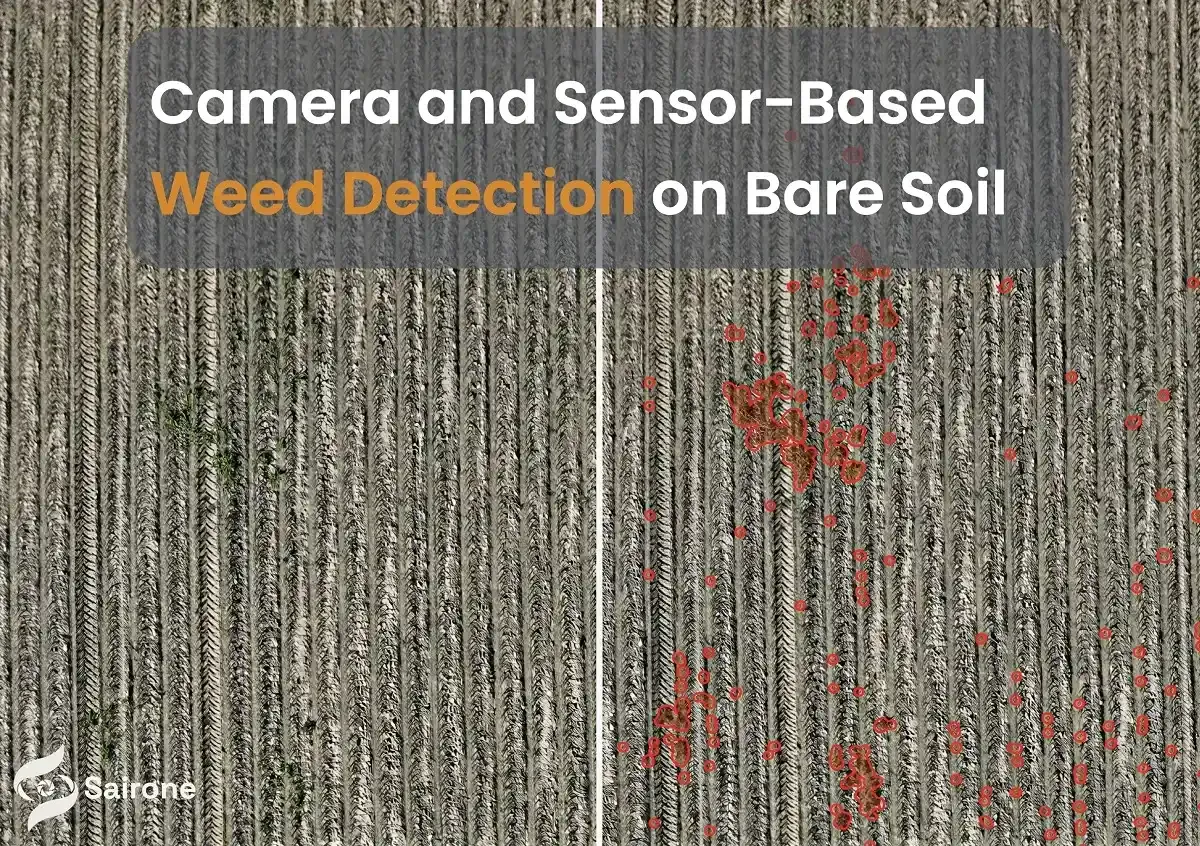
Targeted systems can reduce chemical use substantially in fallow or stubble situations because bare ground is not sprayed. The reported savings range widely, which is expected: the percentage of a field containing detectable weeds, the technology used, and the comparison program all differ. Savings should be read alongside weed escapes and the cost of the technology itself.
Commercial DetectSpray use on 33 Australian fallow fields was reported to reduce herbicide use by an average of 90%. Other cited field observations reported fallow herbicide reductions of 1% to 92% in Nebraska and 47% to 88% in North Dakota. The same source reports 19% to 60% reductions in glyphosate and dicamba use across a fallow season, with associated cost savings of $6 to $32 per hectare, and notes comparable weed control to broadcast spraying on 80% of application dates in trials conducted from 1993 to 1995.
WEED-IT states that its green-on-brown spot-spraying system can produce up to 95% savings in crop-protection costs compared with full-field spraying, while also reducing chemical and water use, refill frequency, and operating costs. These figures are not a field-specific guarantee. They illustrate the upper potential of a system that sprays only detected vegetation in largely clean fallow ground.
| Targeted-application evidence | Reported outcome | Citation |
|---|---|---|
| DetectSpray, 33 Australian fallow fields | Average herbicide reduction: 90%. | |
| DetectSpray fallow observations | Nebraska: 1% to 92% reduction; North Dakota: 47% to 88% reduction. | |
| DetectSpray fallow-season trials | Glyphosate and dicamba reduction: 19% to 60%; savings: $6 to $32/ha. | |
| WEED-IT broadacre claim | Up to 95% crop-protection cost savings versus full-field spraying. |
K-State identifies drone imagery and AI-generated weed maps as tools that can support postemergence herbicide applications where weed presence, rather than the full field, determines the sprayed area. This use of imagery fits a clear economic logic: a weed map is valuable when it changes the treatment footprint enough to avoid unnecessary application without leaving consequential patches untreated.
The available targeted-spray evidence indicates that the economic result cannot be inferred from imagery alone. The value of equipping a sprayer with precision weed-control technology differs with cropping system, weed spectrum, field pattern, strength of the pre-emergence program, application timing, and the settings that define the risk of escapes. Drone-derived prescriptions and optical sensing can reduce treated area, but both need an effective control program and a realistic accounting of costs.
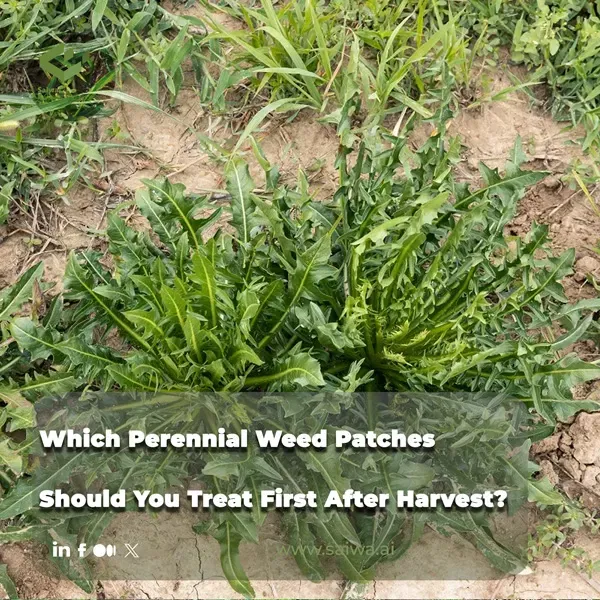
Read More: Which Perennial Weed Patches Should You Treat First After Harvest?
The percentage reduction in treated area is not controlled by sensor capability alone. Weed distribution determines how much clean ground is available to avoid. Fields with edge-driven pressure can look favourable for targeting on a map, but their size and shape may make the edge a large fraction of total hectares.
Pennsylvania targeted-spray data showed a correlation between field size and the area sprayed: smaller fields tended to have a larger share treated. The researchers linked this pattern to higher weed pressure along field edges and a larger edge-to-area ratio in small, topographically variable fields. In such fields, precision technology may not reduce the sprayed area enough to create meaningful input savings.
Edge patterns are operationally important in stubble because the application plan must capture weeds near boundaries without delivering an unintentionally reduced rate. Targeted or broadcast, the equipment setup needs to maintain the application quality required for the selected product. A polygon that excludes clean interior ground has value only when the remaining boundary and patch areas can be sprayed correctly.
Strip trials in commercial soybean fields give a practical illustration of how pre-emergence success changes targeted-spray economics. The targeted system sprayed about 10% of the field area where a strong pre-emergence program matched the weed spectrum and weather activated the herbicide. The weeds that broke through were less than 4 inches tall at treatment, and the soybean crop was at V4 or V5.
A barley-stubble field with widespread green regrowth should not expect the same reduction simply because it uses a targeted platform. As the percentage of the field with detectable weeds rises, the gap between spot and broadcast application narrows. The decision should therefore use the mapped proportion of infested ground, not a generic promise of savings.
Reduced herbicide use is only one performance measure. A targeted program must also achieve a sufficiently high hit rate, particularly where escapes can produce seed or represent difficult-to-control species. Lower sensitivity settings can maximize short-term input savings while increasing the chance that a weed receives no herbicide.
In the Pennsylvania strip trials, broadcast spraying achieved a 97% hit rate, compared with 83% for targeted spraying at the system’s lowest sensitivity setting. Targeted strips had more escapes before harvest, although few escaped weeds grew through the soybean canopy. The weeds were 2 to 4 inches tall and not strongly competitive at that point, but they still produced some seed.
The trade-off changed with weed species. Where weeds can be controlled easily by several herbicides, a small number of escapes may be more tolerable. Where weeds are difficult to control or herbicide resistant, the tolerance for missed plants falls, requiring more product and reducing potential savings. Barley-stubble planning should make this distinction before choosing a low-sensitivity setting or a narrow treatment zone.
DetectSpray relied on ambient light because it did not use active illumination. The system’s weed detection declined substantially around early dawn and before dusk, and its dependence on ambient light was identified as a limitation. Optical systems also distinguish green vegetation from soil or stubble rather than automatically resolving every agronomic question about weed species, resistance, or future crop safety.
Newer systems address some operating constraints differently. WEED-IT states that it uses an internal light source and can operate day or night, with PWM technology for automatic speed and turn compensation. Yet no equipment feature removes the need to verify weed pressure, choose chemistry compatible with the crop rotation, and confirm that the selected application reaches the intended target.
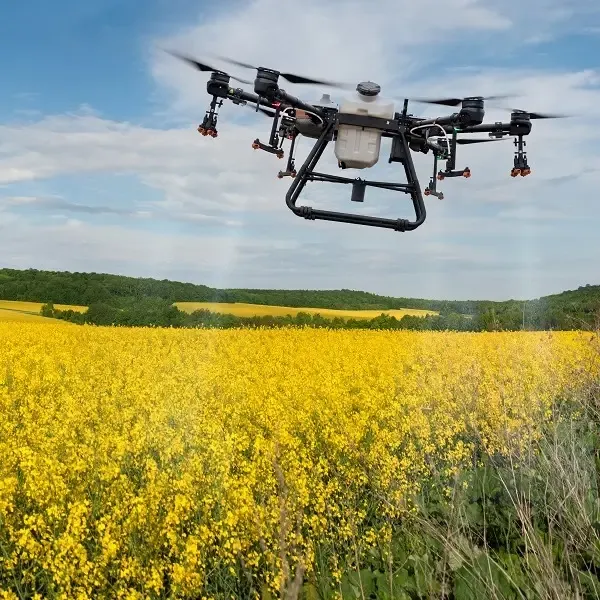
Read More: Volunteer Canola After Harvest
Targeted spraying pays when its avoided product and water use, reduced refill demand, and lower treated area outweigh its equipment, data, labour, and application costs without allowing damaging weed escapes. That calculation shifts between fields. It cannot be settled by the cost of glyphosate or the purchase price of a sensor alone.
A strong pre-emergence program can create the low-pressure condition in which a postemergence targeted pass treats only a small part of the field. In the Pennsylvania example, the 10% treated area occurred where the pre-emergence herbicides suited the weed spectrum and were activated by weather. A weaker program, a larger weed flush, delayed timing, or a field with widespread pressure will reduce this advantage.
The same research identifies technology costs as part of the return-on-investment question. Cropping system, weed spectrum, field size, topography, the intended application setting, and timing all affect whether savings offset the technology cost. When comparing targeted and broadcast stubble treatments, include the complete workflow: field scouting or imagery, mapping, verification, equipment capability, prescription execution, product, water, refilling, and the cost of any respray created by escapes.
Agronomic Insight: A low percentage of hectares sprayed is not, by itself, evidence of a profitable program. The economic result depends on the strength of the earlier residual program, the area actually infested, the system’s hit rate, and the cost of escapes.
Sairone provides a spatial data workflow for agronomists, agricultural service providers, and cooperatives working with field imagery and georeferenced information. It applies AI, computer vision, machine learning, and geospatial analysis to weed and invasive-plant control alongside crop and environmental workflows.
In barley stubble, the workflow supports assessment before a treatment footprint is set. It can organize imagery, locate detected plants, provide a validation stage, and create spatial outputs for review. The final decision on herbicide, rate, targeted zone, or broadcast scope remains dependent on species, active growth, resistance risk, soil moisture, label requirements, and the following crop.
Sairone processes high-resolution drone imagery, field images, satellite imagery, orthophotos, videos, and georeferenced datasets. It supports GeoTIFF, TIFF, JPEG, PNG, video, and orthomosaic workflows, and can generate orthomosaics from video. Its cloud platform and Files environment support upload and organisation of imagery, inputs, outputs, folders, and large datasets.
This format flexibility allows a post-harvest assessment to use the imagery available to the operation rather than a single mandated capture method. Annotation tools support polygons, bounding boxes, class definitions, custom colours, and multi-class labelling, which can be used for data preparation and model refinement.
Sairone Weed Control detects, maps, and analyses weeds and invasive plants in agricultural fields and natural environments. Documented species include Taraxacum, Amaranthus tuberculatus, Amaranthus palmeri, European Water Chestnut, Water Soldier, Fleabane, and Thistle. Detections can include confidence scores and precise geographic coordinates, forming a spatial record for field assessment.
A validation process allows users to review, correct, and approve AI-generated detections before final use. Approved data can transfer to Atlas, Sairone’s geospatial environment, for visualization of weed distribution, analysis of infestation patterns, treatment-map generation, and aerial or satellite image overlays. This supports identification of concentrated green-weed pressure in stubble before treatment costs are committed.
Sairone creates GIS-ready results in GeoJSON, Shapefile, KML, and CSV formats. These outputs can move into geospatial and operational systems used for treatment planning and precision-spraying workflows. The transfer preserves the link between detection coordinates and the zones considered for treatment.
Atlas includes detection-clustering algorithms that group identified weeds into manageable treatment zones. Those zones can be checked against field size, weed density, sensor or prescription requirements, treatment cost, and crop-rotation restrictions before an application plan is finalized. A spatial layer does not validate a herbicide program by itself, but it gives the program a more explicit field boundary.
Saiwa can develop or customize AI models based on the client’s needs and available data. This provides a route for adapting detection and reporting workflows to the imagery sources, target objects, and management units used by a particular service organization.
Sairone is available as a cloud platform, through customized API integration, and as a fully customized White Label platform. API delivery can connect the platform’s services to existing client infrastructure, while White Label delivery can reflect the customer’s brand, needs, and workflow. Saiwa also describes BaaS and a multi-tenant structure for agritech organizations seeking outsourced product-development capabilities.
Targeted spraying can be more cost-effective in barley stubble when green weed pressure is concentrated, mapped accurately, and treated before plants become large or produce seed. The potential advantage is greatest when a sound residual or pre-emergence program has left limited patches to treat. It diminishes when weeds are widespread, small fields contain a high proportion of edge pressure, or low detection sensitivity creates seed-producing escapes.
A credible decision compares the complete cost of a targeted workflow with the complete consequence of under-treatment. Early treatment protects soil moisture and limits seed return; residuals address later flushes; and chemical choices must respect crop-rotation restrictions. Imagery-based mapping, validation, GIS outputs, and treatment-zone planning can make the sprayed area more deliberate, but their value depends on effective weed control and field-specific execution.
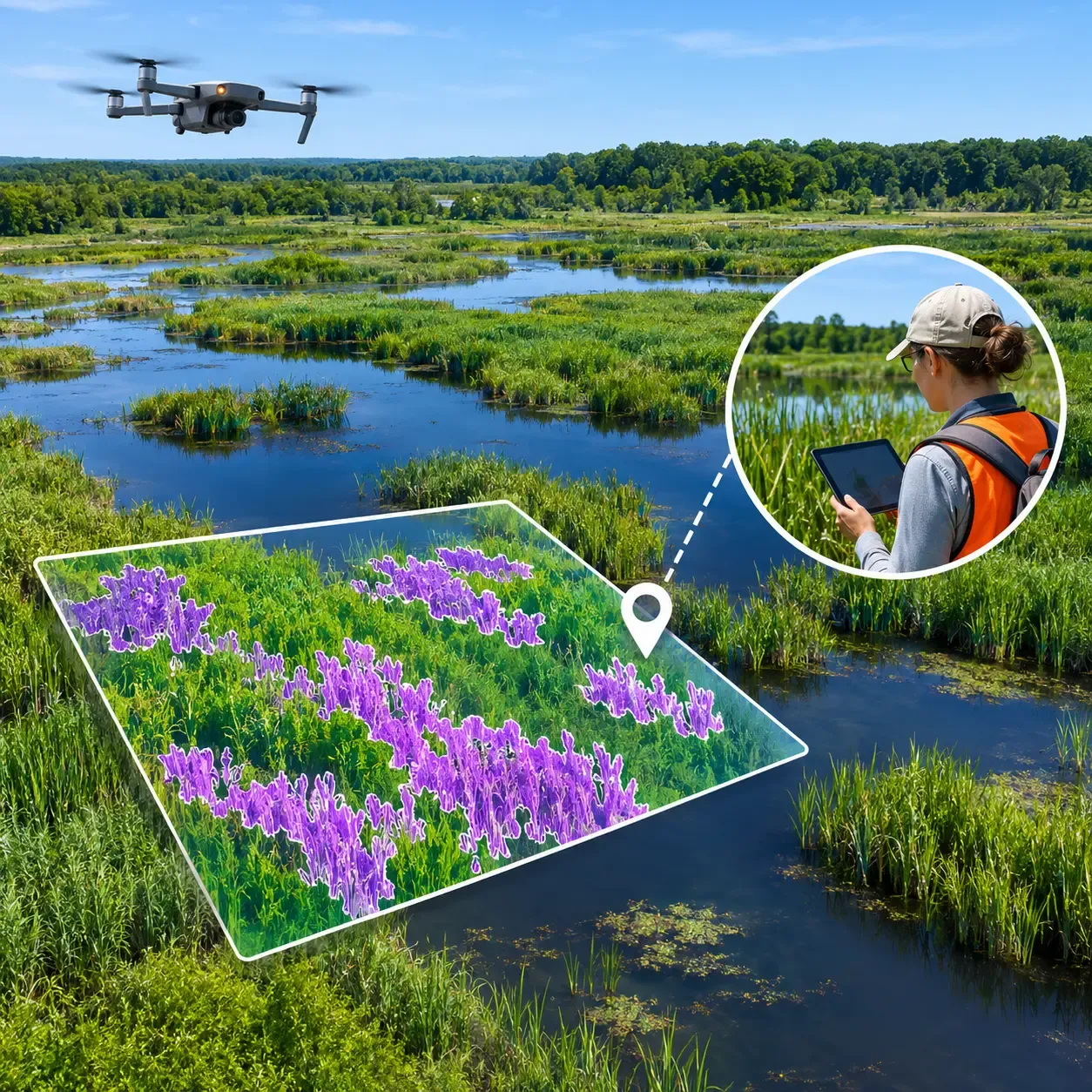
Wetland vegetation maps can help conservation teams identify invasive plants, monitor habitat changes, and prioritize fieldwork. Drones and
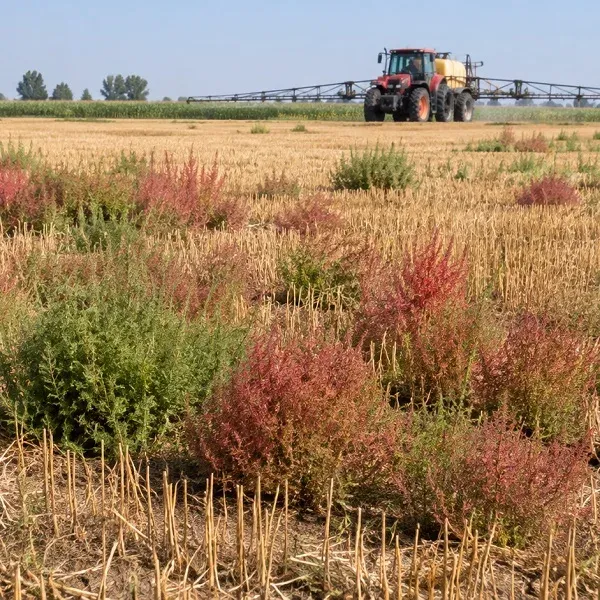
Kochia after harvest presents a deceptively simple choice. A grower can spray the entire field, treat visible patches, or leave the decision
A scattered patch of perennial weeds after harvest can be easy to postpone. That is often the point at which it becomes a more persistent ma
Winter wheat establishment begins before the drill enters the field. Weed pressure already present in the seedbed can compete for moisture,
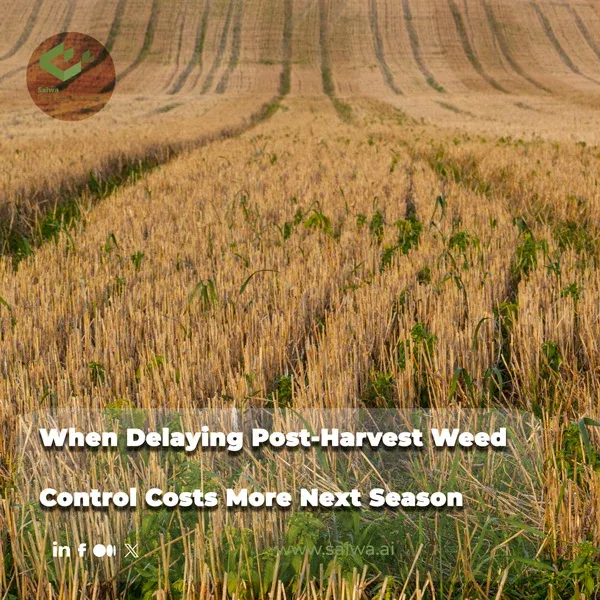
A post-harvest weed flush can look less urgent than a problem in a standing cash crop. That impression is often expensive. Escaped weeds con
Volunteer canola is a post-harvest management issue with both immediate and multi-season consequences. Seed lost during combining can germin
Be the first to share your thoughts
Start the conversation by sharing your thoughts
Share this article
Help others discover this content
Get expert insights, product news, and industry trends delivered straight to your inbox.
No spam, unsubscribe anytime. We respect your privacy.
