Evolution of Segmentation Models in Our Computer Vision Pipeline
Mar 31, 2026
Written by: Maryam Rajaei
Mar 31, 2026
Written by: Maryam Rajaei
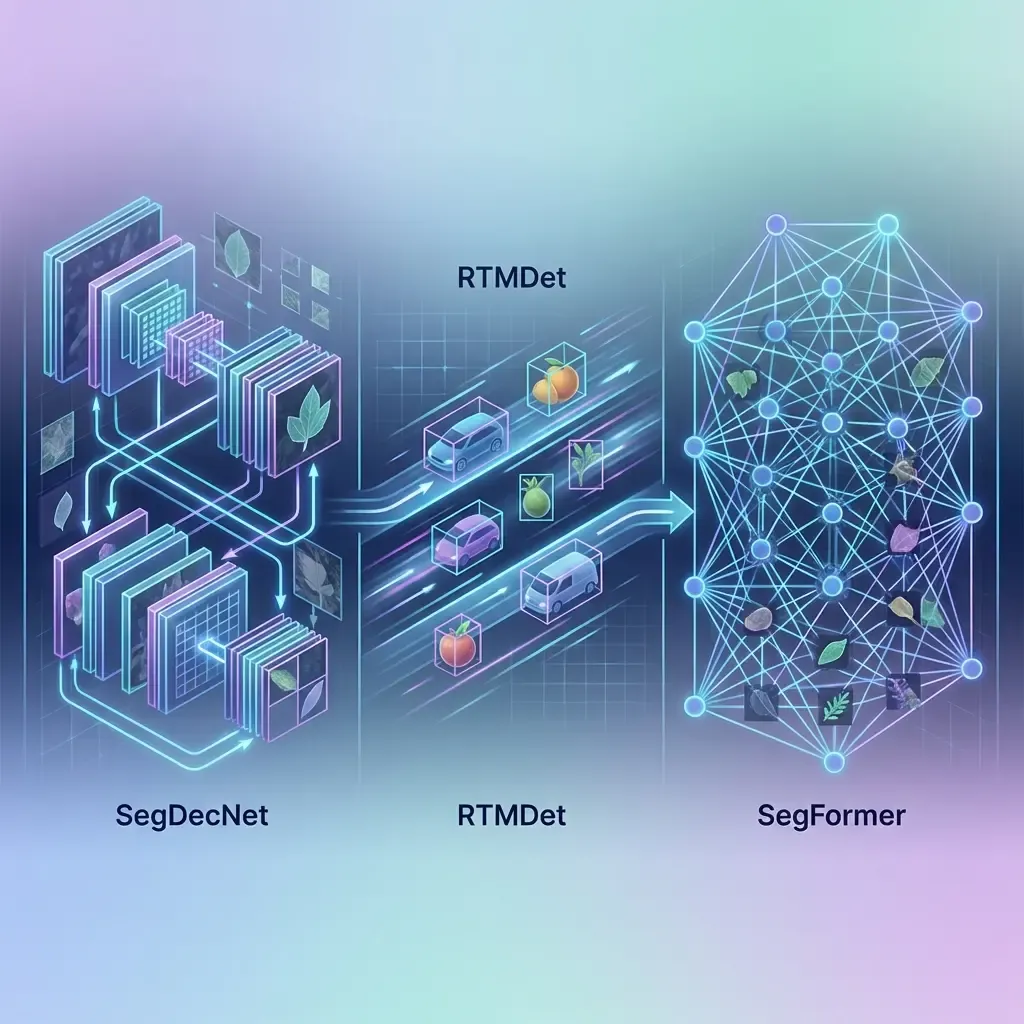
Over time, the segmentation models used in our computer vision projects evolved as the requirements of different applications increased. Early solutions prioritized stability and ease of training, while later models focused more on efficiency, scalability, and improved performance on complex scenes. The transition from SegDECNet to RTMDet and eventually to SegFormer reflects this progression.
SegDecNet was among the earlier models used for segmentation tasks. It is based on a convolutional neural network architecture designed for reliable pixel‑level predictions. SegDecNet follows a fully convolutional encoder–decoder architecture. The encoder extracts hierarchical spatial features using stacked convolutional layers, while the decoder progressively upsamples these features to produce dense pixel‑level segmentation maps. This design focuses on stable feature extraction and reconstruction without relying on attention mechanisms.
Advantages
Limitations
Typical Usage
SegDecNet was suitable for projects where datasets were moderate in size and visual structures were relatively consistent. It provided a dependable baseline for semantic segmentation tasks.
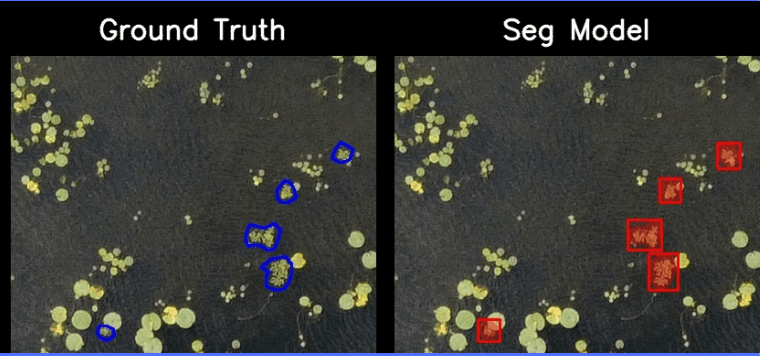
As project requirements expanded to include faster inference and more complex scenes, RTMDet was introduced. Although primarily designed as an object detection framework, its segmentation variants support instance-level segmentation. RTMDet is an anchor‑free detection architecture that uses a convolutional backbone with a feature pyramid network (FPN) to extract multi‑scale features. For segmentation variants, a mask prediction branch is added on top of detection features, enabling instance-level segmentation by generating object masks alongside bounding box predictions.
Advantages
Limitations
Typical Usage
RTMDet became useful for applications requiring faster processing or instance-level segmentation, particularly in scenarios where object detection and segmentation were needed together.
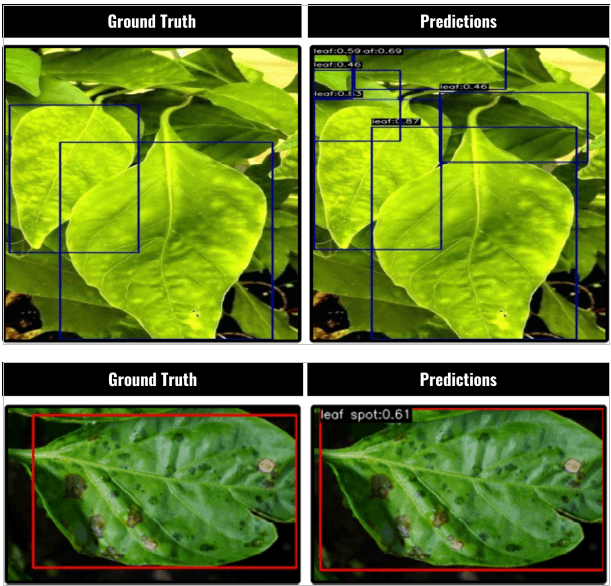
With increasing demands for higher segmentation accuracy and better handling of complex scenes, SegFormer was adopted. It is a transformer-based semantic segmentation architecture designed to capture both local and global context effectively. SegFormer combines a hierarchical Vision Transformer encoder with a lightweight MLP-based decoder. The encoder uses efficient self‑attention to model long‑range spatial relationships while producing multi‑scale feature maps, and the decoder fuses these features to generate high‑resolution semantic segmentation outputs.
Advantages
Limitations
Typical Usage
SegFormer is particularly effective for semantic segmentation tasks involving complex scenes, diverse object structures, and datasets with high variability. It is well suited for applications where segmentation accuracy is a primary requirement.
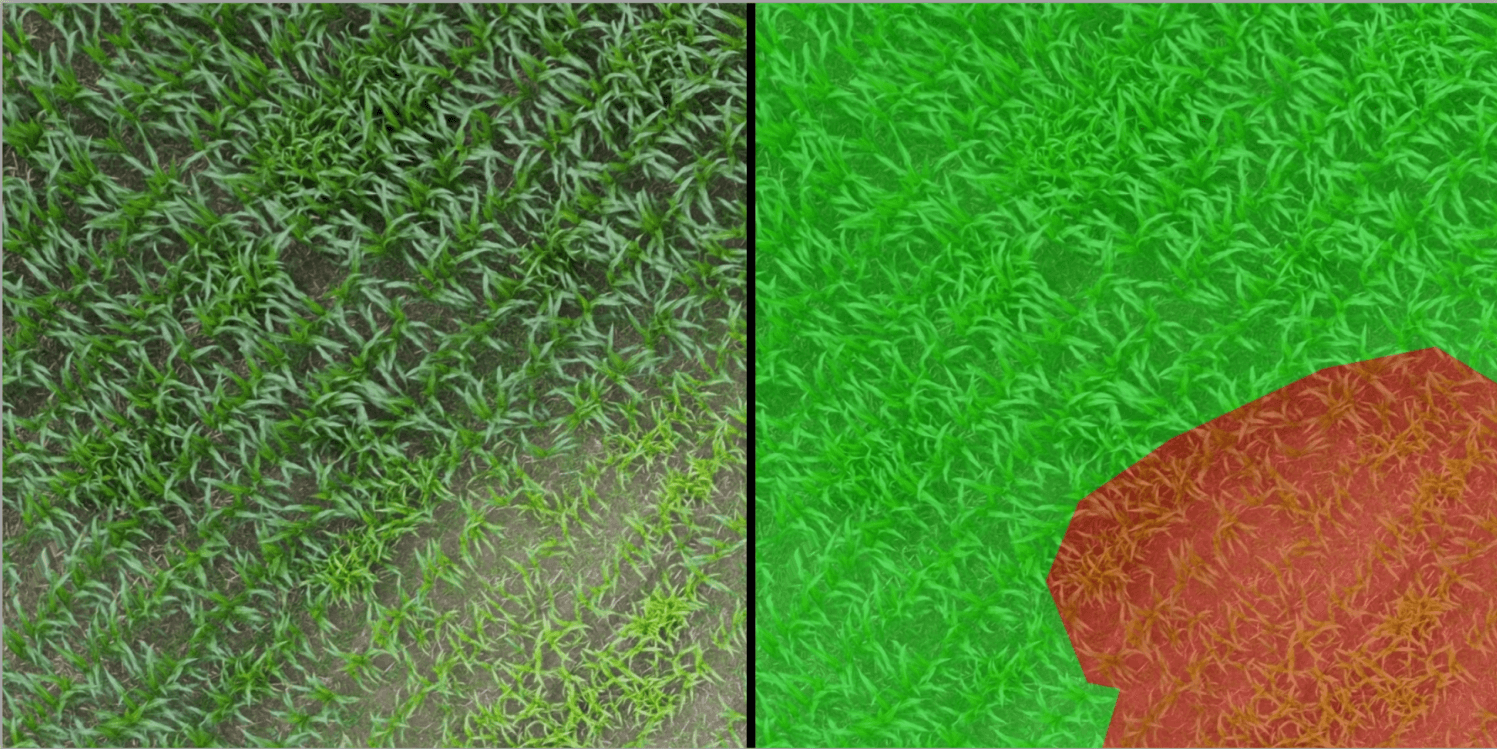
The progression from SegDECNet to RTMDet and later to SegFormer reflects the growing needs of various computer vision projects. Initial models focused on stability and simplicity, while later architectures introduced improved speed, scalability, and contextual understanding. This gradual transition allowed the adoption of more capable models as project complexity and performance requirements increased.
Get expert insights, product news, and industry trends delivered straight to your inbox.
No spam, unsubscribe anytime. We respect your privacy.