


Crop Monitoring Services - Enhancing Farm Productivity
Many technologies can be used to monitor crop, know about their benefits and understand how to use them by reading this article.
Written by Amirhossein
Reviewed by Boshra
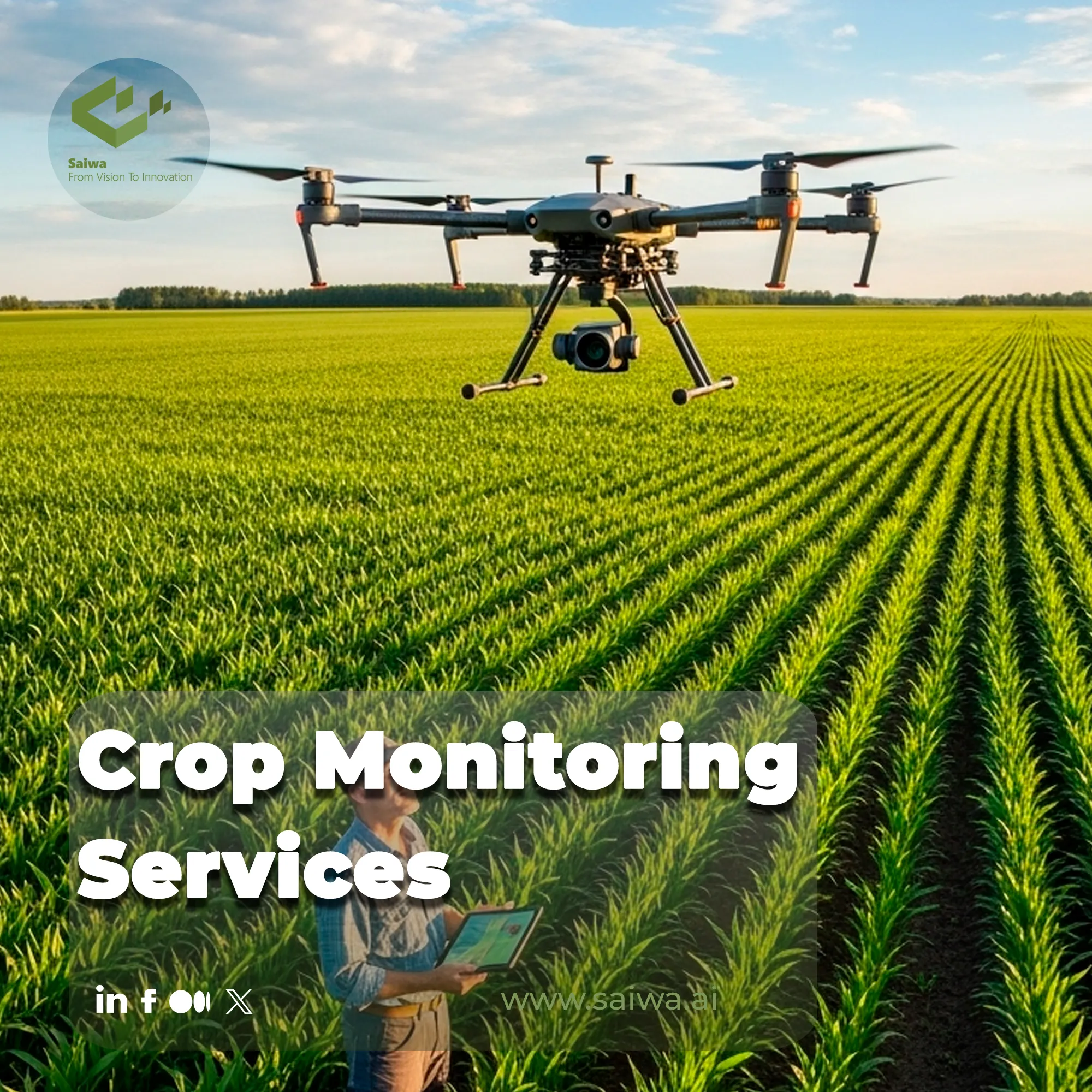
Modern agriculture is under immense pressure due to a growing global population and climate volatility. Traditional, intuition-based farming is insufficient to meet these challenges. At Saiwa, we bridge this crucial gap with powerful AI solutions. Our Crop Monitoring Services, powered by Sairone, provide clear, actionable strategies by translating complex field data. This guide explores the core technologies, their practical benefits, and how intelligent data directly enhances farm productivity. We will show you how these systems work from the ground up.

Understanding Crop Monitoring Technologies
These technologies involve the systematic observation of crops using a suite of advanced tools. Instead of relying on generalized assessments, farmers gain a data-driven view of their entire operation. This allows for highly precise interventions for issues like nutrient deficiencies or water stress. The result is a more efficient and sustainable approach to modern farming that maximizes resources and improves outcomes.
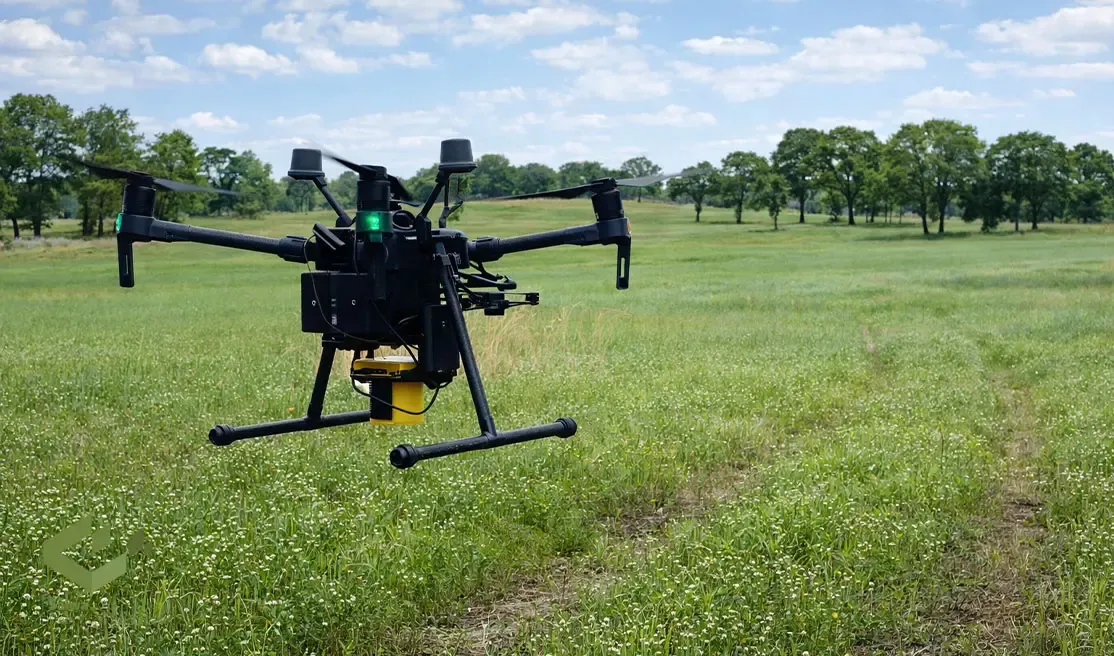
How Crop Monitoring Works
The process begins by collecting comprehensive data from drones and in-field sensors. This information is instantly transmitted to a cloud platform for rigorous analysis. Advanced AI algorithms process the data to identify subtle patterns and predict potential issues.
Farmers then receive clear insights on a simple interface, enabling proactive farm management. This cycle turns raw data into timely, field-specific actions that protect and enhance crops.
Turning Monitoring Data Into Field Decisions
Effective crop monitoring services do more than generate maps. Their real value comes from linking each data layer to a specific management decision, such as where to scout first, when to adjust irrigation, or which zones require variable-rate treatment instead of whole-field action.
Why one sensor is rarely enough
A healthy-looking canopy can still hide early stress. Research reviews show that UAV-based thermal and multispectral sensing can reveal crop stress patterns before they are obvious through standard visual inspection, which is why remote monitoring is becoming central to proactive crop management.
This matters because different stressors leave different signals. Thermal imagery is especially valuable for water-stress detection, while multispectral data helps track canopy vigor and vegetation-index changes such as NDVI-based shifts in crop condition.
Multi-sensor approaches are often more useful than single-source monitoring because they improve the ability to detect and interpret vegetation responses under stress. A peer-reviewed review on multi-sensor spectral synergies highlights that remote detection of vegetation stress has become increasingly important for sustainable agriculture and that optical sensing tools help improve understanding of stress-related processes.
In practice, that means a professional crop monitoring service should not rely on imagery alone when irrigation, fertility, and disease risk may overlap in the same field.
Matching the tool to the task
Monitoring layer | Best use in farm operations |
Satellite imagery | Broad, repeated coverage for tracking general field variability over time. |
Drone imagery | High-resolution inspection for problem-solving, zone delineation, and targeted follow-up. |
Soil and in-field sensors | Root-zone moisture and nutrient context that imagery cannot measure directly. |
AI analytics | Pattern detection, anomaly ranking, and conversion of raw data into action-ready recommendations. |
This layered approach is closely aligned with how Sairone presents crop monitoring in practice. Its crop health workflow includes plant stress interpretation, localized alerts, dashboards, growing-season tracking, and prescription-map export for spray drones or precision sprayers.
What a strong monitoring workflow looks like
For professional growers and ag-service providers, the most reliable workflow is sequential rather than reactive.
Establish a baseline using routine satellite or drone coverage across the full field.
Flag abnormal areas with vegetation indices, canopy temperature patterns, or AI-based anomaly detection.
Validate the hotspot with field scouting or ground sensors before making an input decision.
Export treatment zones for irrigation, fertilization, or plant-protection operations.
Re-monitor the same zones to confirm whether the intervention improved crop condition.
This workflow improves productivity because it reduces guesswork, helps prioritize labor, and supports more precise use of water and fertilizer. A 2024 review on precise water and fertilizer application describes these technologies as important innovations for improving yield and quality while optimizing resource use and reducing environmental pressure.
That is the operational standard modern crop monitoring services should aim for: not more data for its own sake, but faster and more defensible decisions from germination to harvest.
Technological Foundations
The effectiveness of these systems relies on several foundational technologies working in harmony. We can break them down into three critical areas.
Remote Sensing
This provides the essential aerial view.
Satellite Imagery offers broad, consistent coverage for large-scale field analysis.
Drone Technology delivers flexible, on-demand, high-resolution insights for detailed problem-solving.
IoT Integration
This network captures real-time ground truth data.
Soil Sensors measure moisture and nutrient levels directly at the root zone.
Weather Stations provide hyper-local climate information for precise planning.
Data Analytics
This is the intelligent brain of the system.
AI and Machine Learning interpret vast datasets to find actionable patterns.
Decision Support Systems present this information as clear, straightforward recommendations.
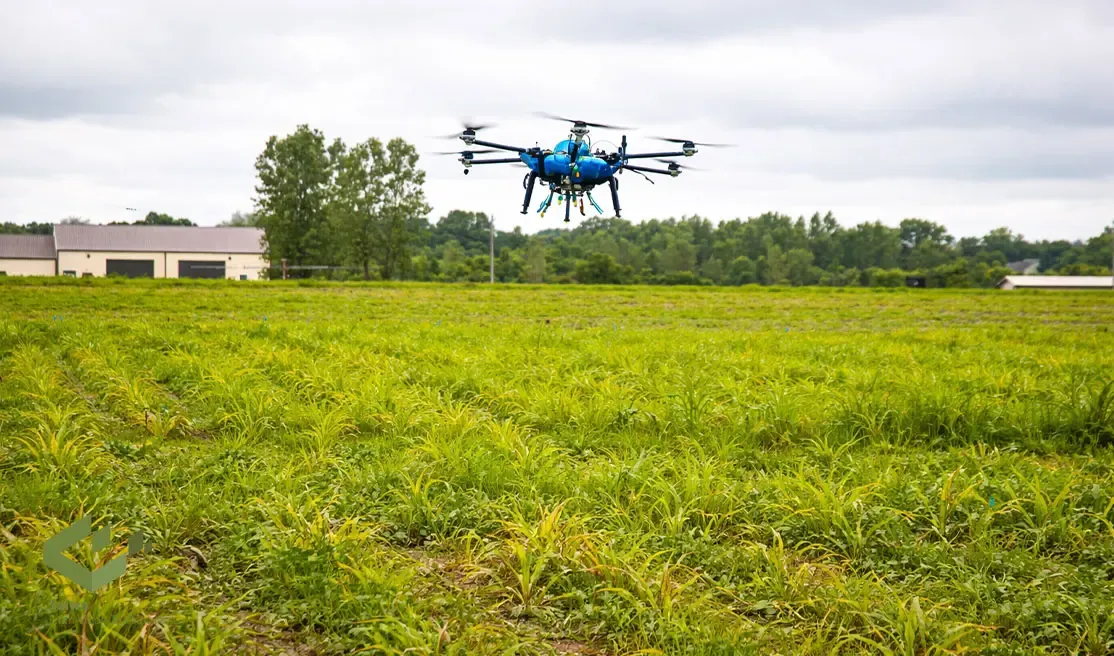
Benefits of Crop Monitoring Systems
The benefits of Crop Monitoring Services are transformative for farm productivity. Implementing these tools provides significant, measurable advantages that directly impact your bottom line, and a few of the most important are noted here.
Yield Prediction: Accurate forecasts enable smarter market planning and logistical preparation.
Resource Optimization: Data-driven insights guide the precise application of inputs like water and fertilizer.
Enhanced Crop Health Management: Early detection of stress factors is key to effective plant health monitoring.
Implementation Considerations
While powerful, successful implementation requires some planning. Key factors include the initial technology investment and the systems for managing data effectively. Another practical challenge is ensuring reliable internet connectivity in rural areas. This is crucial for tools that depend on real-time, cloud-based data transfer. Strategic planning addresses these points for a smooth transition to smarter farming practices.
Sairone: AI-Powered Crop Monitoring System for Smarter Farm Management
Our Sairone platform maks this technology directly accessible. It is an AI suite designed for modern agriculture that automates drone image analysis. We provide precise weed detection and reliable crop yield estimation. This service transforms aerial data into a powerful decision-making tool. Explore how Sairone can bring a new level of efficiency to your operation.
Conclusion
Embracing this technology is more than an upgrade; it is a strategic shift towards precision farming. The insights gained from data empower growers to work smarter and more sustainably. Investing in Crop Monitoring Services is a direct investment in a more productive and resilient agricultural future for any operation.
Note: Some visuals on this blog post were generated using AI tools.
Comments
No comments yet!
Table of Contents
No headings were found on this page.