


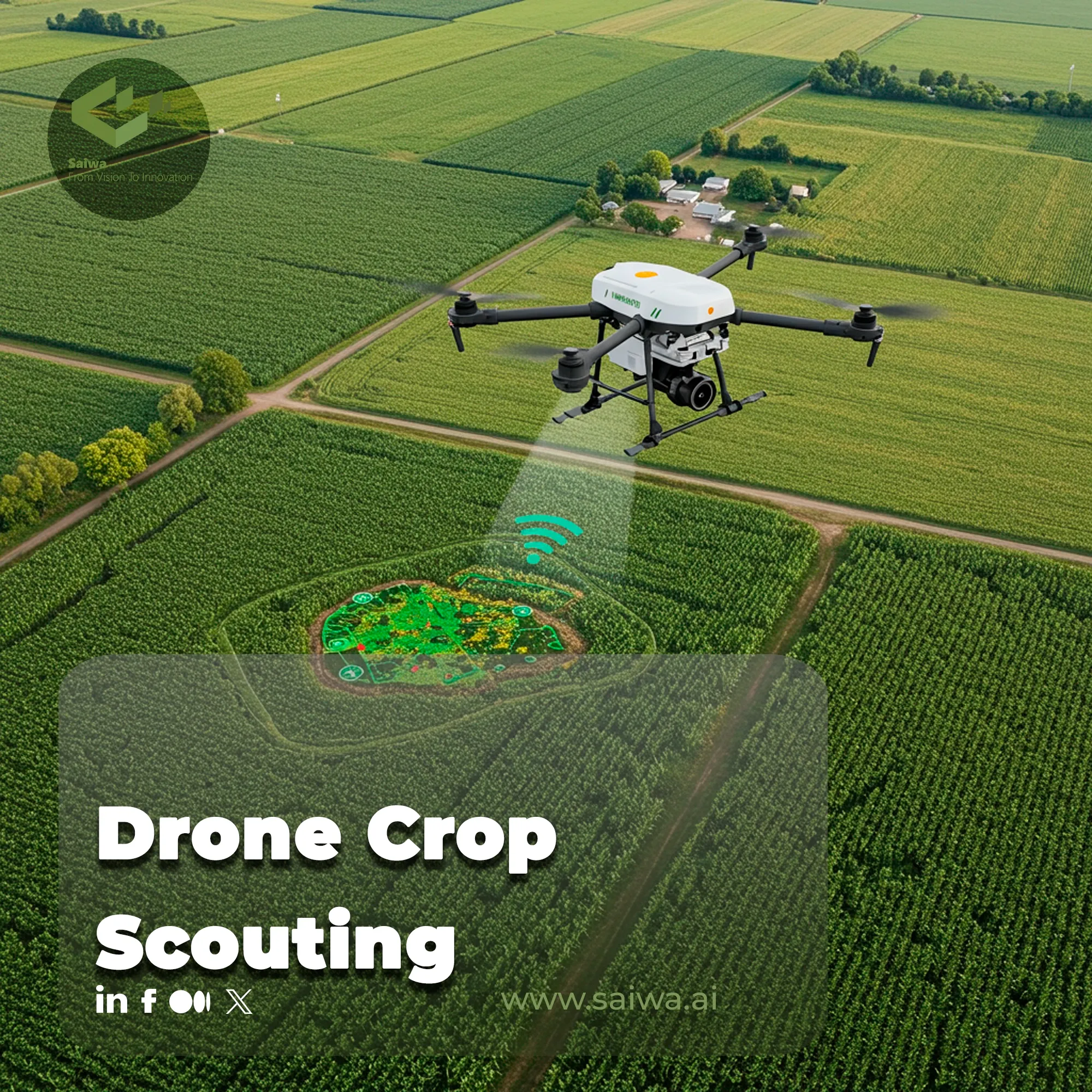
Drone Crop Scouting - Unlocking Farm Efficiency from the Sky
Drone Crop Scouting revolutionizes farming by using aerial sensors and AI to detect crop stress early, boost yields, cut costs, and maximize efficiency.
Written by Amirhossein
Reviewed by Boshra
Why Manual Traditional Scouting Wouldn’t Work Anymore
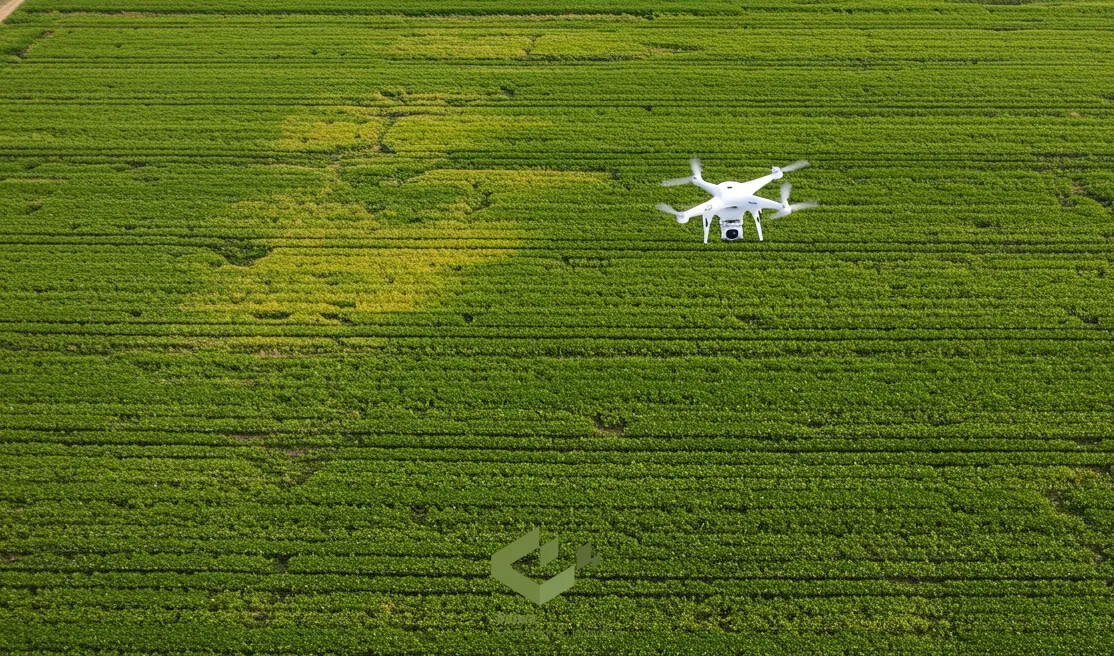
Scouting hundreds of acres manually is slow and labor-intensive, often leaving problems unnoticed until it’s too late. Human observation alone cannot reliably detect early signs of stress or disease, and the scattered notes it yields lack the precision necessary for data-driven decisions. Coupled with rising labor shortages, safety risks, and the complexity of modern farming operations, it's evident that manual scouting is no longer a viable primary approach to crop monitoring.
How Drone Crop Scouting Works?
The evolution of modern agriculture is increasingly tied to data. At its core, Drone Crop Scouting moves beyond simple aerial photography, translating high-resolution images into a rich source of agricultural intelligence.
This technology empowers farmers to make proactive, data-driven decisions by providing an unparalleled view of their fields. The effectiveness of this process hinges on two critical, interconnected elements that work in synergy:
Sensor Technology: Drones are equipped with specialized sensors, such as multispectral and thermal units, that capture data not visible to the naked eye. These sensors measure light reflected from plants across different spectrums, revealing early indicators of crop health or stress.
Data Flow: Once collected, the raw image data is uploaded to a powerful processing platform like Sairone. Here, its AI-driven software automatically stitches the images, creating detailed orthomosaic maps that serve as the foundation for deep analysis and actionable insights.

How to Turn Drone Scouting Data Into Field Action
Drone crop scouting is most valuable when it functions as a decision workflow, not just a faster way to collect images. The current article correctly explains that drones capture high-resolution data and that platforms like Sairone transform those images into orthomosaic maps and actionable insights.
What matters next is how those insights are verified, prioritized, and translated into field action. Research on UAV-based crop scouting shows that aerial maps become far more useful when they guide where agronomists should inspect first rather than replace agronomic validation altogether.
Detection should come before diagnosis
A drone flight can reveal abnormal temperature, reflectance, or canopy patterns earlier than manual scouting alone, but those patterns do not automatically explain the cause. A 2024 review on crop stress detection from UAVs notes that multi-sensor UAV campaigns can characterize crop interactions with biotic and abiotic stressors more precisely, especially when timing, calibration, and quality control are handled correctly.
That distinction matters because the same abnormal zone may be linked to water stress, nutrient deficiency, pest pressure, disease onset, drainage problems, or uneven emergence. In practice, the first role of drone scouting is to narrow the search area quickly, not to assume that every stress signature has a single obvious cause.
Build a scouting loop, not a one-time flight
The most effective drone scouting programs follow a repeatable loop that combines aerial screening with targeted field follow-up. Saiwa’s crop scouting workflow already reflects this logic by moving from field mapping and aerial data collection to analysis, prescription mapping, and follow-up review.
A practical field sequence usually looks like this:
Fly the field to identify unusual canopy patterns, stress zones, or uneven growth areas at high spatial resolution.
Rank those zones by severity and crop stage instead of treating every anomaly equally.
Ground-truth the highest-priority areas with scouting notes, plant checks, or complementary field data before deciding on treatment.
Convert verified findings into targeted actions such as spot spraying, irrigation correction, nutrient adjustment, or repeat monitoring.
Why validation still matters
Drone-assisted scouting improves speed, but human validation still plays a critical role. In a watermelon field study, UAV-assisted multispectral scouting identified disease-prone areas more effectively than conventional scouting alone, while the authors also emphasized that human evaluation remained necessary for disease validation.
That finding is important for professional growers and agronomy teams because it clarifies what drone scouting does best. It helps the team find the right places faster, focus labor where it matters most, and reduce the chance that serious problems will be missed in large fields.
Scouting stage | Best role for drones |
Wide-area screening | Identify stress patterns across the whole field quickly and consistently. |
Sub-field prioritization | Show which zones deserve immediate ground inspection first. |
Repeat monitoring | Track whether a patch is stable, expanding, or responding to intervention over time. |
Precision response support | Feed prescription mapping and targeted treatment workflows instead of whole-field reactions. |
Where Sairone fits
This is where Sairone adds practical value beyond image capture alone. The article already explains that Sairone automates analysis of drone imagery, while Saiwa’s broader scouting workflow shows how those outputs can move into prescription maps and follow-up management.
For modern farms, the real advantage of drone crop scouting is not simply seeing the field from above. It is shortening the path from early signal to verified diagnosis and then to a precise, field-ready response.
Key Benefits of Drone Crop Scouting

Adopting drone-based analytics provides transformative operational advantages that are reshaping modern farm management. Compared to traditional, labor-intensive methods, this agile
technology offers unparalleled efficiency, accuracy, and insight throughout the cultivation cycle. Key benefits include:
1. Speed and Comprehensive Coverage
A single drone can scan up to 1,000 acres in a day, which would take several days of manual scouting. This rapid overview enables farmers to monitor their entire operation in near real time, ensuring that no part of the field is overlooked.
2. Early Stress and Disease Detection
Multispectral and thermal imaging reveal subtle signs of nutrient deficiencies, water stress, and pest infestations four to seven days before they are visible to the naked eye. This early warning system allows for quick intervention, protecting yields and reducing crop loss.
3. Precision Resource Application
Targeted data enables farmers to apply water, fertilizers, and pesticides only where needed. This precision minimizes waste and environmental impact while cutting input costs and promoting sustainable practices.
4. Labor Efficiency and Safer Operations
Automating crop scouting eliminates the need for countless hours of manual fieldwork and reduces the risks associated with navigating uneven or dense terrain. The result is lower labor costs and a safer working environment for farm personnel.
5. Data-Driven Decision Making
Drones don’t just collect images; they generate actionable intelligence. Integrating drone outputs with AI platforms enables farmers to make informed decisions about planting schedules, irrigation strategies, and harvest timing. This ensures that interventions are based on evidence rather than guesswork.
6. Long-Term Field Monitoring and Trend Analysis
Regular drone flights generate historical data on crop performance. Over time, this archive helps identify recurring issues, evaluate the impact of farming practices, and refine strategies from one season to the next.
How Sairone Is Transforming Drone Crop Scouting Through Advanced Technology
While collecting data is powerful, its true value is unlocked through intelligent interpretation. This is where a sophisticated platform like Sairone, by Saiwa, elevates the entire process. Sairone functions as the analytical engine that turns complex aerial data into clear, actionable reports.
Instead of leaving farmers with raw maps, its AI-powered suite automates crucial tasks like weed detection and plant counting. For instance, a manual analysis task that could take 50 hours is completed by Sairone's AI in under two minutes, transforming data into decisions with unprecedented speed and freeing farmers to focus on strategic execution.
Conclusion
The integration of Drone Crop Scouting represents a fundamental shift in agricultural management—from reactive remedies to proactive, precision-based strategies. By leveraging advanced sensors, intelligent data processing, and powerful analytical platforms like Sairone, farmers can achieve a level of operational clarity that was previously unattainable. This technological leap not only enhances productivity and profitability but also paves the way for a more sustainable and resource-efficient future in farming.
Note: Some visuals on this blog post were generated using AI tools.
Comments
Be the first to share your thoughts
No comments yet
Start the conversation by sharing your thoughts
Table of Contents
No headings were found on this page.