



Soil and Leaf Nutrient Monitoring - How Advanced Tools Improve Farm Productivity
Soil and Leaf Nutrient Monitoring helps boost crop yield by optimizing fertilization. Learn how AI, drones, and sensors are transforming farm productivity.
Written by Maryam
Reviewed by Boshra
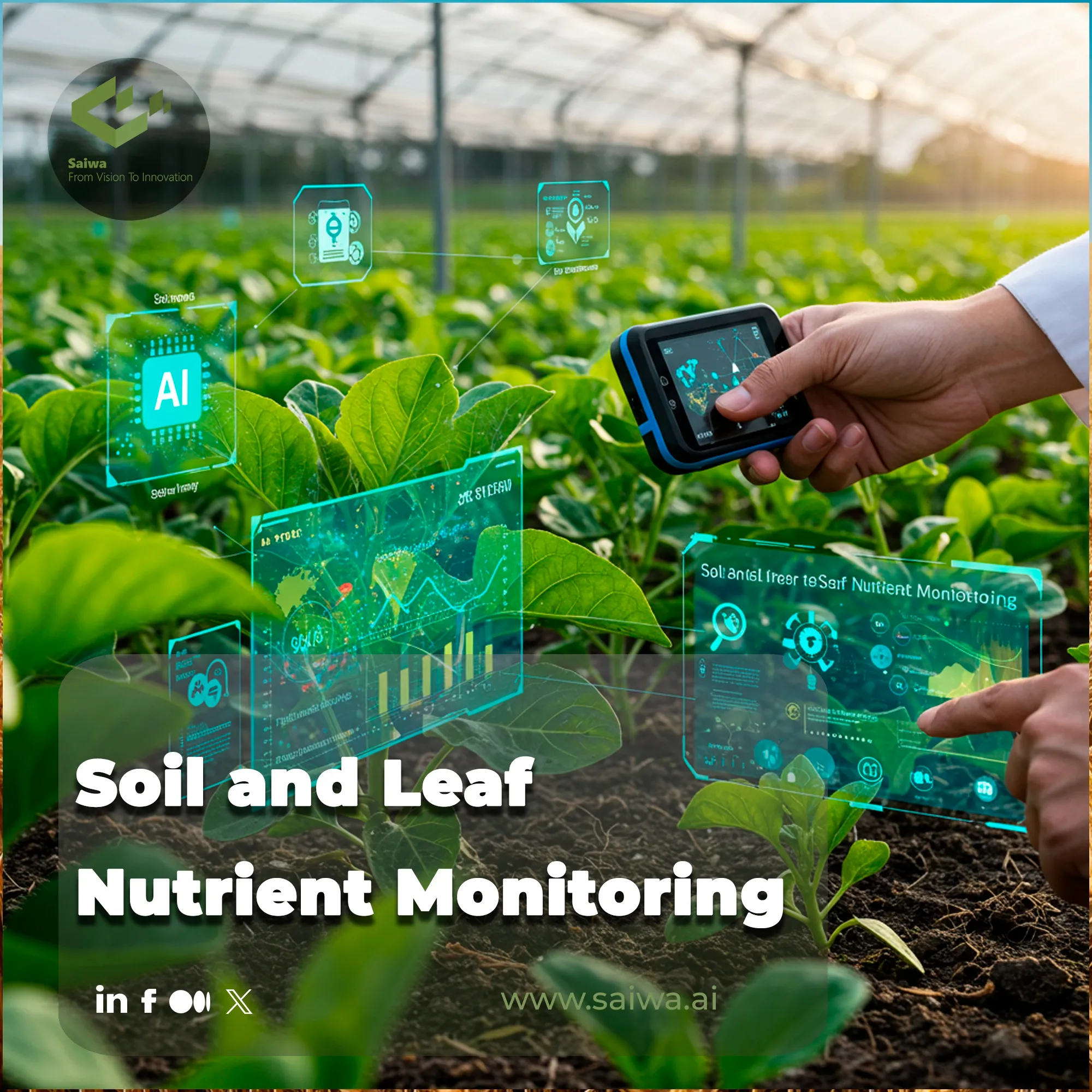
Importance of Soil and Leaf Nutrient Monitoring
Effectively managing farm productivity hinges on a delicate balance: providing crops with precisely what they need, exactly when they need it. Over-fertilization degrades soil and pollutes waterways, while under-fertilization compromises yield and quality.
The key to sustainable agriculture is a deep, scientific understanding of nutrient dynamics, a process where advanced tools are becoming indispensable. To optimize this process, several factors come into play:
Key Soil Nutrient Indicators: Analysis focuses on primary macronutrients (N, P, K), secondary nutrients (Ca, Mg, S), and essential micronutrients.
Soil Health Beyond Nutrients: A truly healthy soil requires more than just minerals; factors like pH and organic matter are critical for nutrient availability.
Tissue vs. Soil Tests: Soil tests reveal what nutrients are present in the ground, but Leaf Nutrient Analysis confirms what the plant is actually absorbing, identifying hidden deficiencies before visual symptoms appear. Here, AI-powered platforms like Sairone begin to show their value by analyzing drone imagery to detect early signs of stress linked to these deficiencies.
Timing for Leaf Sampling: Nutrient levels fluctuate with growth stages, making precise timing essential for accurate and actionable results.

Soil Nutrient Monitoring Methods
Effective strategies rely on a combination of methods, each with its place in a modern agricultural framework:
Sampling Strategies: Shifting from whole-field sampling to dividing land into smaller management zones based on soil characteristics provides far more accurate data.
Lab vs. Field Analysis: Laboratory analysis offers unmatched precision, while in-field tools deliver speed and immediate feedback for rapid decision-making.

Leaf Nutrient Monitoring Methods
Complementing soil data, leaf analysis gives a direct view of the plant's nutritional status. Key distinctions in this area include:
Sap vs. Leaf Analysis
Sap analysis provides a real-time snapshot of nutrients currently flowing within the plant, whereas a full leaf tissue analysis offers a more comprehensive picture of the plant’s nutritional history.
Best Sampling Protocols Soil and Leaf Nutrient Monitoring
Consistency is crucial. Standardizing the age and position of the leaves being sampled ensures that results are both repeatable and comparable over time.
How to Turn Nutrient Data Into Better Fertility Decisions
Soil and leaf nutrient monitoring creates the most value when it is used as a combined diagnostic system, not as separate tests reviewed in isolation. The current article correctly distinguishes soil analysis from leaf analysis, noting that soil tests show what is available in the root zone while leaf measurements show what the plant is actually taking up.
That distinction is critical because nutrient problems do not always come from a lack of nutrients in the field. They can also result from poor uptake, pH-related lockup, uneven soil variability, moisture stress, or timing mismatches between crop demand and fertilizer supply.
Why one test is not enough
Soil testing is essential for baseline planning, especially for nutrient supply, pH, and organic matter assessment. However, tissue and leaf analysis provide a different kind of evidence by revealing whether the crop is truly absorbing those nutrients in the expected way.
A review on nutrient management in fruit crops states that combining soil and leaf tissue analysis is emerging as a better approach for diagnosis and fertilizer recommendation because nutrient uptake and removal vary substantially across time and crop conditions.
In practical terms, a field can test “adequate” in the soil and still show functional deficiency at the plant level. That is exactly why leaf results should not be treated as redundant data.
Build a layered interpretation workflow
The most reliable nutrient strategy uses each monitoring layer for a different question. Precision agriculture research shows that proximal and remote sensors help delineate within-field variability, while decision support becomes stronger when those observations are tied to site-specific application and management zones.
A practical workflow usually looks like this:
Use soil sampling to establish baseline fertility, pH, and management-zone variability before making broad fertilizer plans.
Use leaf or tissue analysis during the season to confirm whether the crop is actually accessing nutrients as expected.
Use drone or remote sensing data to identify spatial patterns of stress that may indicate nutrient imbalance, especially when symptoms are not yet obvious across the whole field.
Convert those findings into variable-rate or zone-specific corrections rather than treating the entire field uniformly.
Monitoring layer | Main question it answers | Best management value |
Soil testing | What nutrients and constraints exist in the field? | Best for baseline planning and zone creation. |
Leaf or tissue analysis | What is the plant actually absorbing? | Best for confirming hidden deficiency or imbalance. |
Remote sensing | Where is stress appearing spatially across the field? | Best for prioritizing scouting and locating correction zones. |
AI decision platform | What action should happen next and where? | Best for faster interpretation and precision response. |
Why this improves productivity
This layered approach reduces one of the most common nutrient-management mistakes: treating a variable field as though it were uniform. The current article already warns against whole-field assumptions, and site-specific nutrient management reviews make the same point by emphasizing management zones, remote sensing, proximal sensing, and variable-rate fertilization as tools for improving nutrient use efficiency and profitability.[3]
It also improves timing. A recent review of UAV-based monitoring notes that aerial sensing is increasingly useful for monitoring crop water and nutrient status because of its high flexibility, fine spatial resolution, and rapid data acquisition, especially when integrated into broader precision-agriculture workflows.[5]
Where Sairone fits
This is where Sairone fits naturally into the workflow. The current article states that Sairone uses AI and drone imagery to detect early stress linked to nutrient issues, while its crop health monitoring platform adds localized alerts, plant health indices, and prescription-map export for precision treatment.
For growers, agronomists, and ag-service providers, the advantage is not just more data. It is a clearer path from nutrient diagnosis to targeted action, with less guesswork and better control over input efficiency.
Best Practices and Considerations
Achieving meaningful results from Soil and Leaf Nutrient Monitoring demands careful planning. To maximize the return on this investment, consider these key points:
Frequency and Depth of Sampling: This should be tailored specifically to the crop’s growth cycle and the known variability of the soil.
Common Pitfalls: A primary mistake is treating a diverse field as a single uniform unit, leading to inaccurate conclusions.
Cost vs. Benefit Analysis: While there are upfront costs, the long-term gains from optimized fertilizer use and increased yields consistently prove the value of this practice.
Advances in Soil and Leaf Nutrient Technologies
The evolution from manual testing to automated analysis is driven by powerful new technologies:
Artificial Intelligence and Machine Learning
AI excels at identifying complex patterns in large datasets from sensors and imagery to predict nutrient levels and soil health.
Drone-Based Remote Sensing
Drones equipped with multispectral cameras capture high-resolution images, creating detailed maps that highlight plant stress and nutrient variability across a field.
IoT and Wireless Sensor Networks (WSN)
In-field sensors provide a continuous stream of real-time data on soil moisture, temperature, and pH.
Robotics and Autonomous Sampling Systems
Automated systems are emerging to perform soil and leaf sampling with greater consistency and efficiency.
Nanotechnology in Nutrient Monitoring
Next-generation nanosensors promise ultra-sensitive and highly specific nutrient detection capabilities.
How Sairone Enhances Nutrient Monitoring with Cutting-Edge Technology
This is where advanced platforms transform data into action. Sairone, developed by Saiwa, leverages AI and drone imagery to move beyond simple data collection. The platform automates the analysis of high-resolution images, providing critical insights for Plant health monitoring.
Its nitrogen content estimation service allows growers to see exactly where crops are thriving and where they are struggling. This enables precision fertilization, reduces waste, and supports better Crop yield estimation. Sairone turns complex visual data into clear, actionable directives for smarter, more efficient farm management.
Conclusion
The future of productive and sustainable agriculture lies in the integration of proven agronomic principles with breakthrough technologies. The meticulous practice of Soil and Leaf Nutrient Monitoring is greatly amplified by AI, drones, and IoT, which provide unprecedented clarity and control. By embracing tools like Sairone that translate complex data into practical solutions, growers can optimize resource use, improve profitability, and steward their land for generations to come. This data-driven approach is no longer a futuristic concept but a present-day reality for competitive farming.
Note: Some visuals on this blog post were generated using AI tools.
About the team
Continue reading
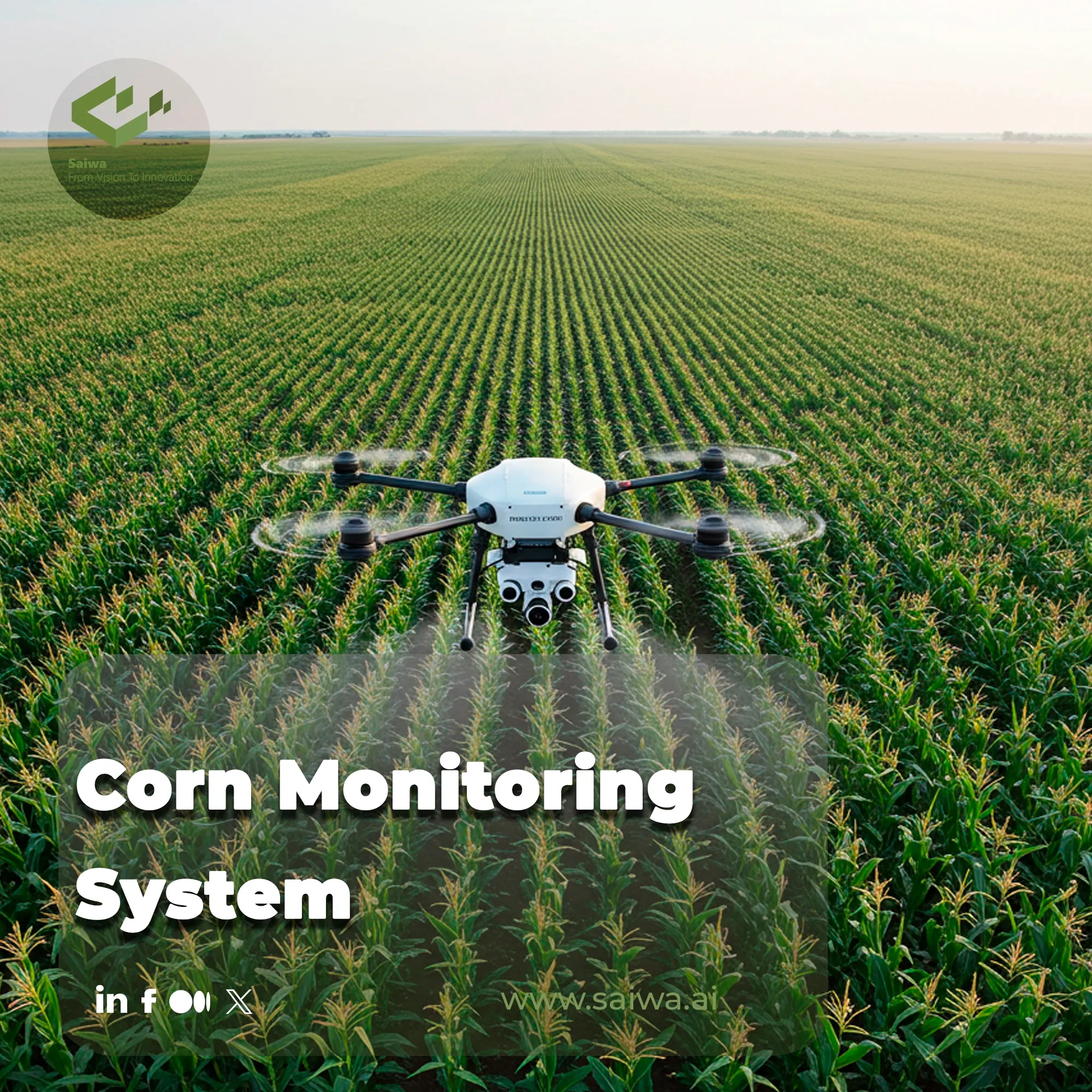
Corn Monitoring System | Modern Technologies Farmers Use to Maximize Yields
The challenge of modern agriculture is moving beyond intuition to data-driven precision, a shift especially critical in corn cultivation. Tr
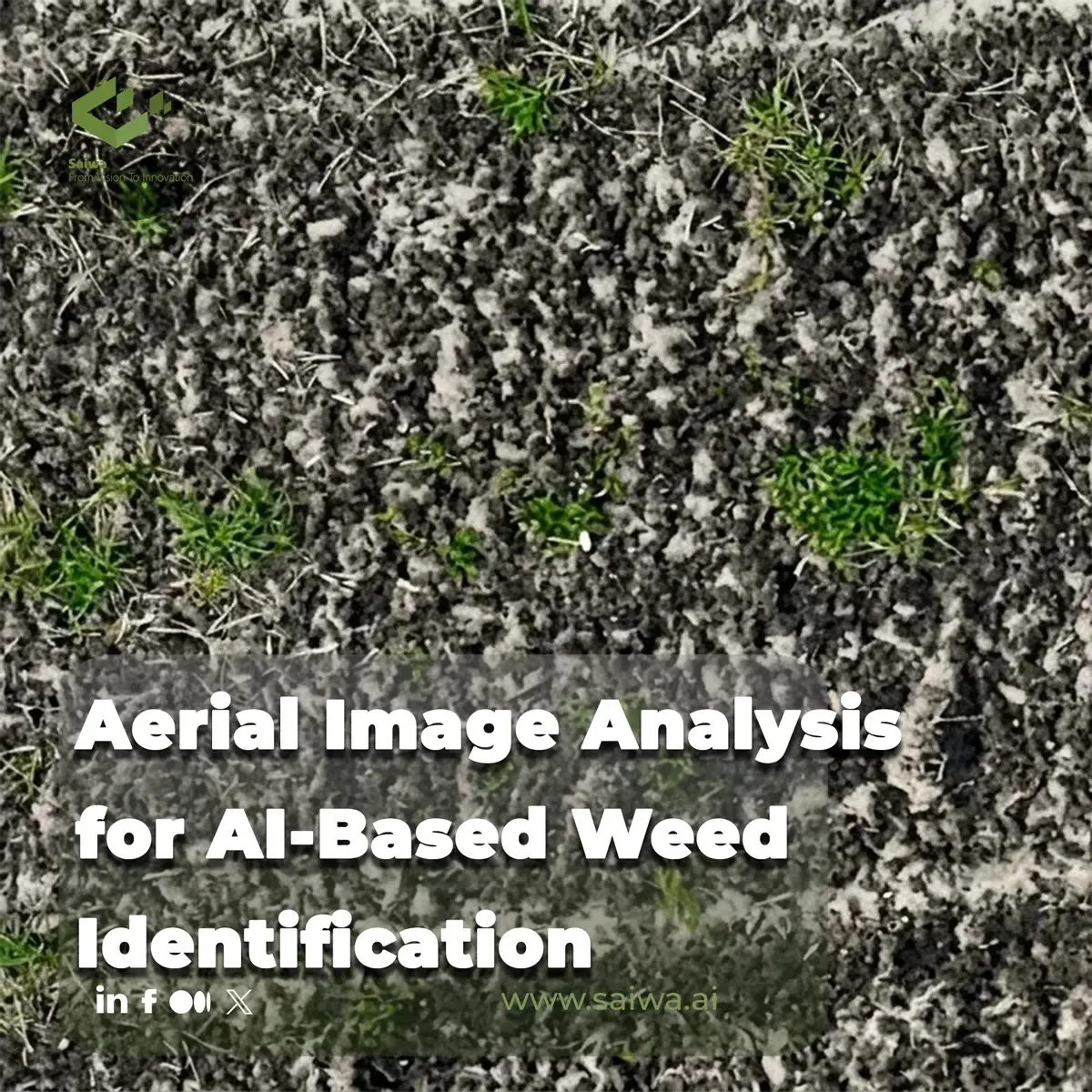
Aerial Image Analysis for AI-Based Weed Identification
IntroductionWeeds compete with crops for light, water, and nutrients, which can reduce crop performance and increase management costs. Conve

Weed Management in Wheat - Cultural, Mechanical, and AI-Driven Synergies
Weed management is a major challenge in wheat production because weeds compete with crops for vital resources such as water, sunlight and nu

AI in Plant Breeding | Accelerating Innovation in Agriculture
Feeding a growing global population while facing the challenges of climate change and resource scarcity demands innovative solutions in agri

Sustainable Agriculture Solutions: Eco-Friendly Farming for the Future
Globally, food systems are responsible for roughly one-third of all greenhouse-gas emissions and a large portion of water use and land conve

Improving Crop Yield Prediction Using Machine Learning
Accurately predicting crop yields is crucial for supporting many aspects of the agriculture industry, including optimizing cultivation pract
Comments
Be the first to share your thoughts
No comments yet
Start the conversation by sharing your thoughts
Share this article
Help others discover this content
Table of Contents
No headings were found on this page.