



Spot Spraying vs. Blanket Spraying: Cost & Efficiency Comparison
Meta Description Compare spot spraying vs. blanket spraying in commercial agriculture through cost, efficiency, weed control, AI mapping, and ROI
Written by Amirhossein
Reviewed by Boshra
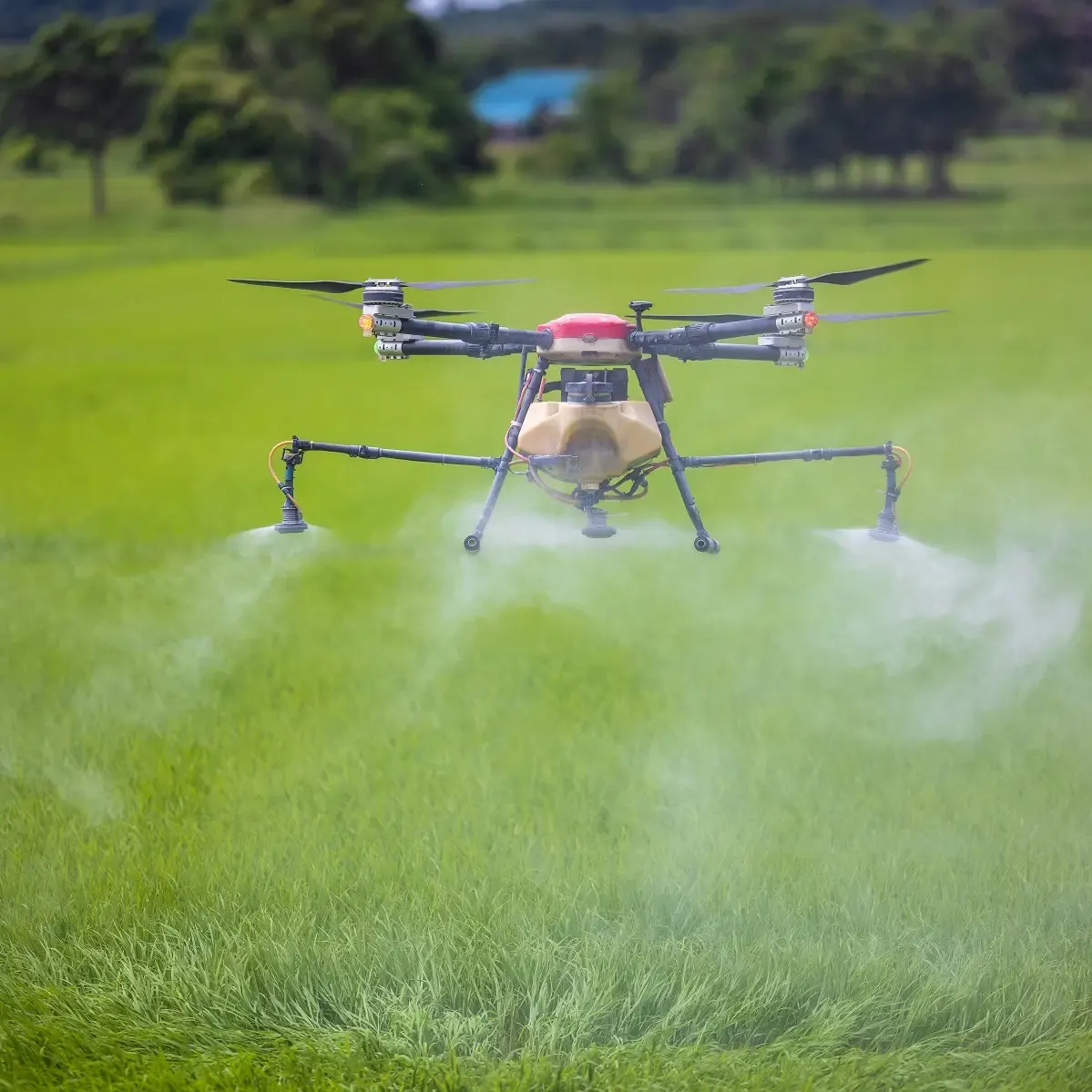
The choice between spot spraying and blanket spraying is no longer only a matter of equipment preference. In 2026, it is also a decision about input efficiency, resistance pressure, environmental risk, and the quality of field data used to guide treatment. Precision weed management has advanced enough that many farms can now target herbicide only where weeds exist, but the value of that approach depends strongly on weed distribution, timing, and detection accuracy. Scientific reviews and on-farm studies consistently show that selective spraying can reduce herbicide use while maintaining agronomic performance under the right conditions.
The shift from uniform application to site-specific control
Uniform spraying treats the field as if weed pressure were evenly distributed, even though that is rarely true in commercial production. Site-specific control uses scouting, imaging, and prescription mapping to apply product only where needed, which can reduce wasted chemistry and improve operational efficiency. The main economic question is not whether spot spraying uses less herbicide, but whether the savings are large enough to offset the cost of detection, equipment, and system complexity. That break-even point changes with herbicide price, infestation pattern, and machine utilization.
What this comparison helps farmers and agronomy teams decide
This comparison is most useful when a farm needs to decide whether to keep using broadcast spraying or move to targeted treatment in specific fields or growth stages. It also helps agronomists evaluate where spot spraying improves ROI and where a blanket pass still offers better simplicity or coverage reliability. The key is to compare the full spray cycle, not just chemical use, because labor, fuel, nozzle control, and data processing all affect the final cost.
Spot spraying vs. blanket spraying: core definitions
Spot spraying is a selective application method that activates only where weeds are detected, typically through sensors, cameras, or a mapped prescription. Blanket spraying, also called broadcast spraying, applies herbicide uniformly across the whole field regardless of local weed density. In practice, spot spraying is a decision system, while blanket spraying is a coverage system.
What spot spraying means in field operations
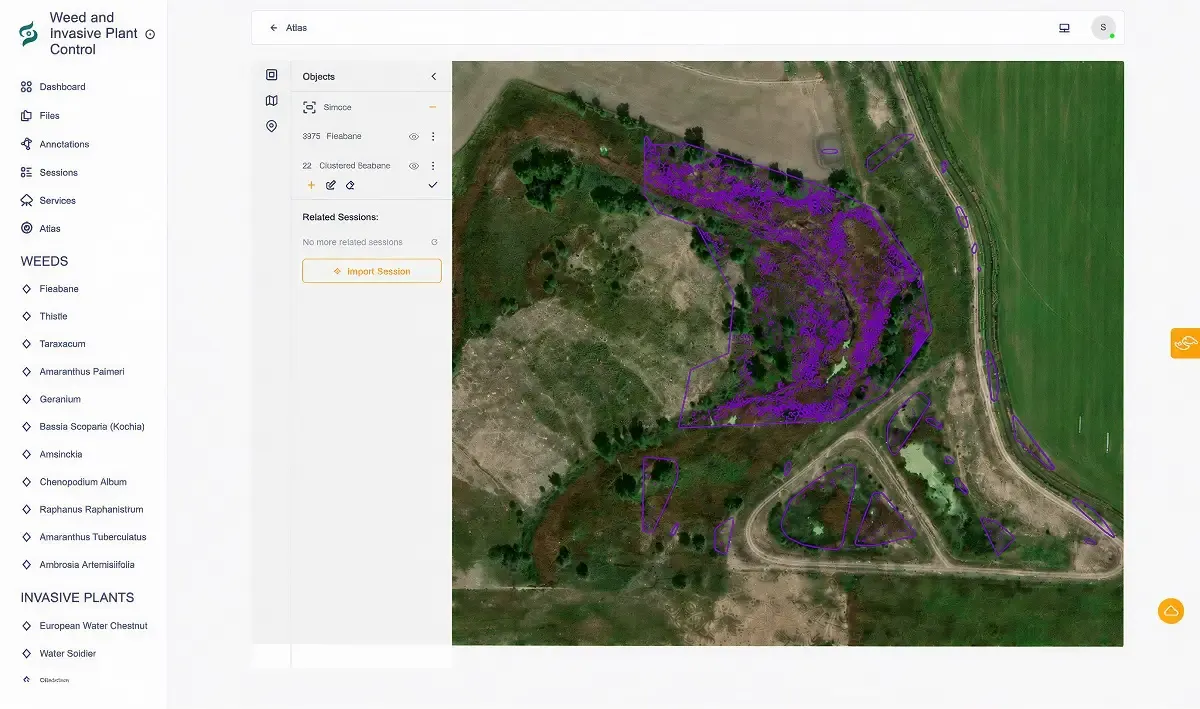
In field operations, spot spraying depends on detecting weed presence early enough for the nozzle or spray section to respond precisely. Some systems work in real time using boom-mounted cameras, while others use drone-derived weed maps that guide later application. This approach is most effective where weeds are patchy or where the weed burden is low enough that many field zones do not need treatment. It can also support resistance management by reducing unnecessary herbicide exposure across weed-free areas.
What blanket spraying means in field operations
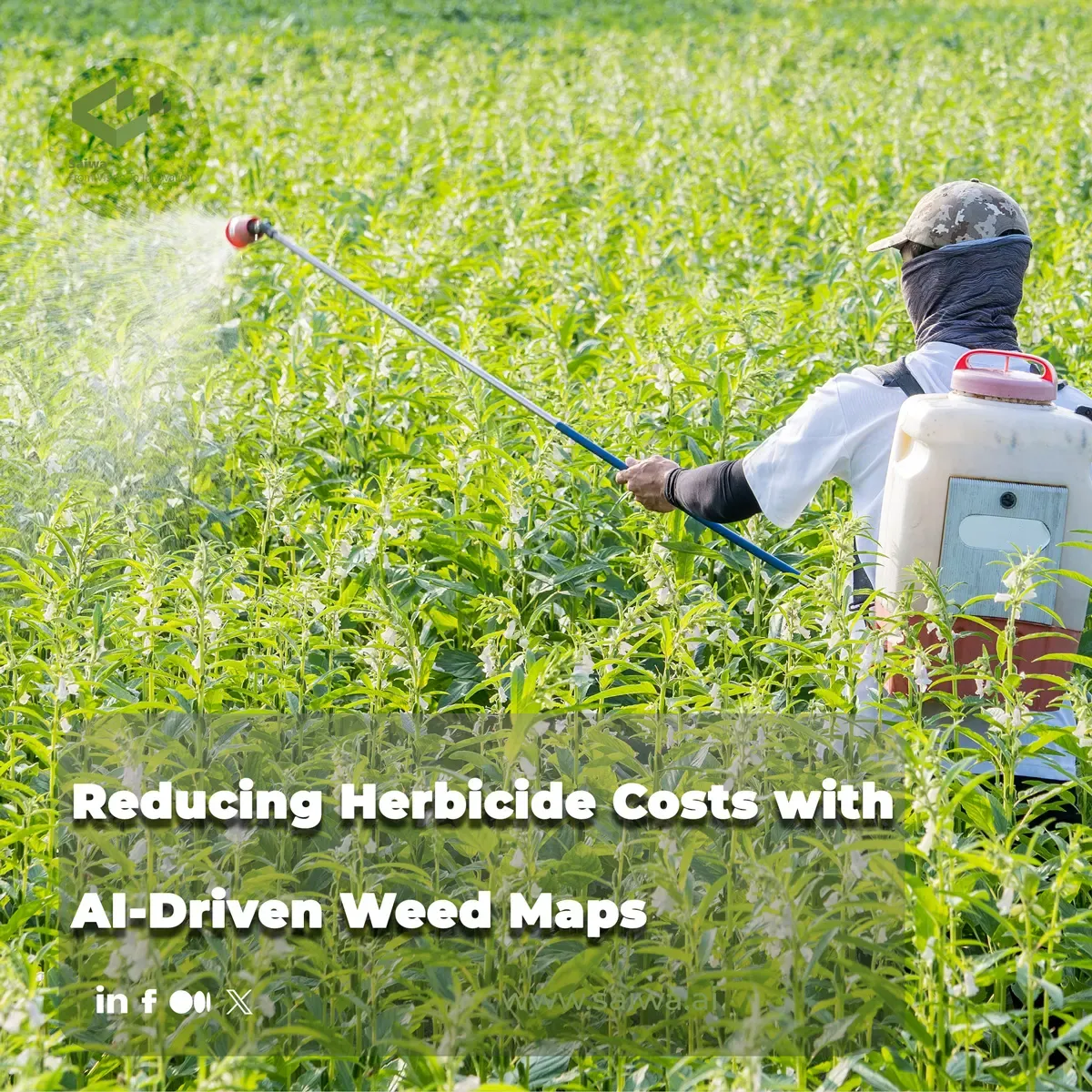
Blanket spraying keeps application logic simple: every part of the field receives the planned rate. That simplicity makes it robust in dense infestations or when the field is too variable for reliable selective detection. It is also easier to schedule and less dependent on image quality, algorithm settings, or sensor timing. The trade-off is that weed-free areas still receive product, which increases chemical use and can add cost without improving weed control.
How targeted application differs from broadcast application
The core difference is spatial resolution. Targeted spraying uses the weed map as the treatment boundary, while broadcast spraying uses the field boundary. That matters because many fields have large zones with no weeds or very low pressure, especially in pre-seed or early-season scenarios. When weed patches are discrete, targeted application can preserve agronomic performance while lowering total chemical load.
Cost comparison across the full spray cycle
The Saskatchewan on-farm trial found that targeted spot spraying created measurable economic benefits. On the 28.3 acres where See & Spray was active, savings averaged $10.50 per acre, equating to approximately $297 in direct herbicide cost reduction. The system treated only 39% of the field, leaving 61% unsprayed, while maintaining weed control and crop performance comparable to broadcast application.
Herbicide and chemical input costs
Chemical savings depend on weed coverage, not just field size. If weeds occupy small or scattered zones, spot spraying can reduce herbicide use dramatically because non-infested areas receive no spray at all. However, if weed pressure is uniform, the savings shrink quickly and the economic case weakens. This is why spot spraying is generally more attractive in fields with patchy infestations than in fields with broad, even weed pressure.
Fuel, labor, and machine-hours
Spot spraying can reduce product use, but it does not always reduce machine-hours proportionally. The sprayer still has to cover the field, and travel time is often similar to a broadcast pass unless the system materially changes field operations. Labor can fall if scouting and re-spraying are reduced, especially when imaging automates part of the detection process. In practice, labor savings are highest when detection, mapping, and treatment are integrated into one workflow rather than handled as separate steps.
Equipment investment, depreciation, and maintenance
Capital cost is one of the biggest barriers to adoption. Optical and AI-guided sprayers require cameras, processing hardware, software updates, calibration, and maintenance, all of which add depreciation and service costs over time. These fixed costs mean the economic benefit is highly sensitive to acreage, herbicide prices, and how often the system is used. Large farms and custom applicators usually have a stronger case because they can spread fixed cost over more treated acres.
Mapping, scouting, and data-processing costs
Spot spraying also adds a data layer. Drone scouting, orthomosaic processing, weed classification, and prescription-map creation require time and software infrastructure. Those costs can be justified when they replace repeated manual scouting or enable more precise interventions. But if the imagery is poor, outdated, or not georeferenced correctly, the cost of the data step may outweigh the benefit.
How to Calculate Spot Spraying Break-Even Cost Per Acre
The economic case for spot spraying should be calculated at the field level, not assumed from the technology’s potential herbicide savings. A selective application system can reduce chemical use substantially, but the resulting financial benefit depends on the proportion of the field actually sprayed, the price of the herbicide program, the cost of detection and mapping, and the annual cost of the equipment or service.
The most important variable is the treated-area percentage, not simply the visible weed density. A field with a low weed count can still require a relatively large treated area if weeds are distributed broadly, nozzle activation buffers are wide, or spray zones overlap. Research on real-time spot spraying found that the proportion of area treated was more useful than weed cover alone when assessing the economics of the system. In the cited trials, the strongest herbicide-cost savings occurred when spot sprayers treated approximately 42% or less of the field area.
A simplified comparison can begin with the following calculations:
Where:
= herbicide cost per acre for a full-rate broadcast application
= application cost per acre, including labor, fuel, machinery, and operational time
= proportion of the field treated by the spot-spraying system, expressed as a decimal
= mapping, scouting, imagery, data-processing, or software cost per acre
= annualized fixed cost of cameras, sensors, software subscriptions, maintenance, depreciation, or contractor premiums, divided by annual treated acreage
= expected cost associated with weed escapes, respraying, reduced control, or additional manual review
The estimated net benefit of spot spraying is then:
This formula isolates the financial value created by avoiding herbicide use in untreated areas. If the result is positive, selective treatment has the potential to outperform blanket spraying financially. If it is negative, broadcast application may be the more cost-effective option for that field, season, or growth stage.
| Input to measure | Why it affects the decision |
|---|---|
| Herbicide mix cost per acre | Higher-cost programs create a larger potential saving from untreated ground |
| Actual treated-area percentage | A lower treated proportion generally improves spot-spraying economics |
| Mapping or real-time detection cost | Data acquisition, processing, subscriptions, and service fees reduce gross savings |
| Annual machine utilization | More acres spread fixed camera and software costs across a larger area |
| Weed escapes and follow-up treatment | Missed weeds can reduce control and create an additional cost later in the season |
| Yield and crop-quality outcome | Input savings are not beneficial if weed escapes create a larger production loss |
For illustration, assume a broadcast herbicide program costs $24 per acre and a spot sprayer treats 35% of the field. The direct chemical saving is:
$24×(1−0.35)=$15.60 per acre
If mapping, processing, and annualized technology costs total $8 per acre, the estimated net benefit is $7.60 per acre before considering any respray requirement or crop-performance difference. If the same system treats 80% of the field, direct chemical savings fall to $4.80 per acre, which may not cover the additional technology and workflow costs.
Published economic analyses reinforce why these calculations must be site-specific. A 2026 review found that the relative profitability of patch spraying, site-specific weed management, and uniform application changed with weed coverage, field conditions, technology costs, and farm scale. In that review, full-rate uniform application became economically preferable when weed coverage exceeded a high threshold in the evaluated scenarios. Another analysis found that UAV map-based spot spraying could approach break-even, while real-time spot spraying increased costs under the assumptions used, largely because of higher machinery and process costs.
The decision should therefore be revisited by field and by season. A farm may find that spot spraying has a strong return in patchy pre-seed fields or targeted post-emergence passes, while blanket spraying remains more practical in dense, uniform infestations or where reliable detection is not available.
Efficiency comparison in real farming conditions
Efficiency is not only about chemical savings; it also includes how reliably the system finds weeds and how consistently it sprays the correct area. Research on selective spraying emphasizes that detection accuracy and nozzle timing are central to system performance. A system that misses weeds or delays actuation can lose the benefit of selective treatment.
Weed pressure and patchiness
Patchy weed distribution is the strongest practical case for spot spraying. When weeds occur in clusters, the machine can concentrate product in high-pressure zones and avoid weed-free ground. By contrast, heavily infested or very uniform fields often require near-broadcast coverage anyway, so targeted spraying offers little advantage. The more variable the field, the more useful the technology becomes.
Detection accuracy and false positives
Selective spraying depends on reliable discrimination between weed and crop or soil background. False positives waste herbicide, while false negatives leave weeds untreated. Machine-learning and computer-vision systems have improved detection, but performance still depends on crop stage, lighting, dust, canopy closure, and model training quality. This is why sensitivity settings and model validation are operationally important, not just technical details.
Travel speed, boom dynamics, and nozzle response
Sprayer speed and response time influence whether a targeted pass behaves like a selective treatment or a partial broadcast pass. Faster travel speeds reduce the time available for detection and nozzle actuation, which can shrink accuracy if buffers and nozzle spacing are not well tuned. Boom height, nozzle angle, and droplet pattern also affect the actual treated footprint. In other words, system dynamics can determine whether the map is faithfully translated into field application.
Weather, dust, and topography limitations
Field conditions can override the logic of selective spraying. Dust, wind, uneven terrain, and poor visibility can reduce detection confidence and trigger fallback broadcast behavior in some systems. Drift reduction technologies, including air-induction nozzles and real-time control systems, improve performance, but they do not eliminate the effect of weather and operator setup. Because of this, the best results usually come from stable operating windows rather than marginal conditions.
Agronomic performance and spray outcomes
The main agronomic question is whether lower herbicide use also means lower weed control. Current evidence shows that in suitable scenarios, spot spraying can deliver weed knockdown comparable to broadcast treatments. That result matters because it means chemical savings do not automatically imply an agronomic penalty.
Weed control efficacy in variable infestation zones
In variable zones, spot spraying can target the same weed population more precisely than a blanket pass. The Saskatchewan trial found no statistically significant difference in weed-density reduction between broadcast and spot-spray pre-seed treatments. That suggests selective application can preserve control when the weed population is localized and well detected. The result should not be generalized to every crop or every weed species, but it is strong evidence for patchy pre-seed scenarios.
Crop safety and crop coverage trade-offs
Crop safety depends on both herbicide selectivity and how much product contacts non-target plants. Blanket spraying increases total crop exposure by definition, while spot spraying reduces exposure in untreated zones. However, selective systems must still avoid overspray and drift near the crop row. If the crop is sensitive or the herbicide window is narrow, precision alone does not guarantee safety; application quality still matters.
Resistance management and overuse reduction
Repeated field-wide applications can accelerate resistance by exposing weed populations to unnecessary selection pressure. Spot spraying reduces total use, which helps preserve herbicide efficacy over time when integrated into a broader resistance-management plan. It is most valuable when paired with pre-emergence coverage, crop rotation, and scouting-based post-emergence intervention rather than used as a standalone tactic. That combination reduces both chemical load and the likelihood of repeated redundant applications.[6][1][2]
Yield protection versus input minimization
The goal is not to spray less at any cost; it is to reduce inputs without losing yield. In the Saskatchewan canola trial, yield and grain-quality measures were statistically similar between broadcast and spot-spray treatments. A related field report found that on 28.3 acres, targeted application produced about $10.50 per acre in herbicide savings while maintaining control. The strongest business case appears where input savings are real and yield remains unchanged.
Where spot spraying wins, and where blanket spraying still fits
The best method depends on infestation pattern, timing, and operational capacity. Spot spraying is not universally superior, and broadcast spraying still has a place when coverage certainty matters more than chemical minimization. A practical spray program often uses both methods in the same season.
Low-pressure or patchy weed scenarios
Spot spraying is most attractive in low-pressure fields with isolated patches. In those cases, the untreated area can be large enough to create clear chemical savings. This is especially relevant in pre-seed or early post-emergence windows when weeds are visible and still localized. Under those conditions, selective application often provides the best balance of savings and control.
Pre-emergence plus targeted post-emergence programs
A two-pass strategy is often more effective than relying on one selective application alone. A full-rate pre-emergence or early broadcast treatment can suppress baseline pressure, followed by targeted post-emergence spot spraying where escapes appear. This approach reduces the burden on detection systems and lowers the chance of missing early flushes. It is also a common pathway for improving ROI because the second pass carries more obvious spatial selectivity.
Fields with heavy, uniform weed pressure
When the field has heavy, widespread infestation, blanket spraying may remain the more practical choice. Selective systems save less when most of the field needs treatment anyway. In such fields, the added cost of detection and selective hardware may not produce enough savings to justify the complexity. In other words, a high weed load compresses the economic gap between methods.
Operational scenarios where broadcast spraying remains practical
Broadcast spraying is still practical when the operator needs maximum simplicity, fast deployment, or consistent coverage in uncertain conditions. It can also make sense when imaging quality is poor, cloud cover is limiting, or weed identification confidence is low. For some operations, especially smaller ones, the lower complexity can outweigh the input savings of targeted treatment. The right decision is therefore field-specific, not ideological.
Sairone case study: AI-powered weed detection for targeted spraying
Sairone platform is positioned around AI-based crop and environmental monitoring, including weed and invasive plant control, image/video/orthomosaic processing, and map-based recommendations. In the soybean use case, the platform describes drone and orthophoto analysis for weed identification and variable-rate prescription maps for spot spraying. That is directly aligned with the decision logic behind selective spraying, where the objective is to reduce chemical use without losing treatment precision.
The relevant case for this article is the weed-control workflow: aerial imagery is collected, weed hotspots are identified, and treatment zones are mapped for targeted action. This type of workflow is most useful in patchy fields, where the map can separate infested from non-infested areas with enough confidence to justify selective treatment. Sairone also supports cloud-based processing, API integration, and white-label deployment, which means the same detection logic can be embedded into agronomy services or farm workflows without changing the underlying spraying decision.
Conclusion: Choosing the right spraying strategy
Spot spraying is most compelling when weed pressure is uneven, herbicide prices are meaningful, and detection quality is high enough to support confident targeting. Blanket spraying remains relevant when infestation is heavy, the field is highly uniform, or operational simplicity matters more than chemical minimization. The most defensible choice in 2026 is usually a field-specific program built from scouting, imaging, and agronomic thresholds rather than a one-method-fits-all rule.
References (1)
About the team
Continue reading

AI-Powered Drones for Agriculture: The Future of Smart and Sustainable Farming
Modern agriculture is under pressure. Farmers face rising costs, unpredictable climate conditions, and the need to grow more food with fewer

How to Create Weed Maps from UAV Imagery
IntroductionWeed mapping from unmanned aerial vehicle (UAV) imagery combines aerial data capture, image processing, plant classification, sp

Mastering Fleabane Control: Challenges, Technology, and the Sairone Advantage
Why Fleabane Is One of the Toughest Weeds to ControlFleabane (Conyza bonariensis) poses a serious challenge to farmers because of its aggres

Comprehensive Strategies for Weed Control in Corn Fields
Weed control has always been a challenge for farmers, especially when it comes to crops like corn. Weeds compete with the plants for vital r
Reducing Herbicide Costs with AI-Driven Weed Maps
Weed Patchiness and the Case for Site-Specific ControlModern agriculture operates on increasingly tight margins, pushing agronomists to opti

AI vs. Field Surveys for Invasive Plant Detection: Accuracy and Cost
Invasive plant management depends on knowing where target species occur, how widely they are distributed, and how quickly those patterns are
Comments
Be the first to share your thoughts
No comments yet
Start the conversation by sharing your thoughts
Share this article
Help others discover this content
Table of Contents
No headings were found on this page.