



Wildlife Control in Ontario: Managing Urban Wildlife Safely and Effectively
wildlife control in Ontario can be done through AI-driven monitoring, and smart prevention strategies.
Written by Maryam
Reviewed by Boshra
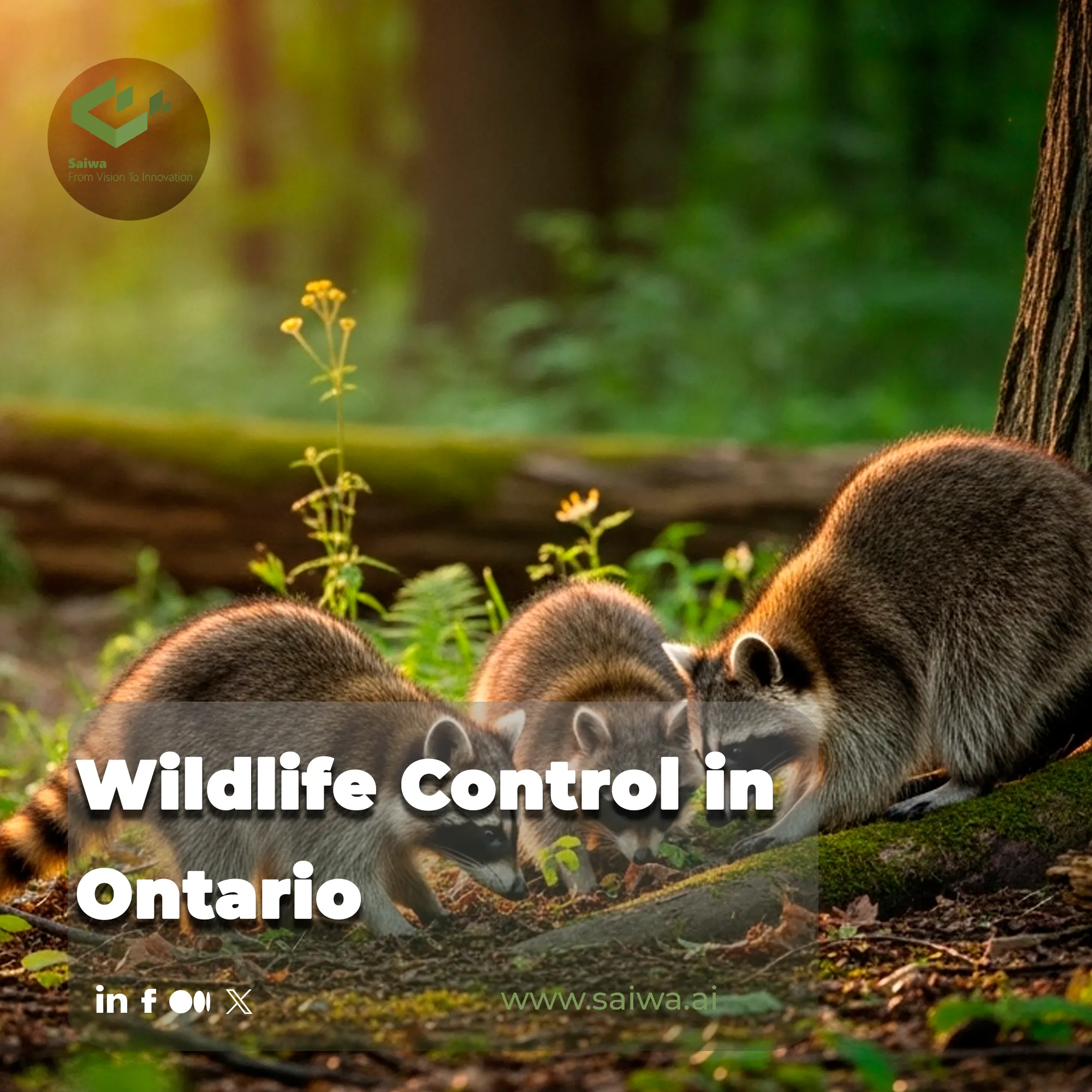
Ontario's urban areas are experiencing significant increases in wildlife encounters, as cities expand into natural habitats.
Existing wildlife management strategies are typically reactive in nature, often resorting to methods that are both inhumane and ineffective. These approaches do not address the underlying causes of human-wildlife interactions, leading to a cycle of problems.
In the context of modern wildlife control, it is necessary to implement effective strategies that combine prevention, ethical management, and the use of advanced monitoring technology.
This comprehensive guide explores wildlife control challenges specific to Ontario's urban environments, examining common species creating management concerns, practical prevention strategies homeowners can implement.

Overview of Wildlife Control in Ontario
Wildlife control in Ontario refers to management strategies addressing human-wildlife conflicts in urban and suburban environments through prevention, humane deterrence, and ethical removal when necessary. Unlike traditional pest control focused on extermination, modern wildlife management emphasizes coexistence through habitat modification, exclusion techniques, and monitoring systems that identify conflict patterns before they escalate.
This approach recognizes wildlife as integral components of healthy ecosystems requiring protection while acknowledging legitimate safety and property concerns when animals inhabit human structures.
This matters because Ontario's regulatory framework under the Fish and Wildlife Conservation Act establishes strict guidelines governing wildlife interactions, prohibiting cruel treatment and requiring licensed professionals for many removal activities. Homeowners cannot legally trap or relocate most wildlife species without permits, and improper handling risks significant fines plus potential injury from defensive animals.
How Modern Wildlife Control Works
Contemporary wildlife management in Ontario integrates prevention, monitoring, and intervention approaches supported by advanced technology:
- Risk Identification: Wildlife management specialists conduct thorough inspections identifying attractants like unsecured food sources, shelter opportunities in structural vulnerabilities, and landscape features providing cover or access. This assessment reveals specific risks unique to each property enabling targeted prevention recommendations.
- Prevention and Exclusion Implementation: Physical modifications eliminate wildlife access and reduce attractants. This includes installing chimney caps, sealing foundation cracks, securing vents with appropriate screening, eliminating yard debris providing harborage, and implementing proper waste management preventing scavenging opportunities.
- Pattern Analysis and Predictive Modeling: Machine learning algorithms identify temporal and spatial patterns in wildlife activity, revealing peak conflict times, preferred travel corridors, and seasonal behavior changes. This intelligence enables proactive intervention before conflicts escalate rather than reactive responses after incidents occur.
- Humane Removal When Necessary: When prevention proves insufficient and animals have established residence in structures, licensed professionals employ ethical removal techniques including one-way exclusion doors allowing animals to leave but preventing reentry, and live trapping with immediate local release when appropriate and legally permitted.
- Ongoing Monitoring and Adaptation: Continuous surveillance verifies intervention effectiveness, detects new wildlife activity, and identifies emerging patterns requiring management attention. This feedback loop enables adaptive strategies responding to changing conditions rather than static approaches assuming consistent wildlife behavior.

A Prevention-First Framework for Wildlife Control in Ontario
Ontario’s own wildlife-conflict strategy makes one point especially clear: effective wildlife control depends on prevention, adaptive management, and shared responsibility among property owners, communities, and service providers.
That matters because repeat wildlife problems are rarely solved by removal alone. If food, shelter, and access points remain available, the next animal will often return to the same site.
What humane control looks like in practice
For most urban and suburban properties, humane wildlife control starts with reducing attractants before direct intervention is considered. Ontario advises residents to avoid feeding wildlife, keep a safe distance, and avoid accidentally providing food, water, or shelter.
That guidance aligns with practical property-proofing measures such as using heavy garbage containers with locking lids, putting waste out on pickup morning, keeping pet food indoors, trimming roof-access branches, and screening vents or chimneys after confirming no animals are trapped inside.
A practical decision sequence is:
Remove attractants such as garbage, pet food, compost exposure, and fallen fruit.
Identify structural access points around roofs, soffits, decks, sheds, crawl spaces, and vents.
Confirm whether animals are actively using the space before sealing or exclusion work begins.
Use humane deterrence or qualified wildlife-control support when animals have already established a den or roost.
This approach is usually less expensive than repeated removal and more reliable over time because it addresses the cause of the conflict, not only the symptom.
Legal and operational limits property owners should know
Ontario allows property owners to protect private property from certain wildlife damage, but the rules are not unlimited. Government guidance states that some species, including deer, moose, elk, and species at risk, require added authorization or are subject to stricter protection rules.
Ontario also states that people must not cause unnecessary suffering and may not use poisons or adhesives to kill, capture, or injure wildlife, except for limited pest-specific exemptions such as licensed poisons for mice and rats.
If wildlife is captured and not killed, Ontario requires release within 24 hours as close as possible to the capture site, within one kilometre, and in similar habitat where possible; injured, sick, or orphaned animals should be delivered to an authorized rehabilitation facility.
This is one reason many municipalities and property owners rely on trained wildlife-control agents rather than improvised removal methods.
Risk factors across Ontario
Conflict driver | Why it matters | Recommended response |
Urban expansion and habitat fragmentation | Pushes adaptable species into neighborhoods and built environments. | Combine prevention, exclusion, and monitoring. |
Accessible food and shelter | Encourages repeat visits by raccoons, skunks, squirrels, bats, and rodents. | Remove attractants and seal entry points. |
Disease exposure concerns | Ontario identifies zoonotic disease risks such as rabies and other shared health threats as an ongoing concern. | Avoid direct contact and use safe, documented response protocols. |
Poor timing of exclusion | Can trap young animals inside dens or structures. | Inspect first and use humane, species-appropriate eviction planning. |
Why better evidence improves control
Ontario’s strategy also emphasizes science-based solutions, practical knowledge, and community-based tools.
That is exactly where AI-assisted wildlife monitoring becomes valuable: it helps teams move from anecdotal sightings to documented patterns, hotspot identification, and more defensible intervention decisions across neighborhoods, green corridors, and agricultural edges.
Common Ontario Wildlife Species
Understanding the specific animals creating urban conflicts helps property owners implement appropriate prevention and response strategies:
- Raccoons: Highly intelligent and adaptable omnivores notorious for raiding garbage bins, accessing attics through roof vulnerabilities, and establishing dens in chimneys.
- Skunks: Nocturnal animals frequently hiding under decks, sheds, and porches to establish dens. While generally non-aggressive, skunks spray defensive musk causing lingering odor problems and may carry rabies.
- Bats: Beneficial insect predators that may roost in attics, barns, and wall cavities during summer maternity seasons. While vital for mosquito control, their presence in occupied structures creates health concerns.
- Squirrels: Agile rodents accessing attics through roof-line vulnerabilities, chewing through building materials, and potentially damaging electrical wiring.
- Opossums: North America's only marsupial, opossums establish dens in sheltered areas like under decks and in crawl spaces. While beneficial for controlling tick populations and rarely aggressive, their presence concerns homeowners.
Prevention Strategies for Ontario Homeowners
Proactive measures significantly reduce wildlife conflict likelihood by eliminating attractants and access points that make properties appealing:
- Secure All Food Sources: Install locking mechanisms on garbage bins, store trash in garages until collection day.
- Maintain Property Landscaping: Trim tree branches overhanging roofs preventing wildlife from accessing structures, clear brush piles and yard debris eliminating harborage areas, maintain short grass reducing cover for animals.
- Implement Proper Waste Management: Store garbage indoors until collection morning when possible, use bins with tight-fitting lids and locking mechanisms.
Regular Property Monitoring: Conduct routine inspections for wildlife activity signs including tracks, droppings, disturbed soil, chewed materials, or unusual sounds in walls and attics.
Conclusion
The approach to wildlife control in Ontario has evolved from a reactionary, removal-based model to a progressive, preventative management strategy. This shift underscores the importance of proactive monitoring and the fostering of ethical coexistence.
Urban expansion continues to fragment natural habitats and increase human-wildlife encounters, but modern approaches balance legitimate safety and property concerns with conservation values and regulatory requirements. Achieving success in this area requires a comprehensive understanding of species-specific behaviours, the implementation of effective prevention strategies, the use of advanced monitoring technology, and the engagement of professional expertise when necessary.
We believe our platform Sairone and Wildlife Conservation solution can significantly enhance urban wildlife control strategies by providing high-resolution, real-time monitoring of animal activity. Using aerial and ground-level imagery, AI algorithms identify species, track movement patterns, and detect emerging hotspots of human-wildlife interactions. This data-driven approach allows municipalities and conservation agencies to proactively implement mitigation measures, optimize resource allocation, and assess the effectiveness of exclusion or deterrent methods over time.
By integrating species-level multi-class classification, geospatial mapping, and predictive behavior models, Sairone not only supports collision and property-damage prevention but also enables long-term ecological planning. Combining AI insights with traditional prevention and humane intervention ensures that wildlife management is both ethical and effective, maintaining safety for humans while preserving urban-adjacent biodiversity.
Note: Some visuals on this blog post were generated using AI tools.
References (4)
About the team
Continue reading

AI in Ecology | Expanding Ecology's Vision with AI
Understanding and preserving the Earth's precious biodiversity is an immense responsibility. Nowhere is this more evident than in the plant
Wildlife Detection Systems: AI Habitat Protection in 2025
According to Smart Growth America, there are about 1–2 million collisions each year in the U.S. involving vehicles and large wild animals, a

Machine Learning in Ecology - Advancing Research
Ecological systems generate enormous volumes of information, from climate patterns to species interactions, yet much of it has remained unde
How Wildlife Monitoring Systems Are Transforming Conservation Efforts
Understanding Wildlife Monitoring Systems and how to use themProtecting our planet's biodiversity demands tools that are as dynamic and comp

Drones for Wildlife Conservation Solutions
Wildlife conservation faces unprecedented challenges in the 21st century, including habitat loss, poaching, climate change, and human-wildli
Wildlife Control in Ottawa: Understanding and Managing Urban Wildlife
Ottawa’s Urban Wildlife: An OverviewOttawa’s landscape, where urban centers meet rich natural ecosystems like the 20,000-hectare National Ca
Comments
Be the first to share your thoughts
No comments yet
Start the conversation by sharing your thoughts
Share this article
Help others discover this content
Table of Contents
No headings were found on this page.