



How Wildlife Monitoring Systems Are Transforming Conservation Efforts
Deep learning can be used to power wildlife monitoring systems that track species, analyze habitats, and support smarter, data-driven conservation efforts.
Written by Boshra
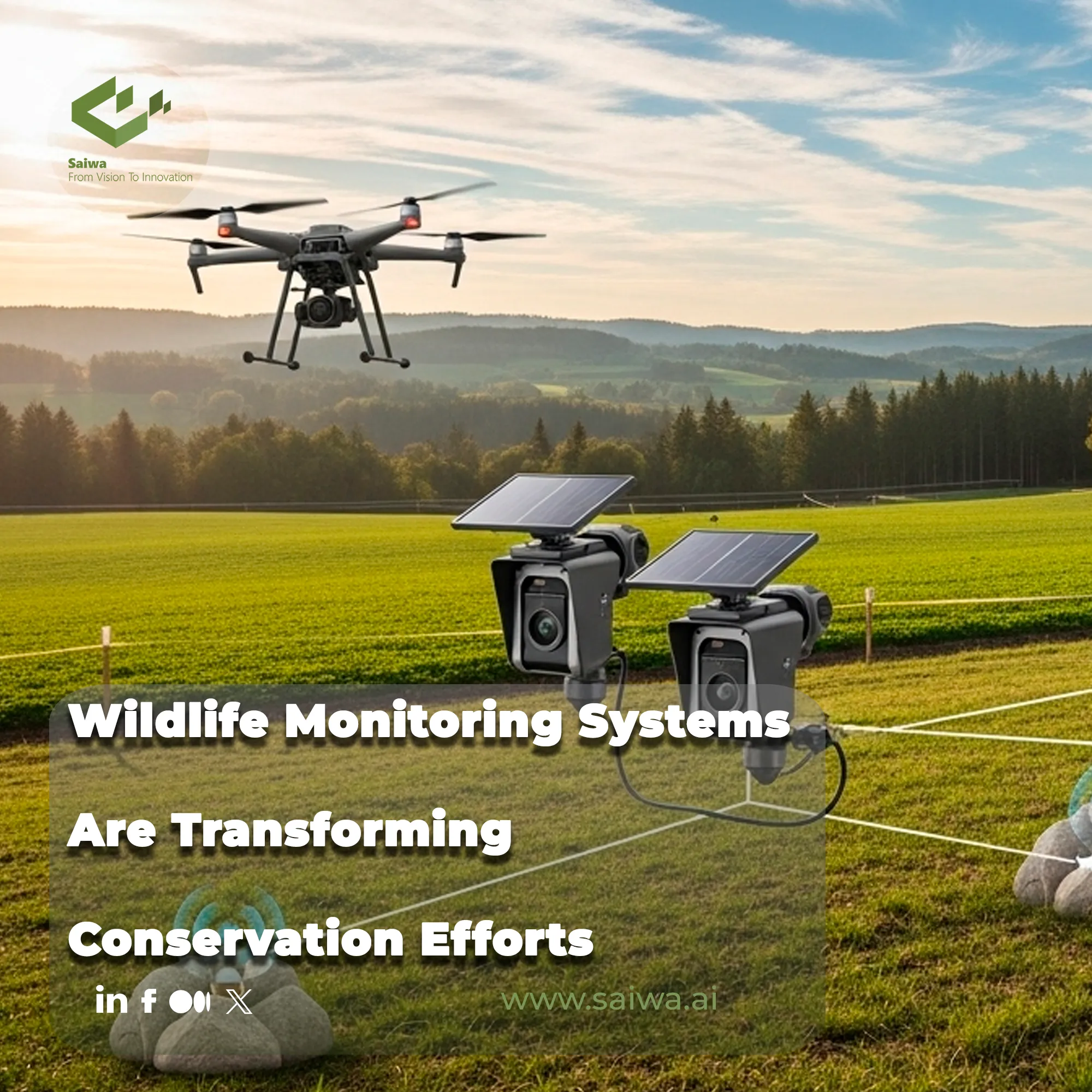
Understanding Wildlife Monitoring Systems and how to use them
Protecting our planet's biodiversity demands tools that are as dynamic and complex as the ecosystems themselves. A modern Wildlife monitoring system integrates several key technologies, providing researchers and conservationists with an unprecedented view into the natural world. This digital transformation allows us to gather crucial data with minimal disturbance. Let’s explore the core components that make these systems so powerful.

Sensors
Sensors serve as the system’s digital nerve endings. Motion and acoustic sensors can automatically trigger cameras upon detecting activity, while integrated environmental sensors gather crucial data points like temperature and humidity, providing deeper, contextual layers for observed animal behaviors.
Cameras
Deployed as non-invasive camera traps, high-resolution cameras utilize technologies like no-glow infrared flashes to operate undetected at night. They capture clear visual evidence used to estimate species presence, population density, and specific behavioral patterns without disturbing the animals.
Drones
Drones, or Unmanned Aerial Vehicles (UAVs), equipped with advanced payloads like thermal or multispectral imagers provide an unparalleled aerial view. They can efficiently survey vast and often inaccessible terrains, making critical tasks like population counts and habitat change detection significantly faster and safer than ground-based methods.
GPS tracking
By fitting animals with lightweight GPS collars or tags, we can gather precise, near real-time spatial data. This technology is fundamental for mapping critical migration corridors, defining home ranges, understanding habitat utilization, and revealing social dynamics with incredible accuracy.

Benefits of Wildlife Monitoring Systems
The true value of these systems emerges when data is translated into action. The integration of technology brings about significant advantages for conservation, creating a proactive and informed approach to protecting vulnerable wildlife. These benefits impact every aspect of modern conservation work.
Conservation Efforts
These systems provide a continuous stream of longitudinal data. This helps teams monitor population health and accurately measure the effectiveness of their conservation interventions over long periods.
Data-Driven Decisions
Accurate, real-time data is the cornerstone of effective AI in wildlife conservation. It empowers organizations to make evidence-based decisions, utilizing predictive modeling to optimize the allocation of limited resources for maximum impact.
Reducing Human-Wildlife Conflicts
By tracking animal movements via GPS, authorities receive real-time alerts to anticipate potential conflicts. This proactive approach helps mitigate negative interactions, protecting both human communities and vulnerable animal populations.
Building Reliable Wildlife Monitoring Programs
A wildlife monitoring system is only as useful as the quality of the decisions it supports. Strong conservation programs do not rely on image collection alone; they combine clear survey design, careful data management, and low-disturbance field methods so that the final outputs can guide habitat protection, population assessment, and conflict mitigation with confidence.
Why data quality matters as much as detection
Modern monitoring projects can generate thousands of images, videos, and sensor records in a short period, which makes data management a practical bottleneck for many conservation teams. GBIF notes that, in camera trap research, data management has increasingly become the limiting factor rather than data collection itself.
That matters in real projects because poorly organized files, missing timestamps, inconsistent classifications, or undocumented deployment details can reduce the scientific value of otherwise expensive surveys.
For that reason, professional wildlife programs should document at least four elements consistently:
Project metadata, including objectives, sampling design, and classification method.
Media files and timestamps, which are essential for interpreting animal activity.
Deployment records, including location, duration, camera angle, and habitat context.
Observations or classifications, including species, count, and whether the result came from a human reviewer or AI model.
This structure improves traceability and makes long-term comparisons far more defensible, especially when multiple teams, seasons, or study areas are involved.
Where drones add the most value
Drones are most effective when they solve a survey limitation that ground teams cannot address efficiently. WWF’s conservation guidance shows that drones are especially valuable for hard-to-reach sites, local-scale surveys, habitat mapping, animal monitoring, and repeated observations at fine spatial resolution.
They are also useful because survey timing, resolution, and coverage can be controlled directly by the operator, which gives conservation teams more flexibility than many conventional aerial methods.
Recent peer-reviewed research strengthens that case. A 2025 study on nocturnal arboreal mammals found that thermal drone surveys achieved detection rates comparable to ground surveys while covering larger areas and recording more species and individuals in some cases.
A 2026 study in Chitwan National Park reported no significant difference in total mammal counts between manual and programmed thermal UAV flights, but manual flights reduced survey effort and produced imagery better suited to species identification.
Ethical and operational safeguards
Drone-based monitoring should still be treated as a precision tool, not a universal shortcut. WWF-linked guidance stresses that conservation teams should choose the right drone for the job, follow local laws, launch and land away from animals, and take extra precautions around endangered species and sensitive habitats.
WWF also emphasizes that drones can help monitor wildlife with minimal disturbance, but that benefit depends on careful flight planning and responsible field practice.[
In practice, that means the best wildlife monitoring systems are not defined by hardware alone. They are defined by whether the workflow can collect repeatable evidence, protect animal welfare, and convert raw observations into decisions that conservation managers can trust.
Sairone’s Role in Advancing Wildlife Monitoring Systems for Smarter Conservation
Saiwa developed Sairone to transform wildlife monitoring systems from manual, reactive surveys into data-driven conservation efforts. By combining cutting-edge AI with high-resolution drone imagery, Sairone provides non-intrusive, real-time insights into vast and hard-to-reach habitats. It automates the detection and accurate counting of animals, flags habitat anomalies that signal risk, and transforms raw pixels into clear maps, alerts, and APIs that your team can use immediately. The result is higher productivity, lower labor and travel costs, and better decision-making evidence. Sairone integrates with existing workflows and scales from rapid surveys to continuous monitoring. This helps conservationists, researchers, and authorities act sooner and protect more.
Final word
Technology has fundamentally changed our approach to conservation, shifting strategies from reactive to proactive. By integrating vast datasets from drones, sensors, and GPS trackers and then applying advanced AI analytics, we make more intelligent, data-driven decisions for our planet’s future. A smarter Wildlife monitoring system is no longer a futuristic concept; it has become an essential, accessible, and powerful tool for effectively protecting biodiversity today.
Note: Some visuals on this blog post were generated using AI tools.
About the team
Continue reading

Machine Learning in Ecology - Advancing Research
Ecological systems generate enormous volumes of information, from climate patterns to species interactions, yet much of it has remained unde
Drones for Wildlife Monitoring - From Thermal Imaging to AI-Powered Insights
The integration of unmanned aerial vehicles (UAVs) into ecological studies marks a paradigm shift from traditional, often invasive, field me

Drones for Wildlife Conservation Solutions
Wildlife conservation faces unprecedented challenges in the 21st century, including habitat loss, poaching, climate change, and human-wildli

Machine Learning for Wildlife Conservation - Unlocking New Possibilities
Wildlife conservation faces serious challenges, from habitat destruction and climate change to poaching and human-wildlife conflict. These t

Wildlife Control in Ottawa: Understanding and Managing Urban Wildlife
Ottawa’s Urban Wildlife: An OverviewOttawa’s landscape, where urban centers meet rich natural ecosystems like the 20,000-hectare National Ca

AI in Ecology | Expanding Ecology's Vision with AI
Understanding and preserving the Earth's precious biodiversity is an immense responsibility. Nowhere is this more evident than in the plant
Comments
Be the first to share your thoughts
No comments yet
Start the conversation by sharing your thoughts
Share this article
Help others discover this content
Table of Contents
No headings were found on this page.