



The Environmental Impact of Invasive Plants on Native Ecosystems and Crop Yields
Discover how invasive plants disrupt native ecosystems and devastate crop yields. Learn how precision agriculture and AI-powered UAV imaging
Written by Amirhossein
Reviewed by Boshra
Introduction: The Dual Threat of Invasive Flora to Ecology and Agronomy
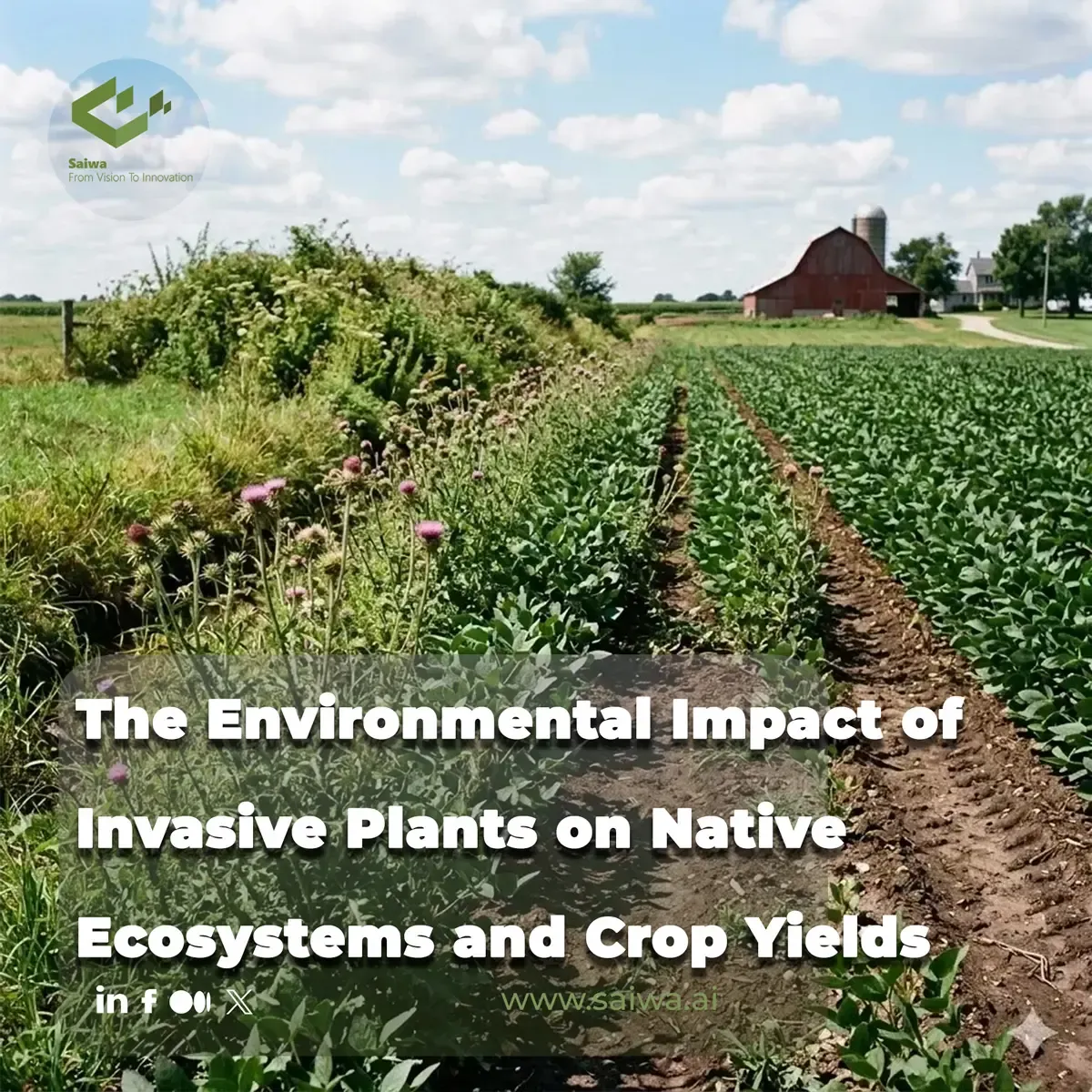
Invasive plants represent a silent but escalating threat to ecological stability and agricultural productivity worldwide. As these non-native species aggressively colonize new environments, they disrupt native ecosystems, causing severe structural damage and biodiversity loss. Simultaneously, invasive weeds impose immense pressure on agricultural systems, significantly hindering crop performance and jeopardizing global food security.
Addressing the dual threat of ecological destabilization and agronomic damage requires more than traditional manual removal or blanket chemical applications. The rapid proliferation of invasive flora demands a strategic, science-backed approach integrating modern precision technologies and sustainable management models. The emergence of AI-powered tools, specifically Sairone's Weed & invasive plant control solution, now provides land managers and agronomists with critical data for targeted interventions, bridging the gap between ecosystem conservation and profitable farming.
Ecological Disruption: How Invasive Species Destabilize Native Habitats
When invasive plants establish themselves in new territories, they fundamentally alter the structure and function of native habitats. Their uncontrolled growth triggers a cascade of ecological disruptions, leading to long-term environmental degradation.
Biodiversity Displacement and Resource Monopolization
Invasive species, such as Fallopia japonica (Japanese knotweed), form dense thickets that quickly outcompete native vegetation for essential resources like sunlight and space. This aggressive resource monopolization displaces native flora, reducing plant biodiversity. Consequently, the local fauna that relies on native plants for food and shelter is also marginalized, which disrupts natural wildlife interactions and gradually degrades the overall quality and carrying capacity of the habitat.
Soil Microbiome Degradation and Nutrient Depletion Dynamics
The impact of invasive plants extends beneath the surface, significantly altering the physico-chemical attributes of the soil and degrading the soil microbiome. Research demonstrates that global plant invaders, such as Leucanthemum vulgare, induce measurable shifts in belowground microbial communities—including fungal and bacterial species—which facilitate further invasion while altering native soil nutrient pools. This microbiome degradation creates a hostile environment for native plants attempting to regenerate, solidifying the invader's dominance.
Alteration of Hydrological Cycles in Aquatic Environments
In aquatic environments, invasive species like the Water Soldier (Stratiotes aloides) pose a profound threat to hydrological cycles. These dense aquatic weeds impede natural water flow, reduce oxygen levels, and block sunlight from reaching native submerged vegetation. Such alterations degrade water quality and severely impact aquatic wildlife, fundamentally destabilizing the delicate balance of aquatic ecosystems and threatening native fish and invertebrate populations.

Agronomic Consequences: Quantifying Crop Yield Losses to Invasive Weeds
The presence of invasive weeds in agricultural fields directly correlates with substantial economic losses. Globally, weeds account for roughly 13.2% of crop yield losses, and this figure could surge drastically without intervention—often surpassing the damage caused by pests and pathogens.
Direct Competition for Sunlight, Soil Moisture, and Macronutrients
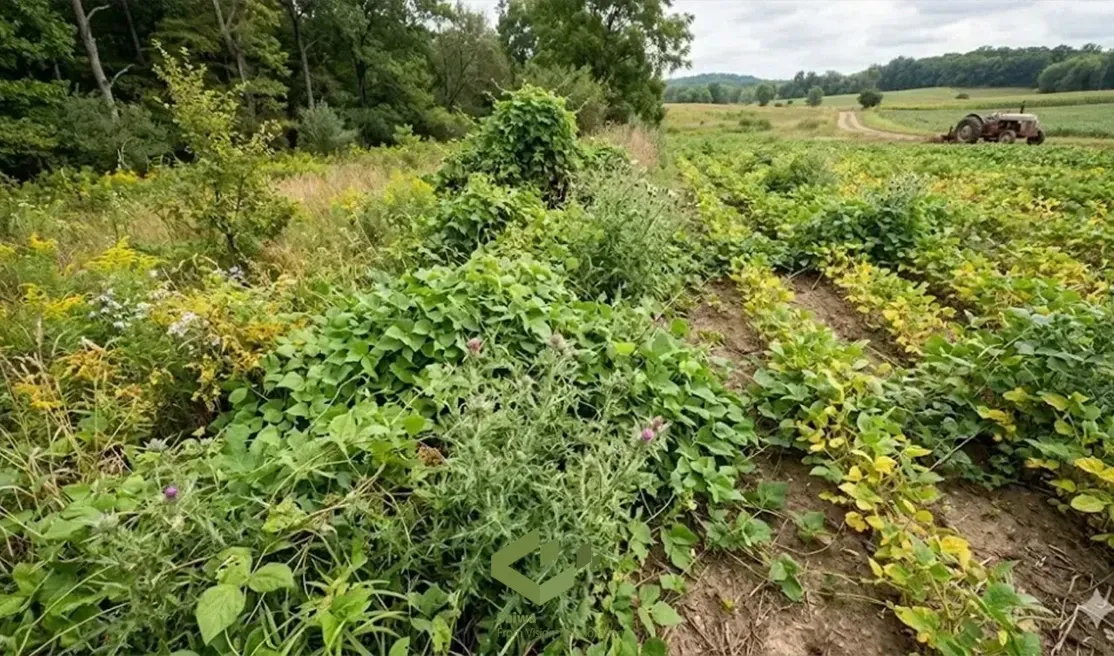
Highly adaptive invasive species, such as Amaranthus palmeri (Palmer Amaranth), thrive in diverse environments and compete aggressively with cultivated crops. Their rapid growth rates and efficient photosynthetic systems allow them to monopolize sunlight, soil moisture, and vital macronutrients. This direct competition starves developing crops, leading to stunted growth, reduced vigor, and ultimately, significantly diminished harvest yields.
Invasive Plants as Vectors for Agricultural Pests and Pathogens
Beyond direct resource competition, invasive weeds often act as bridging hosts for agricultural pests and crop-destroying pathogens. By providing a stable habitat and alternative food source during the off-season, these plants ensure the survival and proliferation of destructive insects and diseases. When the primary crop is planted, the pests and pathogens readily migrate from the weeds, causing secondary waves of agricultural damage that are difficult to manage.
Harvest Inefficiencies and Contamination (e.g., Wheat, Sugarcane, and Tomatoes)
Weed infestations introduce severe harvest inefficiencies and contamination across various crop types, including wheat, sugarcane, and tomatoes. Dense weed growth tangles in harvesting machinery, increasing mechanical wear and fuel consumption while slowing down operations. Furthermore, weed seeds mixed with the harvested crop degrade the final product's quality, leading to dockage fees at the elevator and reduced overall profitability for the farmer.
Impact Dimension | Description | Consequence |
Resource Competition | Weeds monopolize sunlight, water, and nutrients. | Up to 13.2% global crop yield loss . |
Pathogen Vectoring | Weeds host pests and diseases during the off-season. | Increased crop disease incidence and secondary yield loss. |
Harvest Interference | Weeds tangle machinery and contaminate harvested goods. | Equipment damage, slower harvest times, and dockage fees. |
Traditional Land Management vs. Precision Agriculture Interventions
Historically, managing invasive plants relied on aggressive, indiscriminate methods. However, modern challenges—including rising costs and environmental concerns—are driving a paradigm shift toward precision agriculture interventions.
The Ecological Cost of Blanket Chemical Applications and Mechanical Dredging
Traditional methods, such as blanket herbicide applications and mechanical dredging, carry high ecological costs. Indiscriminate chemical spraying leads to runoff that pollutes local waterways, harms non-target native species, and accelerates the development of herbicide-resistant weed strains. Similarly, mechanical dredging in aquatic environments often causes severe habitat destruction and can inadvertently spread invasive plant fragments, exacerbating the infestation rather than controlling it.
Adopting Integrated Weed Management (IWM) for Sustainable Cropping
Integrated Weed Management (IWM) offers a sustainable alternative by combining biological, cultural, mechanical, and targeted chemical tools. This holistic strategy focuses on long-term prevention and ecosystem resilience rather than relying solely on eradication. By adopting IWM, farmers can maintain agricultural productivity while minimizing environmental impact, preserving soil health, and reducing the reliance on broad-spectrum herbicides.
Modernizing Weed Control with UAV Remote Sensing and Computer Vision
The integration of artificial intelligence and drone technology is revolutionizing weed management. By automating detection and mapping, AI-driven platforms like Sairone empower farmers and ecologists to implement highly precise interventions.
Multispectral and High-Resolution RGB Drone Imaging for Rapid Mapping
Unmanned Aerial Vehicles (UAVs) equipped with high-resolution RGB and multispectral sensors enable rapid, comprehensive mapping of agricultural fields and natural habitats. These drones capture detailed imagery that identifies variations in plant health and density across vast areas. This aerial data provides land managers with a bird’s-eye view of weed pressure, facilitating immediate, targeted responses to early-stage infestations before they cause significant yield loss
Saiwa Case Study: Ducks Unlimited Canada’s AI-Powered Aquatic Plant Surveillance
To combat the spread of aggressive aquatic weeds, Saiwa partnered with Ducks Unlimited Canada (DUC) to develop an automated detection system. This collaboration highlights the transformative potential of AI in ecosystem conservation.
The Ecological Threat of Water Soldier and European Water Chestnut
Water Soldier and European Water Chestnut are aggressive invasive plants that pose severe threats to North American waterways. They form dense, impenetrable mats on the water surface, drastically altering local hydrology, outcompeting native aquatic vegetation, and suffocating fish populations. Monitoring these species across vast wetland complexes using traditional manual surveying is labor-intensive, costly, and often ineffective.
Deploying Sairone’s Deep Learning for 95.5% Accuracy in Drone-Based Semantic Segmentation
To address this challenge, the project utilized Sairone’s advanced deep-learning algorithms alongside RGB drone imagery to monitor the invasive aquatic plants. The AI system employed real-time semantic segmentation to analyze the aerial data, successfully differentiating the invasive species from native flora. The project delivered a robust model achieving an impressive 95.52% accuracy in detection, proving that UAV-based AI surveillance is a highly effective, scalable solution for managing invasive aquatic species and protecting wetland ecosystems.
Conclusion: Scaling Sustainable Weed Management with AI Intelligence
The unchecked spread of invasive plants continues to devastate native ecosystems and severely restrict global agricultural yields. As traditional control methods prove increasingly unsustainable and ecologically damaging, the transition to precision technology is imperative. By integrating UAV remote sensing with advanced computer vision, AI platforms like Sairone provide the scalable intelligence required to map, monitor, and selectively manage invasive species. Embracing these smart technologies ensures that we can protect vital ecological biodiversity while securing the future of global food production.
Comments
No comments yet!
Table of Contents
No headings were found on this page.