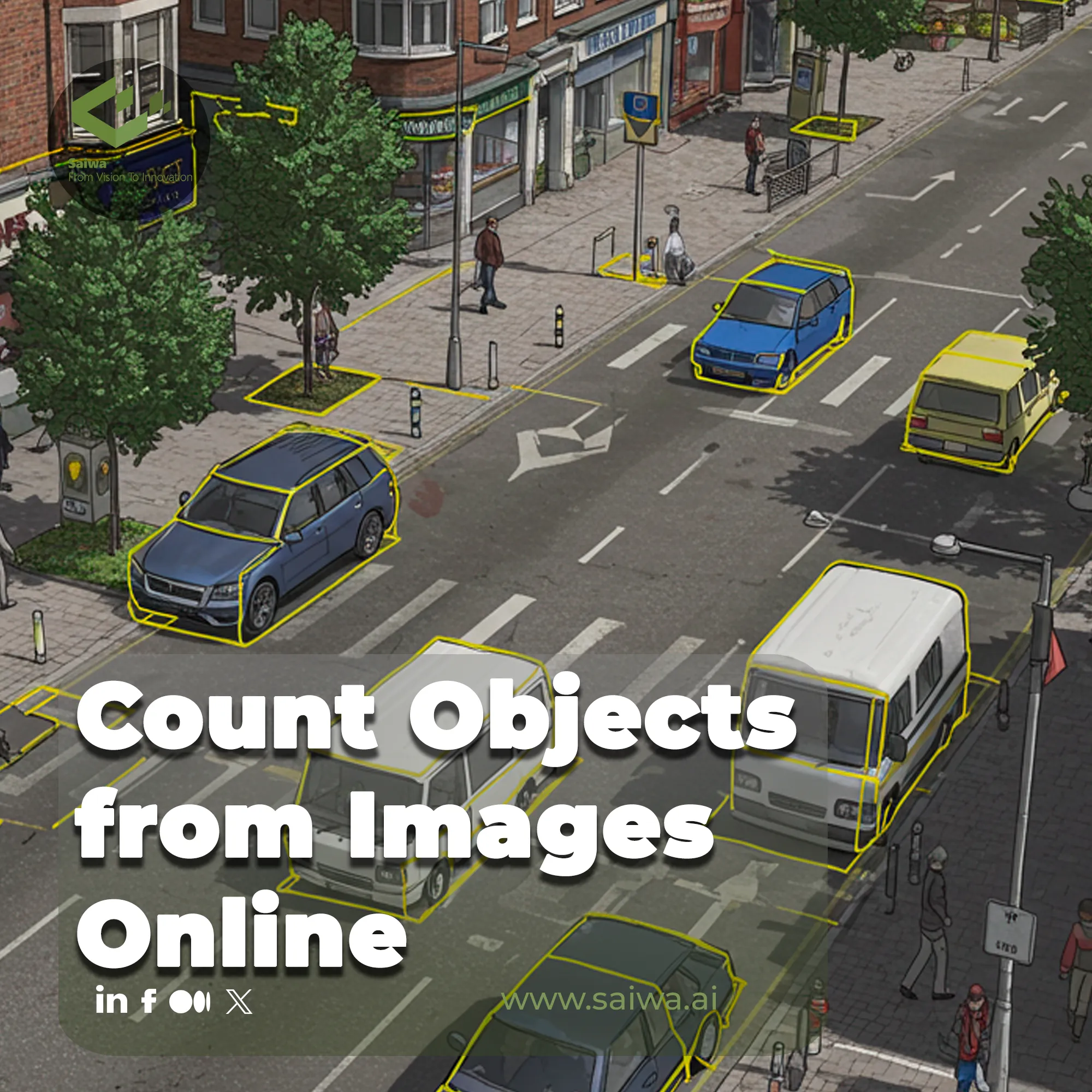
Object Counting in Images
Manual counting of objects in images consumes thousands of work hours annually across industries, with human error rates reaching 15-20% in complex visual environments..
Artificial intelligence has revolutionized object counting by automating the identification and enumeration of items within digital images with accuracy exceeding 95%. Machine learning algorithms process thousands of images in minutes, detecting and tallying objects across diverse scenarios from warehouse inventories to wildlife populations.
This article explores how AI-driven object counting works, the technologies allowing automated enumeration, and applications across industries.
AI-Powered Object Counting Explained Simply
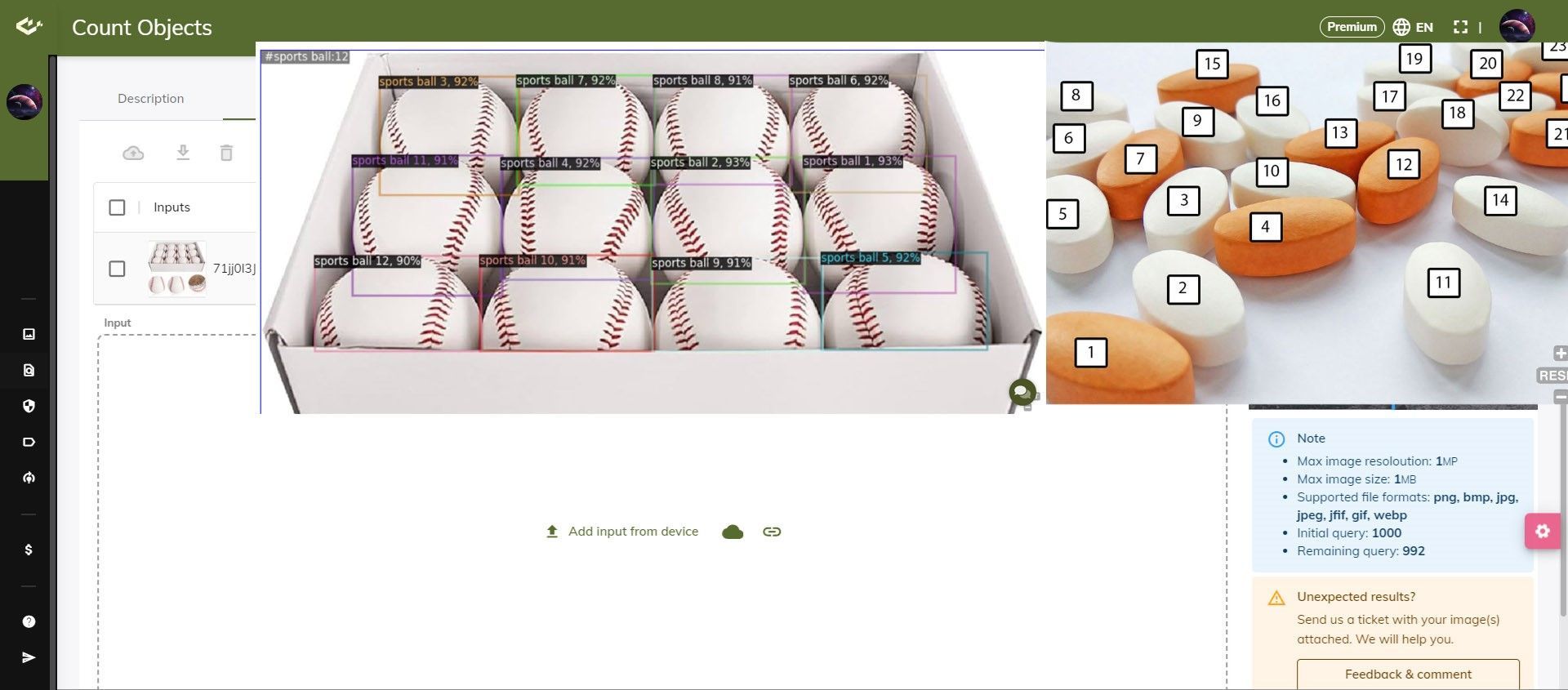
AI-powered object counting is the automated process of identifying and enumerating specific items within digital images using computer vision and machine learning algorithms. Unlike manual counting that requires human observers to individually tally objects, AI systems analyze shapes and features to detect and count items simultaneously across entire images.
The play a vital part today, because these systems employ deep learning models trained on thousands of labeled examples to recognize target objects regardless of variations in lighting, orientation, scale, or background complexity. The technology processes visual data in seconds, providing accurate counts for applications ranging from inventory management to scientific research. This capability transforms tedious manual enumeration into instant automated analysis that scales effortlessly across growing data volumes.
Inside the Process: How AI-Powered Object Counting Works
AI object counting systems operate through structured computer vision and machine learning workflows:
- Image Acquisition and Preprocessing: Digital images are captured through cameras, drones, or existing visual databases, then preprocessed to enhance quality through noise reduction, contrast adjustment, and standardization for consistent analysis.
- Image Segmentation: Algorithms partition images into distinct regions, isolating objects of interest from backgrounds and separating individual items that may overlap or touch in cluttered scenes.
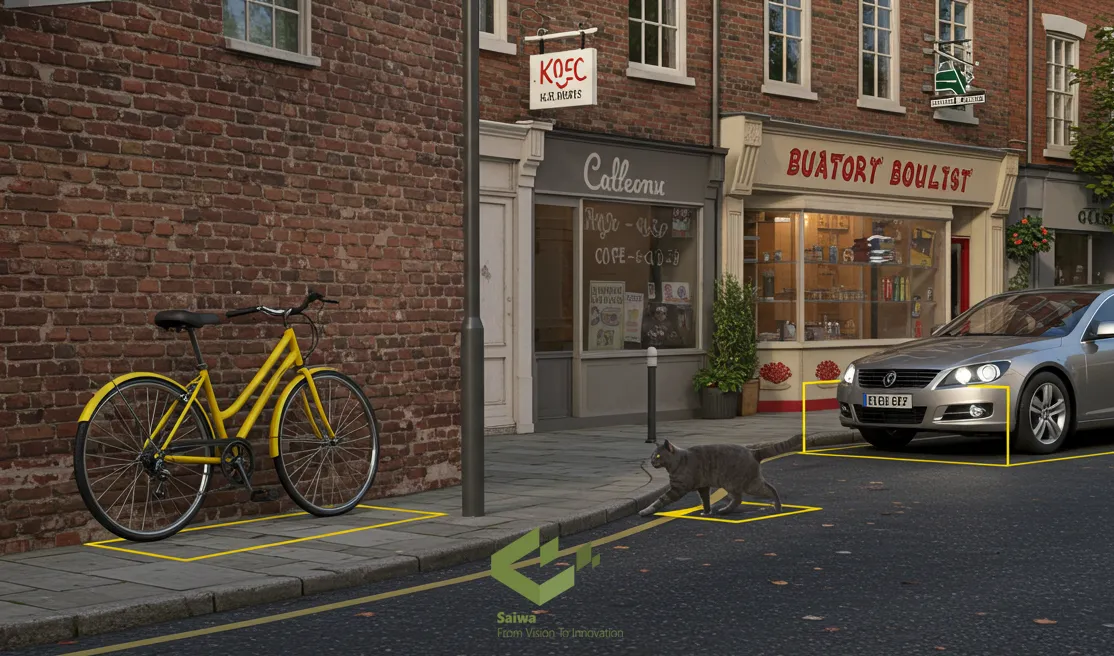
- Object Detection and Localization: Deep learning models like YOLO or Faster R-CNN identify objects by drawing bounding boxes around each item, enabling individual recognition even when multiple objects appear together.
- Feature Extraction and Classification: Convolutional neural networks analyze visual features including shapes, textures, colors, and patterns to classify detected objects and distinguish target items from irrelevant elements.
- Counting and Enumeration: The system tallies all detected objects matching specified criteria, generating precise counts along with confidence scores indicating detection reliability for each identified item.
- Results Visualization and Reporting: Output displays annotated images showing detected objects, numerical counts, and statistical summaries that enable immediate interpretation and decision-making.
This automated pipeline processes visual information at speeds and scales impossible for manual counting, delivering consistent accuracy across diverse imaging conditions.
Practical Applications in Industry
AI-powered object counting delivers transformative capabilities across sectors requiring efficient visual data quantification:
- Inventory and Warehouse Management: Automated systems count products on shelves, pallets in storage facilities, and items in shipping containers without manual stocktaking. Real-time inventory tracking prevents stockouts, optimizes supply chains, and eliminates time-consuming physical audits that disrupt operations.
- Manufacturing Quality Control: Computer vision counts components in assemblies, verifies packaged goods contain correct quantities, and detects missing or extra parts before products leave production lines. Automated inspection maintains quality standards while processing items at production speeds impossible for human inspectors.
- Retail Analytics: Systems count customers entering stores, track product interactions, and monitor shelf inventory levels continuously. These insights optimize staffing, prevent stock shortages, and provide data-driven merchandising decisions that improve sales performance.
- Scientific Research: Biologists count cells in microscopy images, ecologists enumerate wildlife populations from aerial surveys, and researchers quantify specimens in large-scale studies. Automation accelerates data collection that would require months of manual analysis, enabling larger sample sizes and more robust conclusions.
Tools Powering AI Object Counting
Several advanced technologies enable accurate automated object enumeration:
- Convolutional Neural Networks (CNNs): These deep learning architectures excel at analyzing visual features, learning hierarchical representations from raw pixels to high-level object characteristics that enable robust detection and classification.
- YOLO (You Only Look Once): Real-time object detection models that process entire images in single passes, identifying and localizing multiple objects simultaneously with speeds exceeding 30 frames per second.
- Faster R-CNN: Region-based convolutional networks that generate object proposals and classify them with high accuracy, particularly effective for detecting small or partially occluded items in complex scenes.
- Semantic Segmentation Networks: Models like U-Net and Mask R-CNN that classify every pixel in images, enabling precise object boundary definition critical for counting overlapping or touching items accurately.
- Density Estimation Methods: Algorithms that predict object counts from crowd density maps rather than individual detection, useful for extremely dense scenes like stadium crowds or cell colonies where individual separation is impractical.
- Transfer Learning Frameworks: Pre-trained models fine-tuned on specific object types reduce training data requirements, enabling accurate counting systems without collecting thousands of custom labeled images.
Strengths and Weaknesses
AI-powered object counting provides quick, automated analysis for tracking quantities and movement across environments. However, challenges remain alongside its strengths.
Strengths
AI-powered object counting delivers substantial operational improvements over manual enumeration:
- Superior Accuracy and Consistency: AI systems maintain 95-99% accuracy across millions of counts without fatigue-induced errors that plague manual processes, ensuring reliable data for critical business decisions.
- Real-Time Processing Capabilities: Systems analyze images instantly, providing immediate counts that enable responsive decision-making in dynamic environments like live production monitoring or event management.
- Multi-Object Recognition: Advanced models simultaneously count different object types within single images, extracting comprehensive information from visual data in single analysis passes.
- Remote Accessibility: Cloud platforms enable image upload and analysis from any location with internet access, supporting distributed operations and remote monitoring applications.
Weaknesses
Organizations deploying object counting systems must address several technical considerations:
- Training Data Requirements: Developing accurate models demands hundreds to thousands of labeled images showing target objects in diverse conditions, which can be time-consuming and expensive to collect and annotate.
- Occlusion and Overlap Handling: Objects partially hidden behind others or touching in dense arrangements challenge detection algorithms, potentially causing undercounting without sophisticated segmentation techniques.
- Variable Imaging Conditions: Changes in lighting, camera angles, distances, or image quality affect detection performance, requiring robust models trained across diverse scenarios or preprocessing to normalize inputs.
- Computational Resource Demands: Processing high-resolution images or real-time video streams requires significant computing power, potentially necessitating cloud infrastructure or specialized hardware investments.
- Domain-Specific Customization: Generic models may perform poorly on specialized objects, requiring fine-tuning or custom training for specific applications like counting microscopic specimens or industrial components.
Conclusion
AI-powered object counting transforms visual data from qualitative observations into quantitative insights that drive operational efficiency and informed decision-making. Automated enumeration systems deliver speed, accuracy, and scale unattainable through manual methods, enabling organizations to extract value from images previously too numerous or complex to analyze systematically.
From our object counting experience at Saiwa projects, we suggest the following workflow. Before counting objects in an image, first decide which object is important to you in the scene. Then check those specific objects in the algorithm’s settings section and apply one of the pre-trained models for counting like Detectron2. Yolov5 and Yolov7. It helps to define a clear set of target objects, so the objects can be distinguished in the output image for you. YOLO models are among the most accurate ones and trained on the COCO dataset, which covers 12 common object classes and 80 distinct objects.
If your object of interest isn't included in those classes, you'll need to train the model for that specific item. You can do that with the Saiwa's Deep Learning service. To do that you need an annotated dataset. For preparing your dataset, we offer both bounding-box and polygon annotation services. Finally, the new customized model will be added to your account under Counting service for your further application.
Note: Some graphics and visuals in this post were produced using AI-generated content.