



Facial Recognition Drones: A Comprehensive Guide to Technology, Applications & Ethics
Explore facial recognition drones & their applications in security, law enforcement & more. We discuss ethical concerns & future trends.
Written by Amirhossein
Reviewed by Boshra
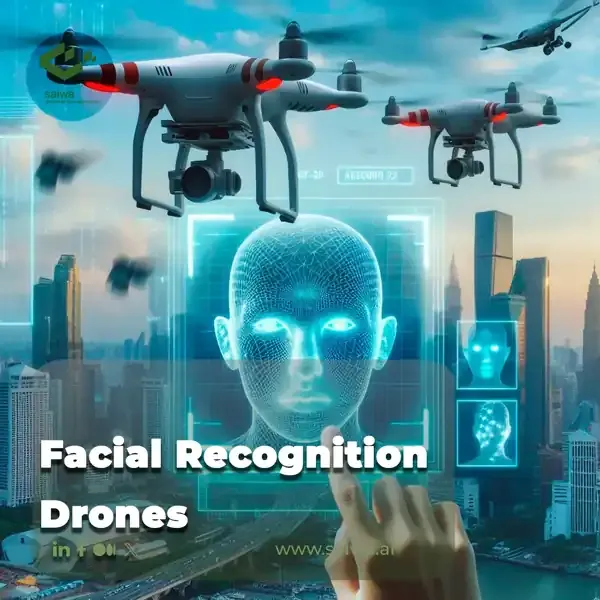
By 2023 according to science direct, unmanned aerial vehicles (UAVs) equipped with facial recognition systems were already the subject of published research demonstrating real-time face detection from drone platforms.
When facial recognition is integrated with drone technology, manual or ground-based identification methods become limited in speed, coverage and consistency. Drones can cover large areas and fly varied altitudes, but without robust face recognition they're simply flying cameras.
The ability to identify individuals from above transforms surveillance, security, search and rescue, and access-control operations having profound implications for public safety, privacy and ethical governance.
In this article you will learn how drone-based facial recognition systems work (hardware, algorithms and deployment), explore their real-world applications, understand the ethical and regulatory issues, and look ahead to future trends and best practices.

Definition and Overview of Facial Recognition Technology

Facial recognition technology utilizes algorithms to analyze and identify individuals based on their facial characteristics. These algorithms extract features like the distance between the eyes, the shape of the jawline, and the prominence of cheekbones to create a unique "facial signature" for each individual. There are two main categories of facial recognition algorithms:
2D recognition
This technology relies on analyzing two-dimensional images or video footage to identify individuals. While effective in controlled environments, 2D recognition can be susceptible to variations in lighting, pose, and facial expressions.
2D recognition technology focuses on analyzing two-dimensional images to identify and classify objects or patterns effectively. Saiwa, with its state-of-the-art image processing and detection and authentication services, harnesses this technology to offer advanced solutions.
Saiwa utilizes similar recognition methods with two face detectors—one prioritizing speed and the other accuracy. Our 2D recognition technology excels in detecting and localizing reference faces across multiple images, even those with unknown subjects. This service is particularly beneficial for applications in authentication, security, social media, and marketing.
Saiwa’s face detection service includes features like enhancing from a fast recognition algorithm, handling multiple reference images per individual, and exporting results to user cloud space or locally. By employing our face detection service, we ensure precise and reliable face recognition, adapted for frontal or near-frontal faces. With our comprehensive 2D recognition technology, Saiwa provides robust solutions for diverse applications, streamlining authentication and enhancing security measures.
3D recognition
This advanced technology utilizes depth sensors to create a three-dimensional model of the face. This allows for more robust recognition, as it is less affected by pose and lighting variations compared to 2D technology.
Integration of Facial Recognition Systems with Drone Platforms
Drones equipped with high-resolution cameras and powerful processing units can be integrated with facial recognition software. This allows for real-time identification of individuals from an aerial perspective. The integration process typically involves:
High-resolution camera: The drone needs a camera capable of capturing clear facial images from various distances and angles.
Processing unit: A powerful onboard computer or a ground-based processing station is required to run the facial recognition algorithms and analyze captured images.
Communication system: The drone needs a reliable communication system to transmit captured video footage or extracted facial data for real-time analysis or storage.
Facial Recognition Technology for Drones

Emerging Trends: Edge AI Processing, Multi-Modal Thermal Recognition, and Privacy-Preserving Governance
As facial recognition drones transition from controlled experimental deployments to operational field tools, recent technological advancements are overcoming critical limitations in aerial surveillance—specifically variable lighting, high-altitude perspective distortion, bandwidth constraints, and heightened privacy concerns.
Thermal-Infrared and Multi-Modal Facial Analytics
Traditional 2D optical aerial cameras struggle significantly in low-light conditions, nighttime operations, or heavy atmospheric haze. Modern aerial recognition platforms overcome this by implementing multi-modal sensor fusion—combining high-resolution RGB cameras with long-wave thermal infrared (LWIR) and 3D LiDAR sensors. Thermal-infrared facial recognition maps subcutaneous vascular heat signatures, enabling reliable identity verification even in complete darkness or when targets attempt physical disguises. When processed alongside 3D depth sensors, multi-modal pipelines mitigate perspective distortion caused by steep drone tilt angles and dynamic flight movements.
On-Device Edge AI and Low-Latency Matching
Transmitting high-bitrate video streams from aerial drones to ground control stations introduces network latency and risks signal interception in remote or contested environments. Modern drone platforms leverage Edge AI hardware—such as embedded neural processing units (NPUs)—to execute face detection, alignment, and feature vector extraction directly on board the aircraft.
By converting facial features into lightweight 512-dimensional mathematical embeddings locally on the drone, the platform only transmits vector metadata to central databases. This reduces bandwidth requirements by up to 95%, speeds up matching response times to sub-second thresholds, and ensures operational continuity even during active network jamming or signal loss.
Privacy-Preserving Encryption and Anonymization Frameworks
To address growing ethical and regulatory concerns regarding public surveillance, next-generation facial recognition drones are incorporating privacy-first computer vision architectures. Modern platforms deploy dynamic redacting and zero-knowledge vector encryption directly at the acquisition stage:
On-the-Fly Anonymization: Non-target faces captured within crowd monitoring streams are automatically blurred or pixelated at the edge level before footage is stored or transmitted.
Encrypted Feature Hashing: Facial templates are converted into non-reversible, encrypted hashes, preventing the reconstruction of raw facial images in the event of hardware capture or data breaches.
Audit-Logged Access Control: Flight logs and matching alerts are locked within cryptographic ledger frameworks, ensuring compliance with international data protection standards and preventing unauthorized surveillance.
By pairing thermal multi-modal sensing and low-latency edge computing with privacy-preserving cryptography, modern facial recognition drones deliver precise security capabilities while maintaining ethical transparency and operational resilience.
Fundamentals of facial recognition algorithms (e.g., 2D, 3D, deep learning-based)
As previously mentioned, facial recognition algorithms fall into two main categories: 2D and 3D recognition. Additionally, deep learning algorithms are playing an increasingly important role in facial recognition technology:
Deep learning-based facial recognition: This approach utilizes deep neural networks, a type of artificial intelligence, to analyze facial features. Deep learning as a service can learn and improve facial recognition accuracy over time with large datasets of labeled facial images.
Hardware requirements (cameras, sensors, processing units)
Cameras: High-resolution cameras with zoom capabilities are crucial for capturing clear facial images from varying distances and angles. Additionally, some systems might utilize depth sensors (e.g., LiDAR) for 3D facial recognition.
Processing units: Facial recognition algorithms require significant processing power. Drones might rely on onboard processing units for real-time analysis or transmit data to ground stations with high-performance computing capabilities.
Software and algorithms for real-time facial recognition
Facial recognition software specifically designed for drone applications is required. This software needs to be optimized for real-time processing, considering factors like latency and power consumption on drone platforms.
Considerations for aerial data acquisition and processing
Flight planning and image capture: Flight paths need to be planned to optimize facial recognition accuracy. Factors like altitude, camera angle, and lighting conditions need to be considered.
Image quality and pre-processing: Captured images need to be of sufficient quality for accurate facial recognition. Pre-processing techniques might be necessary to address issues like noise and blurring.
Read Also : AI-Based Drone Operation| AI in Drones Use Cases
Applications of Facial Recognition Drones
Security and Surveillance
Perimeter security: Drones equipped with facial recognition can be used to monitor perimeters of sensitive locations, identifying and deterring unauthorized individuals.
Crowd monitoring: Facial recognition drones can be deployed at large-scale events to monitor crowds, identify potential threats, and track suspicious individuals.
Law Enforcement
Missing person searches: Facial recognition drones can assist in search operations for missing individuals by scanning large areas and identifying individuals matching specific criteria.
Criminal investigations: Facial recognition drones can be used to track suspects or gather evidence during criminal investigations.
Access Control and Identity Management
Facial recognition for access control: Drones can be integrated with access control systems to verify identities at entry points to restricted areas.
Border security: Facial recognition drones can be deployed at borders to identify individuals and verify travel documents.
Integration with Other Drone Technologies
Facial recognition technology can be combined with other drone capabilities to enhance situational awareness and functionality:
Combining facial recognition with thermal imaging: Thermal imaging can detect individuals in low-light conditions, while facial recognition allows for identification.
Integrating facial recognition with object detection and tracking: Drones can be equipped with object detection algorithms that identify specific objects of interest (e.g., weapons). When combined with facial recognition, this allows for tracking individuals carrying these objects.
Multi-sensor fusion for enhanced situational awareness: Data from facial recognition, thermal imaging, and object detection can be combined to create a comprehensive picture of the situation, improving decision-making for operators.
Agricultural Labor Management and Worker Safety
While law enforcement and perimeter security are the most commonly discussed applications, the integration of facial recognition drones into precision agriculture is an emerging trend with significant operational value. Large-scale farming operations involve vast landscapes, heavy machinery, and substantial transient labor forces. Drones equipped with AI-powered face detection and recognition are increasingly utilized to streamline labor tracking and enhance the physical safety of agricultural workers.
Automated Labor Tracking and Identity Verification
Managing labor on a large commercial farm often involves manual roll calls, physical ID badges, and time-consuming administrative oversight across thousands of acres. Facial recognition drones can automate this process. By flying over active work zones, drones can verify the identities of field workers in real-time, cross-referencing captured biometric data with a central database of authorized employees and seasonal contractors. This ensures that only authorized personnel are present in restricted or hazardous areas, such as zones where chemical pesticides have recently been applied. Furthermore, this automated tracking seamlessly integrates with payroll and human resources systems, providing highly accurate, location-based timesheets without requiring workers to interrupt their tasks to clock in at a stationary terminal.
Enhancing Farmworker Safety Around Heavy Machinery
griculture is one of the most hazardous industries, with a high incidence of accidents involving heavy machinery such as combine harvesters, tractors, and variable-rate application sprayers. Drone-based facial recognition, combined with broader AI people-detection algorithms, plays a critical role in preventing these accidents.
When a drone monitors an active harvest from the air, its deep learning algorithms (such as Convolutional Neural Networks) can track the movement of workers relative to autonomous or manually operated agricultural machinery. If the drone's system detects that a worker is encroaching upon the "danger zone" of a moving harvester or is present in a "blind spot," it can trigger an immediate real-time alert. This alert can be sent directly to the machine operator's dashboard or automatically halt an autonomous tractor. In this context, the facial recognition component is vital not just for detecting a person, but for identifying who is in the field, ensuring that only specialized operators are near specific equipment.
Ethical and Privacy Concerns
The use of facial recognition drones raises significant ethical and privacy concerns:
Privacy implications
The widespread use of facial recognition drones gives rise to concerns about mass surveillance and the potential for tracking individuals without their consent.
Regulatory frameworks and data protection laws
Regulations and data protection laws regarding facial recognition technology used by drones are still evolving. It's crucial to ensure compliance with these frameworks to protect individual privacy.
Transparency and consent considerations
Transparency is essential regarding the use of facial recognition drones and the purpose of data collection. Obtaining consent whenever possible is crucial for the ethical use of this technology.
Potential for misuse and abuse
Facial recognition technology in the wrong hands could lead to discrimination, profiling, and suppression of dissent. Robust safeguards are necessary to prevent misuse and abuse.
Operational Challenges and Considerations
Several operational challenges need to be addressed for effective use of facial recognition drones:
Environmental factors affecting facial recognition accuracy: Factors like weather conditions, lighting variations, and occlusion (e.g., hats, and sunglasses) can significantly impact facial recognition accuracy.
Flight planning and data acquisition strategies: Flight planning needs to consider factors like altitude, camera angles, and image quality to optimize recognition accuracy.
Real-time data processing and transmission requirements: Real-time facial recognition requires robust data processing capabilities and reliable communication systems for efficient data transmission.
Security and data protection measures: Robust security measures are essential to protect facial recognition data from unauthorized access or manipulation.
Face Detection, Verification, and Identification in Drone Operations
A drone camera detecting a face is not the same as confirming a person’s identity. These functions should be separated clearly when designing or evaluating facial recognition drones, especially where an alert could lead to denied access, security intervention, employment consequences, law-enforcement action, or another high-impact outcome.
Face detection answers the question, “Is a face visible in this image or video frame?” It locates a face-sized region so that the system can crop, align, blur, count, or process that area. Detection alone does not establish who the person is.
Face verification, often described as one-to-one matching, answers, “Does this live image appear to match this specific enrolled identity?” For example, a verification workflow may compare a person approaching a restricted facility with a credential-linked reference image. NIST defines the false match rate as the proportion of impostor comparisons that meet or exceed a selected matching threshold, while the false non-match rate is the proportion of genuine comparisons that fall below that threshold.
Face identification, or one-to-many matching, answers, “Does this image correspond to anyone in a gallery of enrolled identities?” This is a more demanding process because the system searches a face image against many possible candidates. In NIST’s one-to-many testing, the false positive identification rate measures how often searches involving people absent from the enrolled database incorrectly return an identity at or above the selected threshold.
This distinction matters because drone-based imagery can be especially challenging for identity matching. Face images captured from an aerial platform may be affected by distance, camera angle, movement, motion blur, changing light, occlusion from hats or glasses, compression, zoom limitations, and a face that is not near-frontal. These conditions can increase missed matches, create inconsistent similarity scores, or make an apparent match less dependable than a result obtained from a controlled reference image.
A responsible drone facial-recognition workflow should use a tiered decision process:
| System output | Appropriate interpretation | Recommended action |
|---|---|---|
| No face detected | No usable face was located in the frame | Do not infer that a person is absent from the scene |
| Face detected, low image quality | A face-like region is present but is unsuitable for reliable comparison | Avoid identity matching or request a better image where lawful and appropriate |
| Possible one-to-one match | The live image exceeds a defined similarity threshold against one reference image | Require trained human review before granting access or taking action |
| Possible one-to-many candidate | The system returned a candidate from an enrolled gallery | Treat as a lead for review, not as confirmation of identity |
| High-confidence match with poor context | A score may be high, but image quality, location, purpose, or authorization remains uncertain | Verify context, source image, and identity through an independent process |
Threshold selection should reflect the consequence of an error. A lower matching threshold may produce more candidate alerts but increases the likelihood of incorrect matches. A higher threshold can reduce false positives but may miss genuine matches. NIST testing demonstrates this trade-off by reporting false non-match performance at specified false-match thresholds rather than presenting a single universal accuracy score.
Performance should also be measured on representative drone imagery, not only on controlled portrait datasets. Test footage should reflect expected operating altitude, camera hardware, lighting, subject movement, demographics, weather, image compression, and enrollment-photo quality. NIST has found that false negatives can be strongly affected by poor image quality, including inadequate exposure and pitch-angle variation, while false-positive rates can also vary across demographic groups even when image quality is high.
For this reason, facial-recognition drone systems should preserve the original evidence associated with an alert, record the model version and threshold used, document the reviewer’s decision, and provide an escalation route for uncertain cases. In high-impact applications, an automated match should never be the sole basis for identifying a person or initiating an adverse action.
Case Studies and Real-world Applications
Crowd monitoring at large-scale events
Facial recognition drones have been used to monitor crowds at events like marathons and concerts, aiming to identify potential security threats.
Border and perimeter security operations
Some countries are exploring the use of facial recognition drones for border security and perimeter monitoring of sensitive locations.
Search and rescue missions
Facial recognition drones can be used to search for missing individuals in large areas, particularly in disaster zones or remote locations.
Facility access control and identity verification
Facial recognition drones are being piloted for access control at restricted facilities, allowing for identity verification without requiring physical presence at entry points.
Facial Recognition in Military and Defense Applications
Facial recognition technology has a significant role in military and defense operations, enhancing security, intelligence, and real-time threat detection. When combined with drones surveillance security facial recognition startup innovations, it enables advanced monitoring and strategic defense measures.
Key Applications in Military and Defense
Border Security: Helps in identifying individuals at checkpoints, preventing unauthorized access.
Surveillance and Threat Detection: AI-driven drones provide real-time tracking of potential threats.
Access Control: Military bases use facial recognition to restrict entry to authorized personnel.
Combat and Intelligence Operations: Drones surveillance security facial recognition startup solutions aid in locating high-risk individuals.
Prisoner Identification: Identifies detainees and combatants, reducing identity fraud risks.
The Role of Drones in Military Facial Recognition
Drones equipped with drones surveillance security facial recognition startup technology enhance military efficiency by:
Rapidly scanning large areas for potential threats.
Identifying individuals in real time for intelligence operations.
Strengthening security in high-risk zones.
With cutting-edge drones surveillance security facial recognition startup developments, military forces can deploy high-tech monitoring systems, ensuring stronger defense and operational success. This integration of AI and surveillance tools is revolutionizing modern warfare strategies, making national security more proactive and effective.
Future Trends and Advancements

The field of facial recognition drones is undergoing rapid development. Here are some anticipated future trends:
Improved facial recognition algorithms and accuracy: Advancements in deep learning and artificial intelligence as a service will lead to more robust and accurate facial recognition algorithms, even in challenging conditions.
Edge computing and on-board processing capabilities: Developments in on-board processing power will allow for real-time facial recognition analysis directly on drones, reducing reliance on ground stations and improving response times.
Integration with other biometric identification technologies: Facial recognition might be combined with other biometric modalities like iris recognition or fingerprint scanning for enhanced identification accuracy.
Ethical and regulatory frameworks for responsible use
As facial recognition drone technology advances, establishing clear ethical and regulatory frameworks is crucial. These frameworks should address issues like data privacy, transparency, accountability, and potential for misuse.
Advantages and potential applications of facial recognition drones
Facial recognition drones offer potential advantages in various applications:
Improved security and surveillance
Facial recognition drones can enhance security measures at critical infrastructure, borders, and large-scale events. These drones provide continuous monitoring and can quickly identify unauthorized individuals in restricted areas. The ability of a drone with facial recognition to operate in diverse environments, including urban settings with complex structures, ensures comprehensive coverage. Additionally, a drone with facial recognition can be deployed rapidly in response to security alerts, reducing the time
Enhanced law enforcement capabilities
This technology can assist in search operations, investigations, and identifying suspects. Drone with facial recognition are particularly valuable in large-scale operations, where they can cover vast areas more efficiently than ground units. They can be equipped with advanced sensors, such as night vision or thermal imaging, to operate in various lighting conditions. Additionally, by integrating with law enforcement databases, these drones can provide real-time identification and tracking of suspects, significantly improving response times and operational effectiveness.
Streamlined access control and identity management
Facial recognition drones can offer a faster and more convenient method for access control at secure facilities. In dynamic environments, such as industrial sites or events with multiple access points, a drone with facial recognition can move to where it is needed, verifying identities on the go. These drones can also integrate with existing security systems to automate access logs and ensure that only authorized personnel or attendees enter specific areas. The mobility and flexibility of a drone with facial recognition make it ideal for environments while traditional, stationary access control systems may be insufficient.
Challenges and Limitations
Despite the potential benefits, facial recognition drones face significant challenges:
Privacy and civil liberty concerns: The widespread use of this technology raises serious privacy concerns and requires robust safeguards to protect individual rights.
Technical limitations (occlusion, angle, lighting conditions): Facial recognition accuracy can be hampered by environmental factors and limitations of the technology itself.
Legal and regulatory barriers: Clear legal and regulatory frameworks are needed to govern the use of facial recognition drones and ensure responsible deployment.
Public acceptance and trust: Building public trust and ensuring transparency in the use of facial recognition drones is crucial for its social acceptance.
Best Practices and Guidelines
To ensure the responsible and ethical use of facial recognition drones, the following best practices are essential:
Data protection and security protocols
Robust data security protocols are necessary to safeguard facial recognition data from unauthorized access, hacking, or misuse.
Operational guidelines and standard operating procedures (SOPs)
Clear guidelines outlining authorized uses, data collection procedures, and response protocols are crucial for the responsible operation of facial recognition drones.
Training and certification for operators
Operators of facial recognition drones require proper training on the technology, data privacy regulations, and ethical considerations to ensure responsible use.
Conclusion
combining drones with facial recognition turns airborne platforms into powerful identification tools. We have explored how these systems capture and process facial data, their key applications (from crowd monitoring to access control to law enforcement), and the numerous ethical, technical and operational challenges from image quality and flight planning to privacy, bias and regulatory oversight.
From the perspective of a technology and ethics advisor, my view is that while the benefits of facial recognition drones are real faster response times, broader surveillance coverage, new operational flexibilities, they must be deployed only under strict frameworks. Clear protocol, transparency, data protection, bias mitigation and public engagement are non-optional. Absent these safeguards, the technology risks eroding trust, infringing rights and escalating misuse.
Note: Some visuals on this blog post were generated using AI tools.
References (5)
About the team
Continue reading
Introduction to Drone Thermal Inspection
Drone thermal inspection has rapidly become one of the most important tools for modern industries that rely on accurate, real-time visual as
Computer Vision for Drones
Drones have quickly evolved from simple aerial tools into intelligent systems capable of analyzing the world from above. This shift is large
Comments
Be the first to share your thoughts
No comments yet
Start the conversation by sharing your thoughts
Share this article
Help others discover this content
Table of Contents
No headings were found on this page.