



AI in Hydroponic Farming: Smart Soil-Less Farming in 2025
Discover how AI for hydroponic farming enhances crop yields, optimizes resources, revolutionizes sustainable agriculture. Explore cutting-edge technology now
Written by Maryam
Reviewed by Boshra
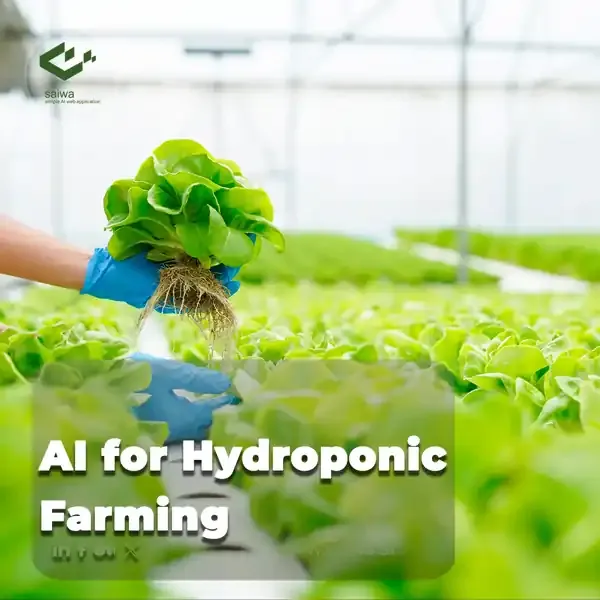
The United Nations projects global population will reach approximately 9.7 billion by 2050. While climate change threatens traditional agriculture through droughts, floods, and unpredictable weather patterns. Farming using traditional methods is facing a number of challenges. These include water scarcity, soil degradation and urbanisation, which is consuming prime farmland at an alarming rate.
Hydroponics presents a promising alternative to traditional farming methods. By cultivating plants in nutrient-rich water rather than soil, hydroponics achieves significant water savings, prevents soil-borne diseases, makes year-round production possible regardless of weather conditions, and supports urban agriculture by bringing food production closer to consumers.
However, these controlled environment systems demand complex management to maintain precise balances of temperature, humidity, nutrients, pH and lighting, which manual approaches struggle to optimize with consistency. This is where artificial intelligence comes in: automated systems continuously monitor sensors, adjust environmental controls, predict problems before they occur and optimize resource use, achieving yields and efficiencies that would be impossible through human management alone.
This complete guide looks at how artificial intelligence is changing hydroponic farming by automatically controlling the environment.

Understanding Hydroponic Farming Using AI
AI-powered hydroponic farming combines artificial intelligence and machine learning algorithms with soil-less cultivation systems. This integration automates environmental control, optimizes resource use and provides predictive insights, thereby enhancing crop yields, quality and longevity.
In hydroponics, plants are grown in nutrient-rich water solutions rather than soil. Inert growing media such as rockwool or coco coir provide physical root support, while precisely formulated nutrient solutions deliver essential minerals directly to the plants. AI systems use sensor networks to continuously monitor temperature, humidity, light intensity, nutrient concentrations, pH levels and plant growth parameters. Machine learning algorithms analyze this data to automatically adjust environmental controls, predict optimal growing conditions and detect problems requiring intervention.

Why Use These Systems?
Hydroponic systems have inherent advantages, including water efficiency, reduced disease and a controlled production environment. However, they require complex management, which human operators struggle to optimize manually across multiple variables simultaneously.
How AI Improves Hydroponics
AI integration in hydroponic farming operates through interconnected processes automating and optimizing cultivation:
Sensor Network Data Acquisition: Internet of Things sensors deployed throughout facilities continuously collect data on environmental parameters including temperature, humidity, CO2 concentrations, light intensity, and air circulation.
- Real-Time Environmental Control: AI algorithms process sensor data continuously, comparing current conditions against optimal parameters for specific crop varieties and growth stages.
- Automated Nutrient Management: Nutrient sensors track macro and micronutrient concentrations in irrigation solutions, with AI algorithms automatically dosing concentrated nutrient stocks maintaining optimal ratios for plant uptake. pH sensors trigger automated injection of acids or bases maintaining target ranges.
- Computer Vision Plant Monitoring: Cameras positioned throughout facilities capture imagery that computer vision algorithms analyze detecting plant stress, disease symptoms, pest infestations, and growth anomalies.
- Predictive Maintenance and Fault Detection: AI analyzes sensor data and equipment performance metrics identifying patterns indicating impending failures in pumps, valves, sensors, or climate control equipment. Predictive maintenance scheduling prevents unexpected breakdowns disrupting growing conditions and potentially causing crop losses.
- Yield Prediction and Harvest Planning: Machine learning models analyze plant growth data, environmental history, and current conditions predicting harvest timing and yield quantities weeks in advance.
Read More : An Over View Applications of Computer Vision in Agriculture
Applications of AI in Hydroponic Operations
AI delivers value across diverse hydroponic farming contexts from small controlled environment agriculture to large commercial greenhouse operations:
- Automated Robotic Integration: AI coordinates robotic systems performing labor-intensive tasks including seed planting, seedling transplanting, pruning, monitoring, and selective harvesting. Machine vision guides robots navigating greenhouse environments, identifying plants requiring attention, and executing precise manipulation tasks. This automation reduces labor requirements while improving consistency and allowing human workers to focus on higher-skill decision-making and quality control activities.
- Precision Nutrient Delivery: Automated nutrient management systems adjust formulations dynamically based on real-time plant uptake rates, growth stages, and environmental conditions. Machine learning analyzes relationships between nutrient availability, uptake patterns, and resulting growth optimizing delivery schedules.
- Disease and Pest Detection: Computer vision systems analyze plant imagery identifying early disease symptoms or pest damage before visible to human inspectors. Early detection enables localized treatment, preventing spread throughout facilities, reducing crop losses and minimizing broad-spectrum pesticide applications, improving food safety and environmental sustainability.
- Vertical Farming Integration: Multi-layer vertical farms leverage AI for coordinated climate control across stacked growing levels, automated material handling systems, and robotic cultivation tasks. AI coordination ensures each layer receives appropriate light, airflow, and environmental conditions despite vertical gradients creating challenging growing environments.

Benefits and Challenges of AI Hydroponics
AI Hydroponics has many benefits but considering all aspects, we should take a look at its benefits and its challenges.
Challenges
- High Initial Investment: Implementing comprehensive AI systems including sensors, control equipment, computing infrastructure, and software represents substantial capital expenditure potentially prohibitive for small-scale operations, though costs continue declining as technology matures.
- Technical Expertise Gaps: Operating, maintaining, and troubleshooting AI systems requires technical knowledge combining horticulture, automation, data analysis, and software that many traditional growers lack, necessitating training investments or hiring specialized personnel.
- Algorithm Bias Risks: Machine learning models trained on limited datasets may develop biases producing suboptimal recommendations for conditions not well-represented in training data. Ensuring diverse representative training sets and continuous model validation is essential.
- Regulatory Uncertainty: Regulations governing AI use in agriculture continue evolving. Growers must ensure systems comply with food safety standards, data privacy requirements, and agricultural regulations that may vary by jurisdiction.
Key Advantages
- Increased Crop Yields: AI optimization of environmental conditions, nutrient delivery, and growth management typically achieves higher percentages of yield improvements compared to conventional hydroponic management through maintaining consistently optimal conditions and preventing stress-related growth limitations.
- Enhanced Crop Quality: Consistent environmental conditions and optimal nutrient delivery produce uniform high-quality crops with superior nutritional profiles, appearance, and shelf life. Predictable quality supports premium pricing and strengthens market positioning.
- Early Problem Detection: AI-powered monitoring identifies diseases, pests, nutrient deficiencies, and equipment issues days or weeks before human observers typically notice problems, enabling intervention before significant crop damage or losses occur.
- Year-Round Production Optimization: Continuous operation independent of external weather enables consistent production schedules meeting market demand reliably. AI ensures optimal growing conditions regardless of seasonal variations in temperature, humidity, or sunlight availability.
- Scalability: Once developed and validated, AI systems scale across multiple facilities or production modules with minimal additional cost, enabling expansion while maintaining consistent quality and efficiency across operations.
Conclusion
Artificial intelligence is changing hydroponic farming. It is moving away from a system where workers have to do a lot of jobs at once and watch what is happening all the time to a system where machines do most of the work. This is being done using networks of sensors, machine learning and robotics.
AI systems constantly check the environment and the health of the plants. They automatically change the climate control and nutrient delivery to make sure the plants are always growing in the best conditions. They can even predict when equipment will break, so it can be fixed before it breaks. They can also spot diseases early on by using computer vision analysis. This means that the yield can be improved significantly while using far less resources than traditional management.
Based on our similar experiences with AI-driven hydroponic systems, integrating real-time sensor networks with machine learning and computer vision enables precise environmental control, nutrient management, and early problem detection across hydroponic facilities. Our deployments demonstrate that AI/ML can maintain optimal growing conditions automatically, detect plant stress or disease before visual symptoms appear, and optimize resource use, including water and nutrients, reducing waste by up to 90% compared to manual management. The combination of predictive analytics and automated control not only improves yields and crop quality but also allows scalable operations with minimal additional labor, supporting sustainable, efficient, and highly reliable smart farming solutions.
Note: Some visuals on this blog post were generated using AI tools.
References (4)
Comments
No comments yet!
Table of Contents
No headings were found on this page.