



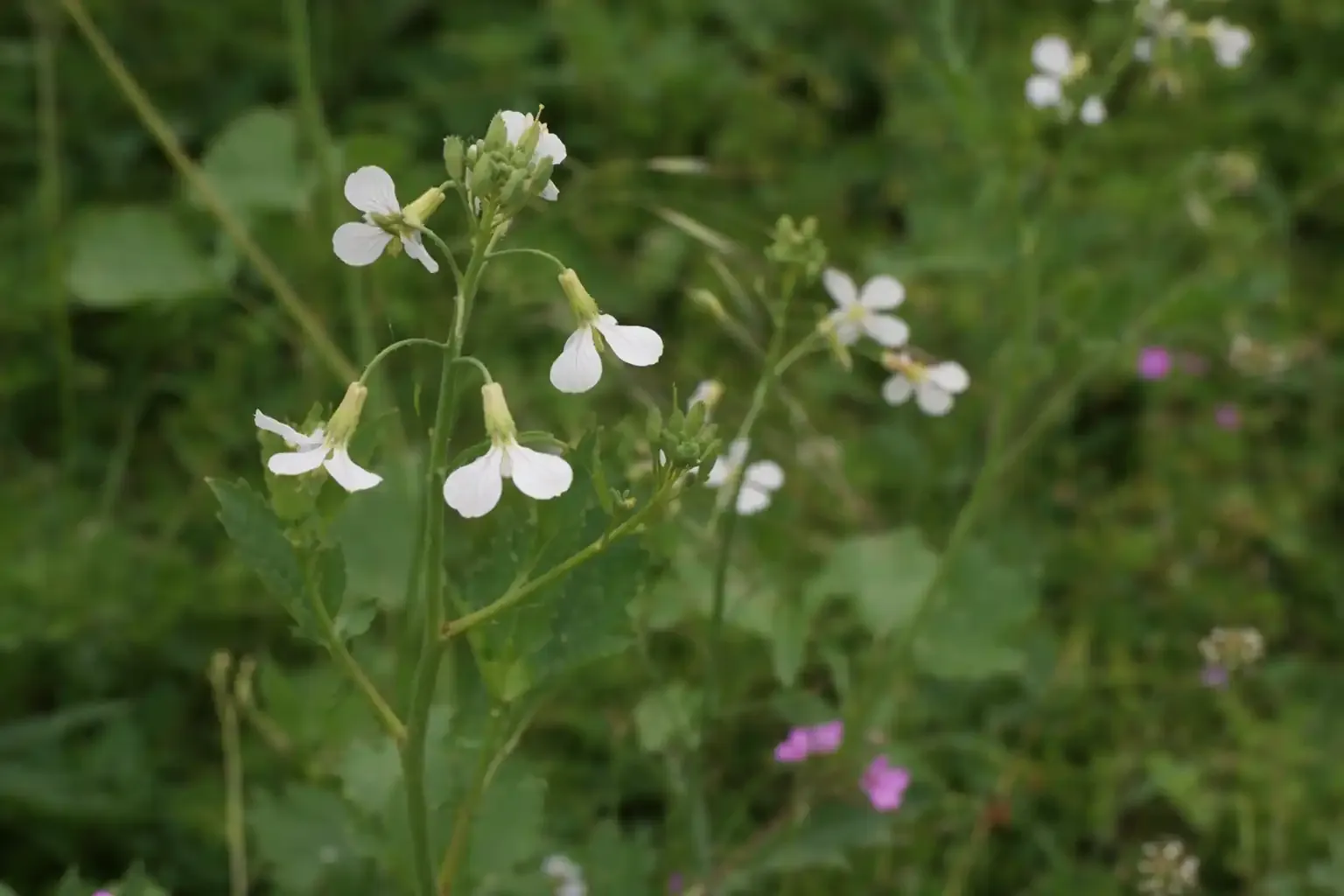
Raphanus Raphanistrum
Raphanus Raphanistrum is a bristly, erect herb that typically grows 40–100 cm tall. It begins as a basal rosette of rough, lobed leaves and later produces branching stems with cross-shaped, four-petaled flowers that are usually white, yellow, or pale purple with darker veins. One of its most distinctive identification features is its jointed, bead-like seed pod, which contains multiple single-seed segments and ends in a sterile beak.
The species reproduces mainly by seed. After flowering, each segmented fruit breaks into units that disperse easily, allowing a single plant to produce many viable propagules. Seeds often show dormancy because of the hard fruit wall, which can delay germination and help create a long-lasting soil seed bank. Wild radish commonly behaves as an annual or winter annual, thriving in disturbed habitats such as cropland, roadsides, and field edges, and spreads primarily through contaminated grain, machinery, soil movement, and local dispersal of its pods.
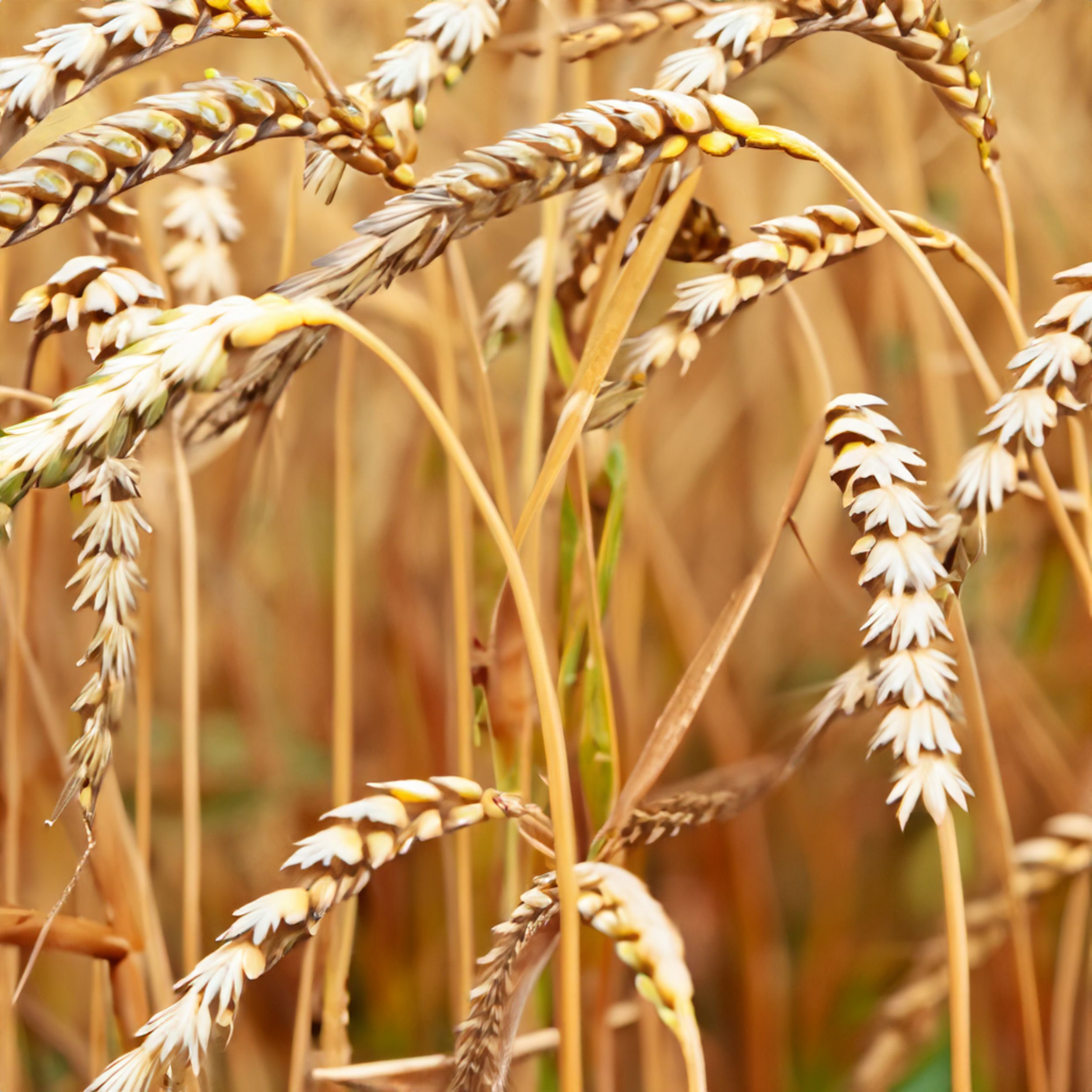
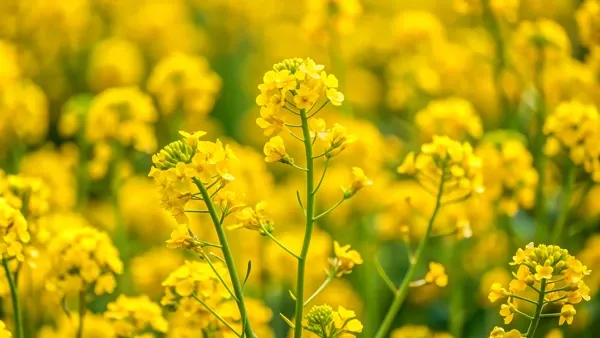
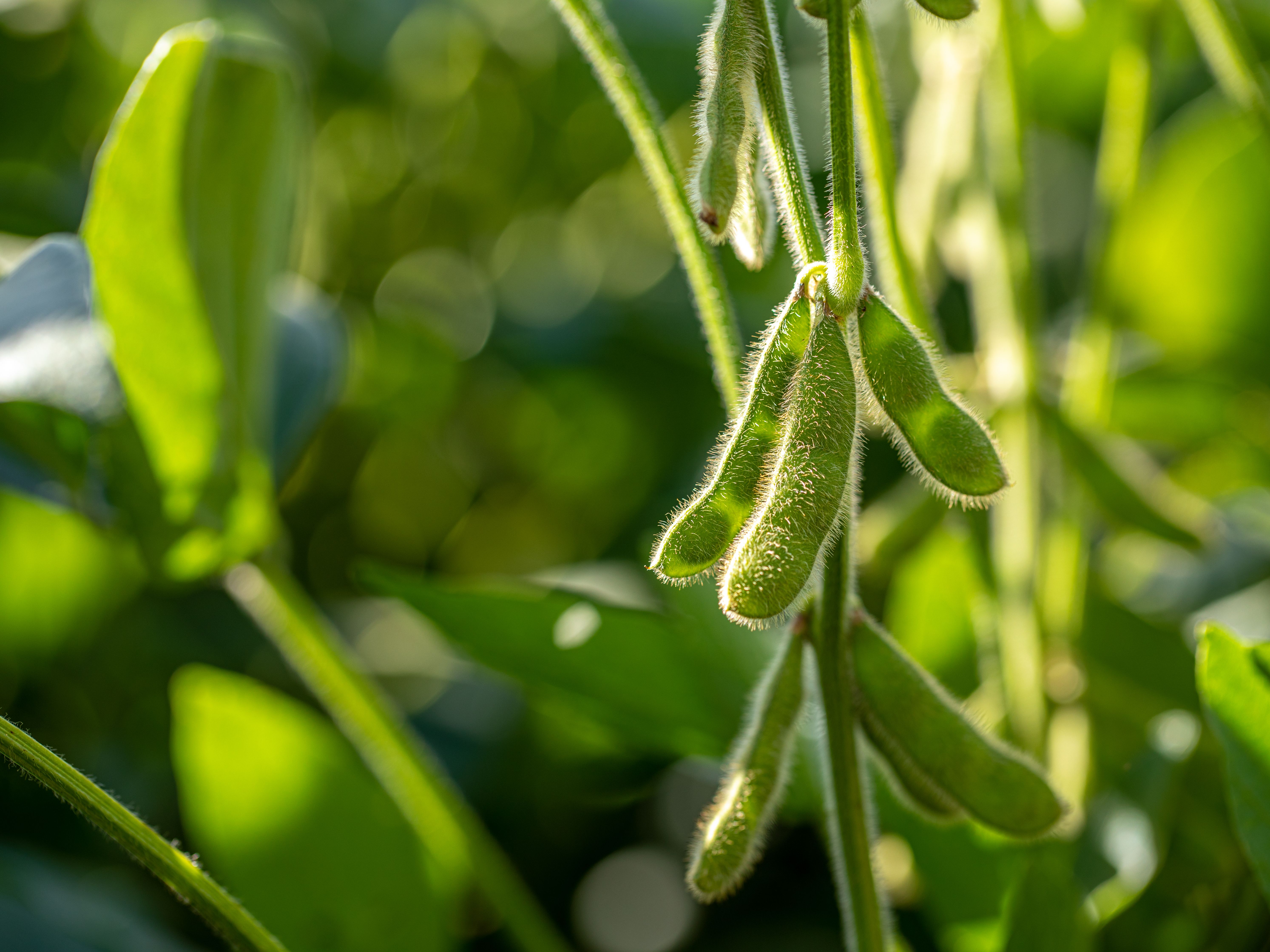
Raphanus raphanistrum is a competitive weed in cereals (especially wheat), oilseeds, and Brassica crops like canola, pulses, and many vegetable systems, where it reduces yield and crop quality by competing for light, water, and nutrients. It is widely distributed across the United States as an introduced species, occurs throughout Canada (particularly abundant in Atlantic and Pacific regions, including the Maritimes and Quebec), and is native and common across much of Europe, especially in arable and disturbed agricultural landscapes.
We employ a cutting-edge, real-time object detection model to identify Raphanus Raphanistrum and other invasive species efficiently. This model is designed to balance high-speed inference with accuracy, making it ideal for real-time applications.
Ready to elevate your Images/Videos?
How it works?
Detect Raphanus Raphanistrum in your fields in three simple steps
Step 1 · Input
Upload your field imagery
Send drone, satellite, CCTV or machinery-camera footage in common formats. No special preparation needed.
- RGB
- Multispectral
- Thermal
- Orthophoto / TIFF
Step 2 · AI analysis
AI detects Raphanus Raphanistrum
Our cloud models scan every frame, then locate and classify Raphanus Raphanistrum among your crops and other vegetation. No installation or setup needed.
- Cloud-based
- Zero installation
Step 3 · Output
Get maps ready for action
Download Raphanus Raphanistrum distribution and clustering maps with GIS data, ready for spot spraying and field decisions.
- GeoJSON
- Shapefile
- KML
- CSV
Flexible Service Delivery
API Integration
Seamlessly connect Sairone’s advanced AI services to your existing systems through modular, easy-to-use APIs.
Fully White-Labeled Solutions
Get a tailor-made version of Sairone—branded, customized, and built specifically for your unique business needs.
Online Web Application
Use our powerful online platform with scalable cloud processing and budget-friendly