





European Water Chestnut
Controlling European water chestnut
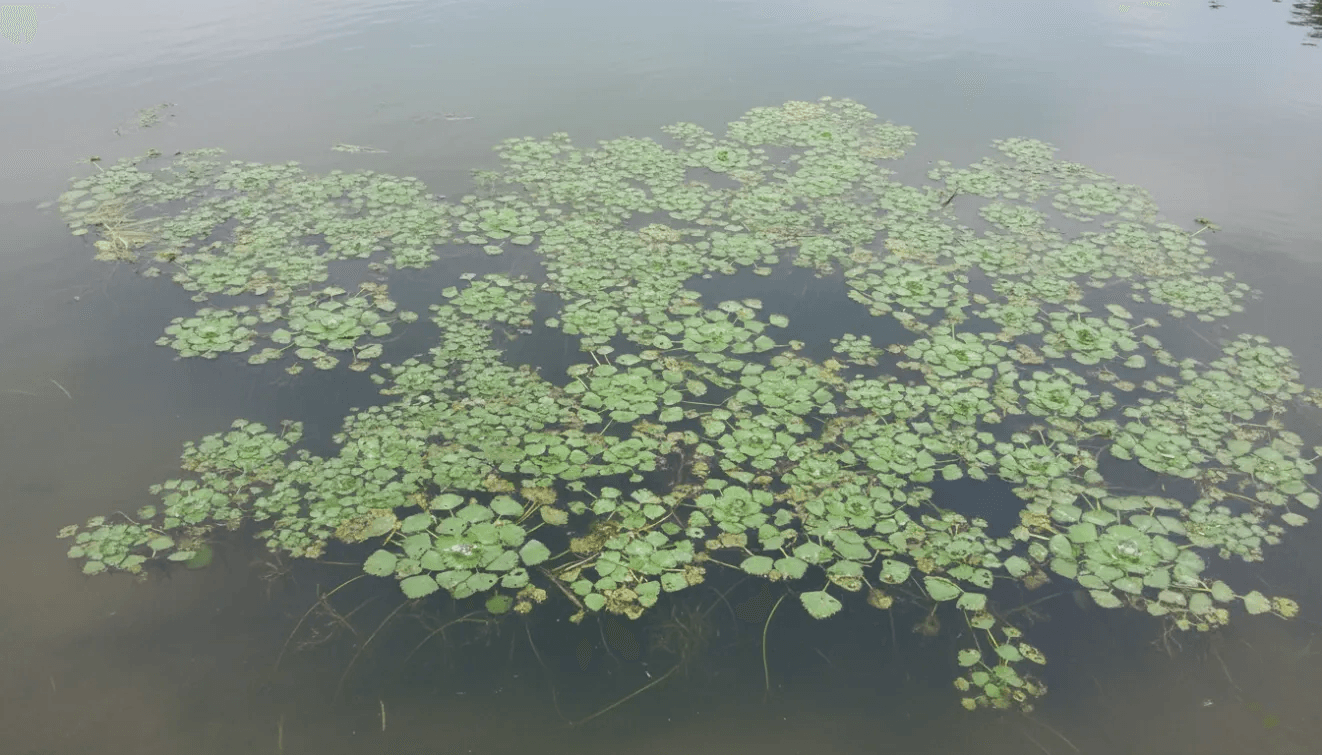
The European water chestnut (Trapa natans), also known as water caltrop, is an aquatic invasive plant native to Europe, Asia, and Africa. It has become particularly problematic in parts of North America, especially in the northeastern United States and eastern Canada, where it was introduced in the 19th century. It thrives in slow-moving freshwater bodies like lakes, ponds, and rivers, forming dense mats that block sunlight and reduce oxygen levels, severely impacting aquatic ecosystems.
Trapa natans is easily identified by its floating rosettes of triangular, toothed leaves with inflated petioles that help them stay afloat. It produces small, four-horned, spiky fruits that can remain viable for years in sediment. These sharp seeds can injure swimmers and damage boat equipment. While Trapa natans is the most widespread species, a related variant, Trapa bicornis (commonly found in Asia), has larger seeds with only two horns and is sometimes cultivated for food. The wild forms, however, differ primarily in seed size and number of horns but share similar ecological impacts.
Although the European water chestnut doesn’t directly affect terrestrial crops, its rapid spread can devastate aquatic farming systems like fish ponds and interfere with irrigation channels. Its dense mats hinder water flow, clog drainage systems, and displace native aquatic vegetation. Management strategies include mechanical removal, herbicide application, and biological control using insects like Galerucella birmanica, though control is often labor-intensive and must be repeated over multiple seasons to prevent regrowth.
Example of processing and outputs
A variety of outputs are available
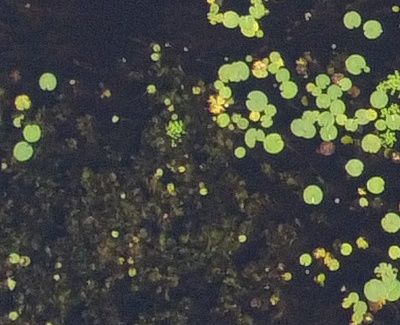
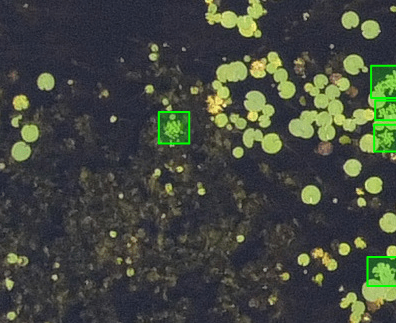
We employ a cutting-edge, real-time object detection model to identify European water chestnut and other invasive species efficiently. This model is designed to balance high-speed inference with accuracy, making it ideal for real-time applications.
Ready to elevate your Images/Videos?
How it works?
Detect European Water Chestnut in your fields in three simple steps
Step 1 · Input
Upload your field imagery
Send drone, satellite, CCTV or machinery-camera footage in common formats. No special preparation needed.
- RGB
- Multispectral
- Thermal
- Orthophoto / TIFF
Step 2 · AI analysis
AI detects European Water Chestnut
Our cloud models scan every frame, then locate and classify European Water Chestnut among your crops and other vegetation. No installation or setup needed.
- Cloud-based
- Zero installation
Step 3 · Output
Get maps ready for action
Download European Water Chestnut distribution and clustering maps with GIS data, ready for spot spraying and field decisions.
- GeoJSON
- Shapefile
- KML
- CSV
Flexible Service Delivery
API Integration
Seamlessly connect Sairone’s advanced AI services to your existing systems through modular, easy-to-use APIs.
Fully White-Labeled Solutions
Get a tailor-made version of Sairone—branded, customized, and built specifically for your unique business needs.
Online Web Application
Use our powerful online platform with scalable cloud processing and budget-friendly
Do you want to Detect and Control European Water Chestnut ?
Send Us a Message
Fill out the form below and we'll get back to you as soon as possible.